



Circular Brass Stand
A circular brass stand brings polished metal and utility together, offering a compact footprint for halls and reception rooms.
Circular Brass Stand
A circular brass stand encompasses utilitarian hall furnishings like umbrella and stick stands, alongside occasional furniture featuring brass tops or frames. Buyers seek these pieces for their durable metallic construction and functional geometry, which fits neatly into corners or narrow corridors.
The pieces appearing for this search span Victorian, Edwardian, and early twentieth-century periods, alongside Georgian and Regency examples. Within these listings, heavy Victorian umbrella holders and smaller brass-inlaid occasional tables emerge most frequently.
Materials and construction
Makers utilised solid brass and gilt metal alongside secondary timbers such as mahogany, oak, walnut, and teak. Cast iron and marble frequently provide stability and weight at the base or top of the stands.
Construction methods combine metal founding and turning with traditional cabinetmaking techniques like coopered joints for umbrella barrels and inlaid brass decoration. Ormolu mounts and toleware accents appear on continental and French-influenced pieces.
The listings combine British and continental European origins, spanning the Georgian period through to the 1940s.
Assessing quality and finish
Quality rests upon the weight of the cast brass and the crispness of any chased or inlaid detail. Superior examples display robust gauge metal and tightly joined wooden elements without excessive thinning or replacement parts.
The integrity of the structural frame, whether a coopered oak barrel bound in brass or a heavy cast iron base, dictates how well the piece endures daily use in a hallway.
Thomas Rubergall·Elkington and Co
The Circular Brass Stand Glossary
- Ormolu
- Gilded bronze or brass applied as decorative mounts on furniture. This technique was favoured by French makers to highlight architectural corners and apron rails.
- Coopered
- Constructed from vertical wooden staves bound together with metal bands, a method borrowed from barrel-making. This technique appears frequently in umbrella and stick stands.
- Gueridon
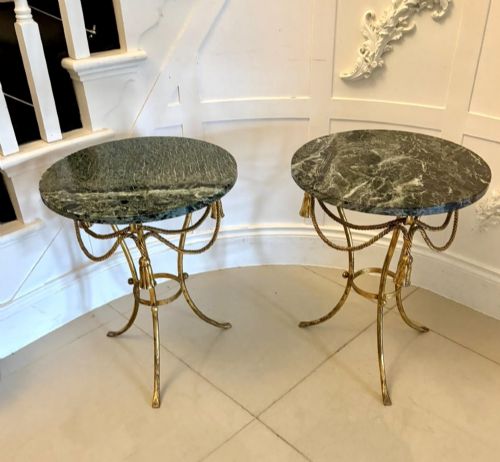
- A small French occasional table, often supported by a central pillar or three legs. These tables frequently feature marble or inlaid brass tops.
- Demi-lune
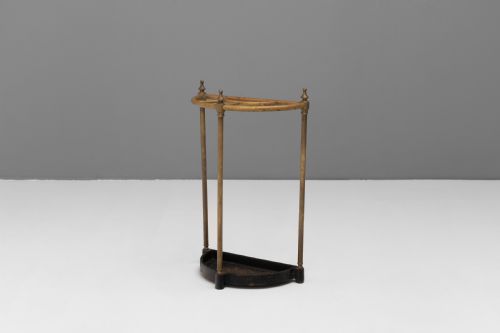
- Half-moon shaped in plan, allowing the piece to sit flush against a wall. Umbrella and stick stands often adopt this footprint to conserve hallway space.
- Bouillotte table
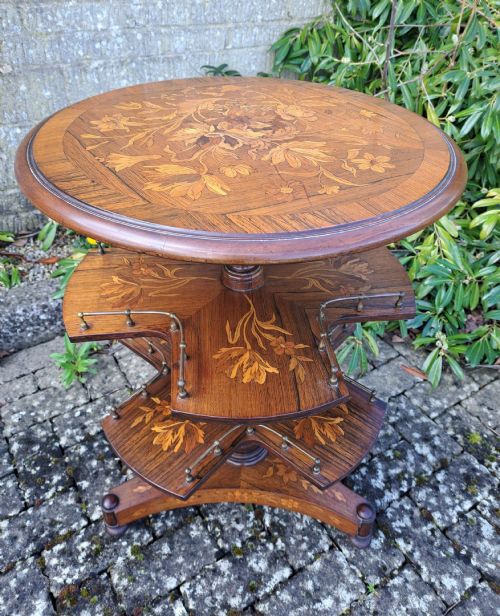
- A small French neoclassical occasional table with a raised gallery edge designed to hold card game counters. They typically incorporate brass galleries and small drawers.
Circular Brass Stand: Frequently Asked Questions
What is a circular brass stand used for?
These stands primarily serve as hallway receptacles for umbrellas and walking sticks, or function as small occasional tables in reception rooms.
Their robust metal and wood construction allows them to handle wet items or support small decorative objects without tipping.
How do I clean brass on an antique stand?
Maintenance typically requires a soft cloth to remove dust and occasional gentle wiping with a mild soapy solution.
Avoid harsh chemical dips that strip away the aged patina built up over decades.
Are these stands suitable for small hallways?
The circular or semi-circular footprint makes these pieces well suited for confined spaces like narrow corridors and entrance vestibules.
Demi-lune variants sit flat against the wall to maximise floor clearance while offering storage.
How can I date a Victorian brass stand?
Dating relies on observing casting marks, screw types, and the degree of wear on the brass and secondary timbers.
Heavier cast iron bases and specific period wood choices such as oak or mahogany often indicate nineteenth-century origin.