

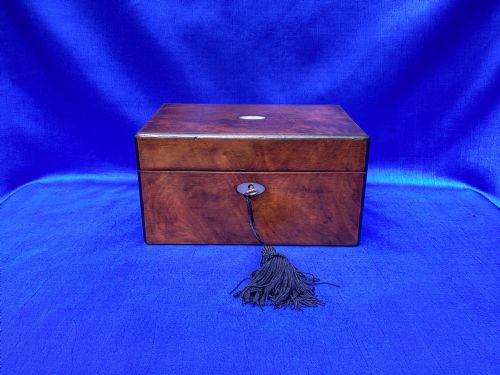
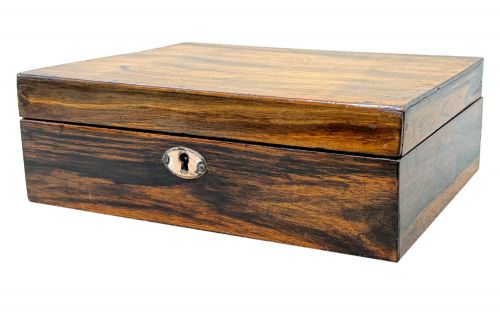


Vintage Jewellery Storage Box
These vintage jewellery storage box pieces combine functional compartments with period craftsmanship, offering a practical way to organise precious items.
Vintage Jewellery Storage Box
A vintage jewellery storage box encompasses tabletop chests, caskets, work boxes, and trinket cases originating from the nineteenth century into the twentieth century. These objects served domestic needs for housing rings, necklaces, cufflinks, and sewing implements.
The pieces on this page draw from Victorian, Regency, Edwardian, and Arts and Crafts traditions. Common formats include mahogany and rosewood table boxes, leather cases, and inlaid wooden caskets made across Britain, Europe, India, and East Asia.
Materials and Construction
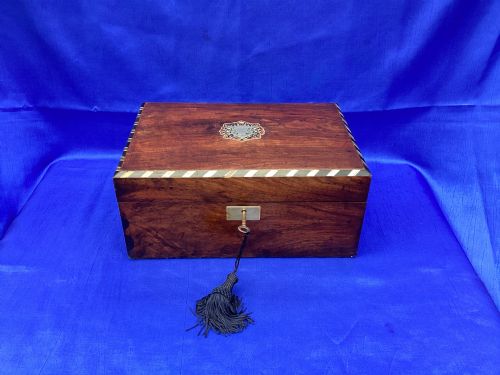
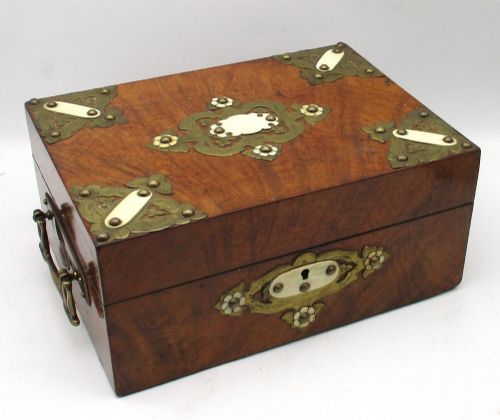
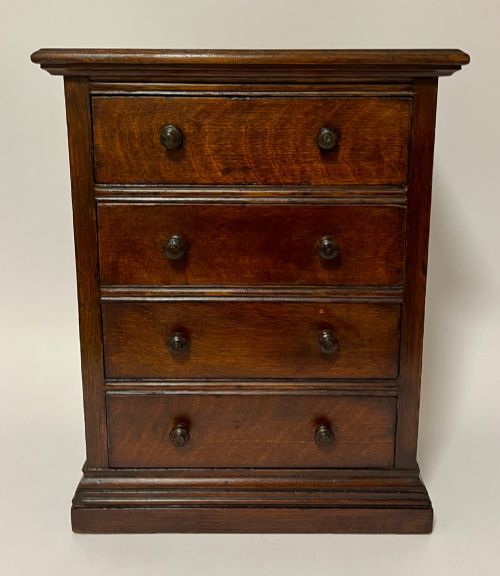
Cabinetmakers utilised dense timbers such as mahogany, walnut, rosewood, coromandel, and oak as the foundational carcasses for these boxes. Surfaces frequently display decorative elements including mother-of-pearl inlay, marquetry, parquetry, leather tooling, and tortoiseshell veneers.
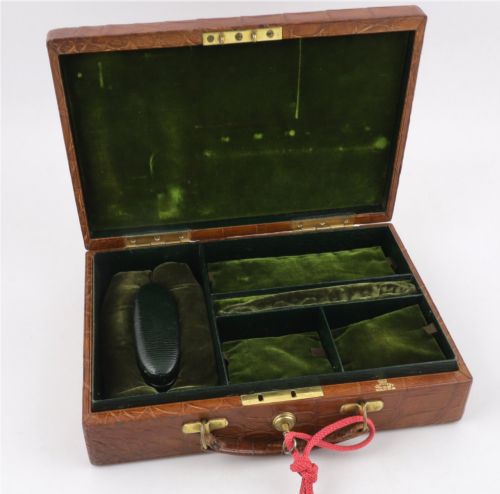
Interiors typically feature fitted compartments lined in velvet or silk, often paired with brass locks, hinges, and carrying handles. Specialised techniques such as Tunbridge Ware mosaic work and cloisonne enamelling appear on specific decorative examples.
One gentleman's box carries regimental arms from the British Army during the Second World War.
Evaluating Execution
Quality rests upon the precision of the cabinetry and the integrity of the surface decoration. Examples with tightly fitted internal trays, intact velvet linings, and secure brass hardware demonstrate superior original manufacture.
The complexity of the exterior embellishment separates standard boxes from finer specimens. Fully fitted interiors and intricate wood veneers or inlay require greater skill from the maker than plain timber surfaces.
J C Vickery
The Vintage Jewellery Storage Box Glossary
- Tunbridge Ware
- A form of woodwork characterised by tiny mosaic tiles assembled from different coloured woods to create geometric or pictorial scenes. This technique flourished in Kent during the nineteenth century.
- Marquetry
- The art of applying pieces of veneer to a structure to form decorative patterns and pictures. Makers used various tinted woods to achieve tonal depth.
- Coromandel
- A dense, heavy tropical timber featuring dark brown grain with contrasting lighter stripes. It was frequently utilised for luxury nineteenth-century boxes and vanity cases.
- Parquetry
- Geometric mosaic woodwork arranged in regular patterns like cubes or herringbone. It differs from marquetry through its strict geometric repetition.
- Trinket Box
- A small container designed for holding rings, pins, and small personal ornaments. These vessels usually sit upon dressing tables or desks.
Vintage Jewellery Storage Box: Frequently Asked Questions
What fits inside these boxes?
These boxes accommodate rings, necklaces, watches, cufflinks, and small trinkets within their dedicated compartments and trays.
Larger variations also function as sewing boxes or desktop storage for letters and personal documents.
How do I date a box?
Dating relies upon timber selection, hardware types, construction methods, and stylistic cues associated with periods like the Victorian era or the Regency period.
Makers' marks, brass locks, and lining materials offer further chronological clues for identification.
Are the interiors original?
Many boxes retain their original velvet or silk linings, fitted trays, and compartmentalised inserts.
Some examples show replacement fabrics or altered internal layouts resulting from long periods of domestic use.
Where were these boxes made?
The pieces originate from British workshops, European centres, and colonial regions including India and East Asia.
Materials and decorative motifs often reflect the specific geographic region and stylistic movement of their manufacture.