


Vintage Jewellery Pin
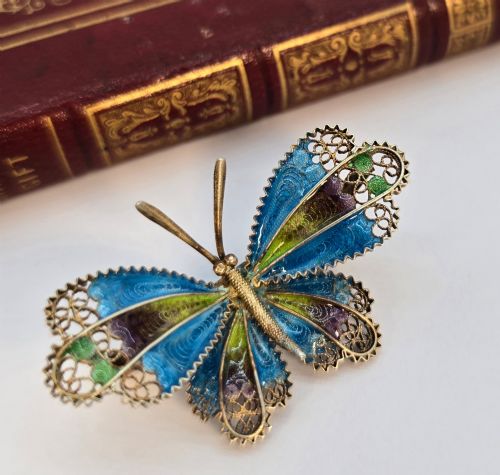
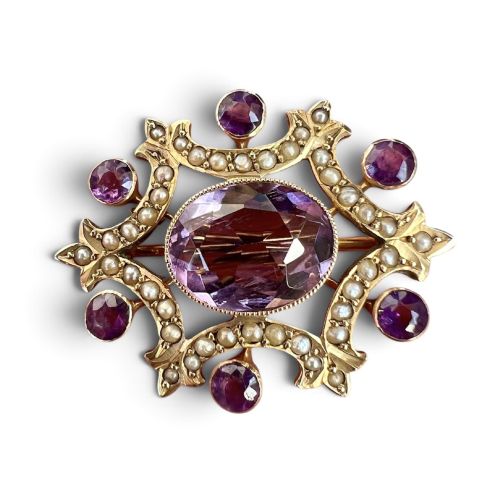
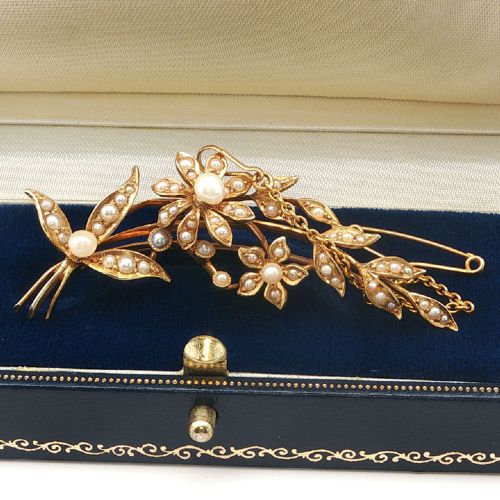
These vintage jewellery pin pieces range from Edwardian gold brooches to mid-century enamel butterflies, worn to fasten garments and adorn lapels.
Vintage Jewellery Pin
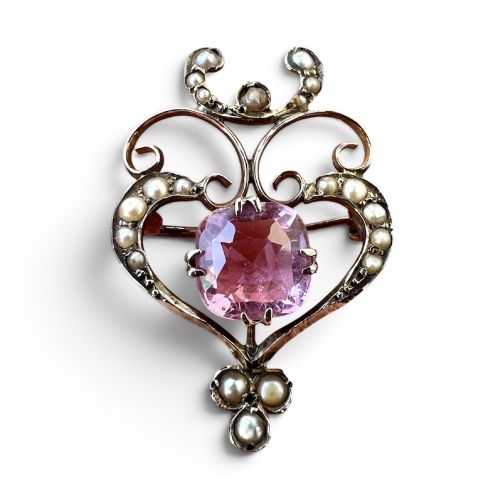
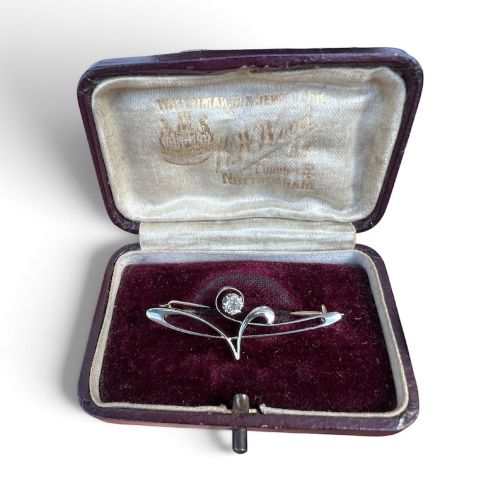
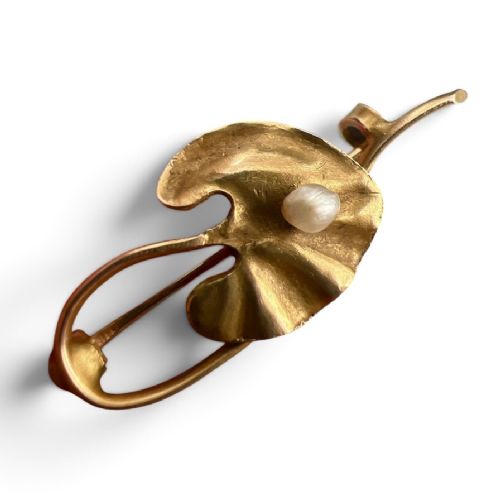
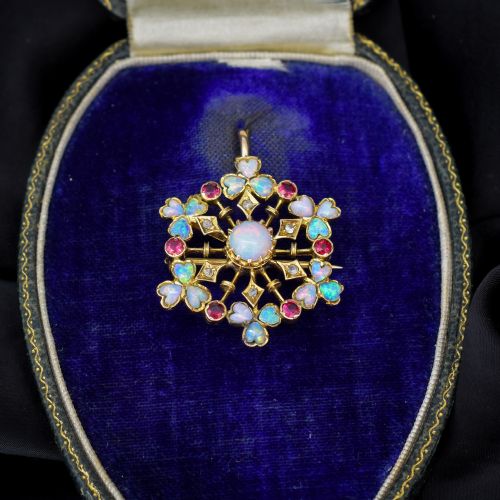
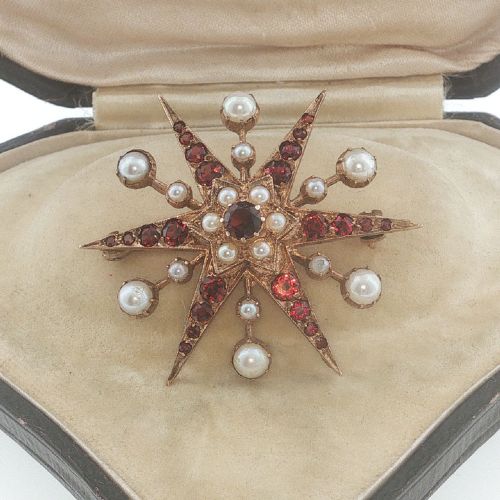
When you search for vintage jewellery pin, you encounter brooches, stick pins, and hair accessories spanning periods from Georgian moss agate items through Victorian and Edwardian gold work to Art Deco and mid-century Scandinavian designs. The selection relies heavily on silver and gold frames set with stones like amethyst, aquamarine, diamond, garnet, opal, pearl, ruby, and sapphire, alongside vibrant enamelwork.
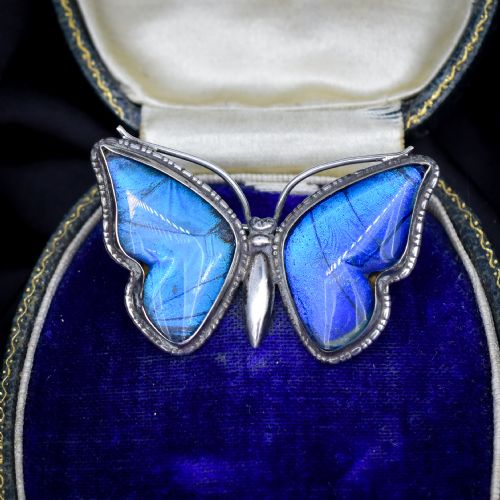
The objects most frequently met on this page are silver and enamel butterflies, floral sprays, and geometric bar brooches originating from British workshops and Scandinavian makers. These pieces served practical purposes in fastening clothing before transitioning into decorative accessories worn on coats, collars, and hats.
How they were made
Goldsmiths and silversmiths shaped precious metals using casting, wire-work, and filigree techniques to form intricate frames in sterling silver, silver gilt, and various carats of yellow, white, and rose gold. Platinum also appears in high-value mountings alongside traditional base settings of sterling silver.
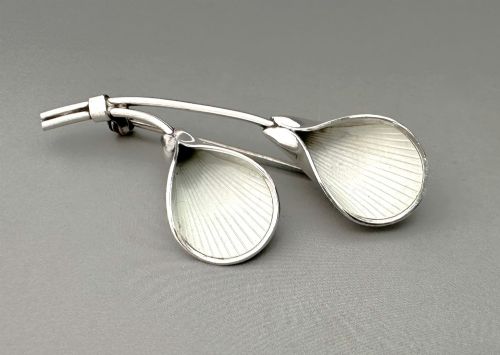
Enamelling techniques such as guilloche created patterned coloured surfaces on silver grounds, particularly in Scandinavian workshops, while stones were secured in claw, bezel, and pave settings by hand.
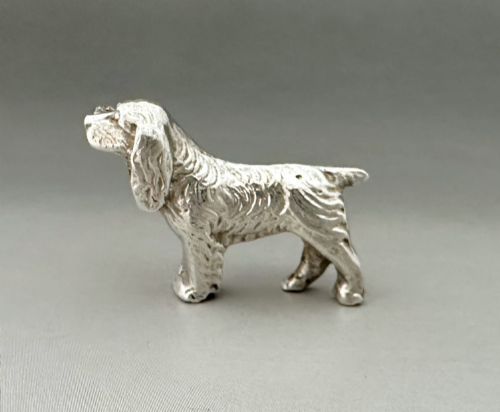
Silver frogs and spaniel dogs join the butterfly swarm, proving that historic jewellers had a cheerful fondness for wearing animals on their lapels.
What varies in quality
The distinction between standard items and exceptional examples rests on the precision of the metalwork, the depth and translucency of the enamel, and the quality of the selected gemstones. Intricate filigree and hand-applied guilloche require high levels of technical skill that separate artisan production from mass output.
Maker attribution and hallmarks also influence standing within the market, where documented pieces by known designers command greater attention than unsigned equivalents from the same period.
Aksel Holmsen·A H Darby & Son·Hroar Prydz·Charles Horner·Kutchinsky
The Vintage Jewellery Pin Glossary
- Guilloche
- An engined-turned decorative technique that etches precise geometric patterns into metal before translucent enamel is applied over the top.
- Silver Gilt
- Sterling silver that has been coated with a thin layer of gold, often providing a warm contrast to colourful enamelwork.
- Seed Pearl
- Tiny, naturally small pearls often used in clusters or floral arrangements during the Victorian and Edwardian eras.
- Bar Brooch
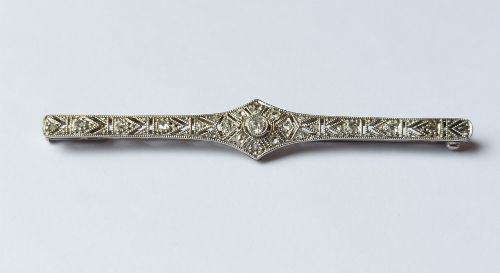
- A horizontal pin style popular during the Art Deco and Edwardian periods, featuring a narrow metal bar set with gems.
- Filigree
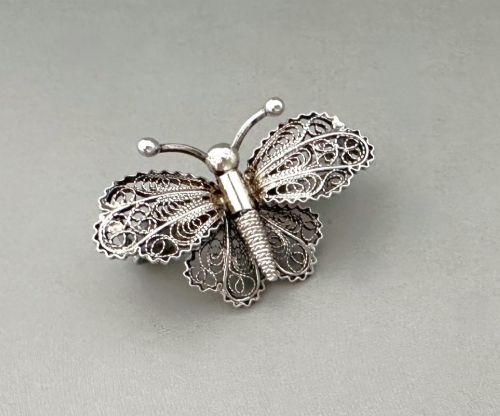
- Delicate openwork jewellery created by twisting and soldering fine threads of gold or silver wire together into lace-like patterns.
- Marcasite
- Small faceted pyrite stones set closely into silver mountings to provide a dark, metallic sparkle resembling cut steel.
Vintage Jewellery Pin: Frequently Asked Questions
How do I wear a vintage pin?
These pieces attach securely to thick fabrics such as wool coats, heavy scarves, and structured lapels using traditional pin stems and safety catches. Placing them on heavier textiles prevents the fabric from sagging under the weight of the metal and stones.
Lighter bar brooches and stick pins suit silk blouses, collars, and knitwear when paired with appropriate backing guards to keep the pin stable throughout the day.
What is guilloche enamel?
Guilloche enamel involves mechanical engraving on a metal base, typically silver, which creates repeating wave or sunburst patterns beneath a transparent layer of coloured glass enamel. The underlying engraving catches the light through the translucent colour to produce depth.
This technique appears frequently on mid-century Scandinavian butterfly and floral brooches listed on the market.
How do I clean enamel jewellery?
Enamel requires gentle cleaning with warm water, mild soap, and a soft cloth to avoid scratching the glass surface or damaging fragile gilt layers on the silver. Harsh chemical dips strip the finish and ruin the vintage patina.
Dry the piece thoroughly after washing, and store it away from direct sunlight and other metal items to prevent surface abrasion.