

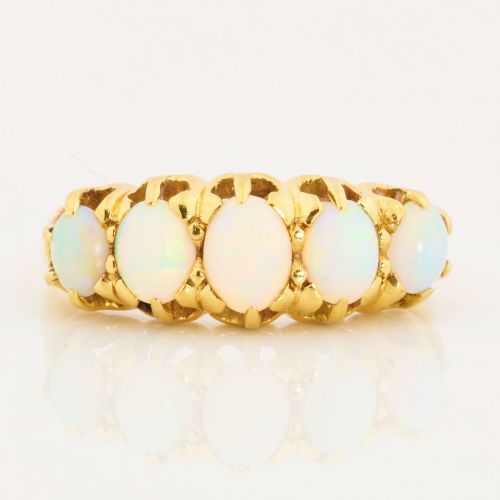
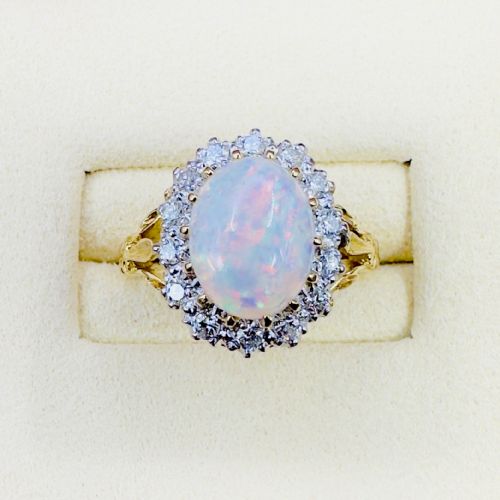
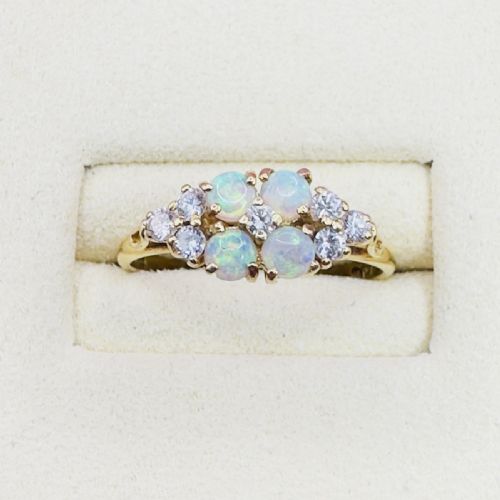

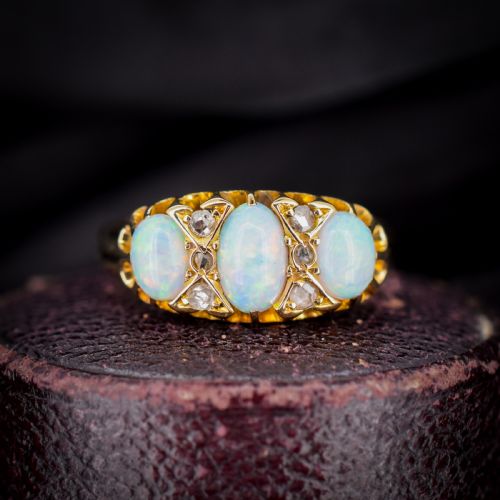

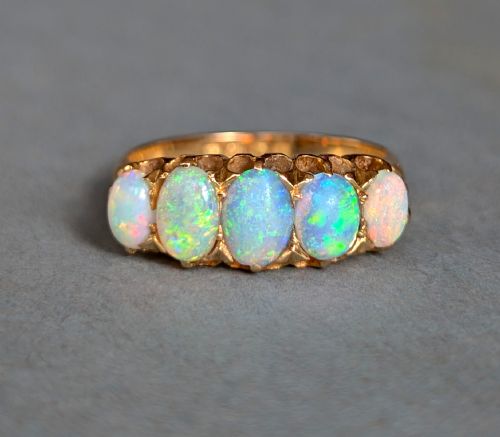
Vintage Jewellery Opal Ring
When you choose a vintage jewellery opal ring, you select a piece that captures shifting plays of colour through Victorian, Edwardian and mid-century designs.
Vintage Jewellery Opal Ring
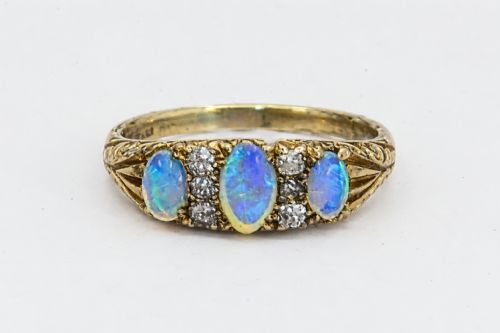
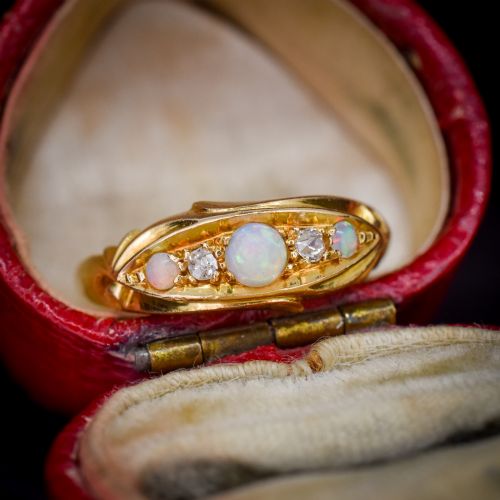
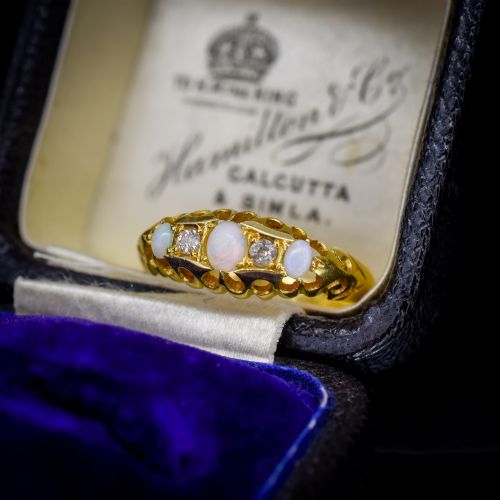
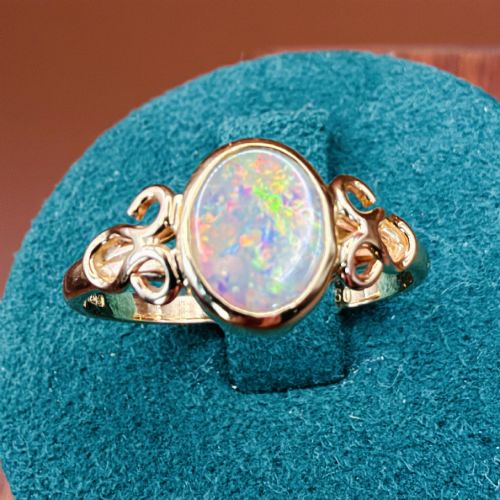
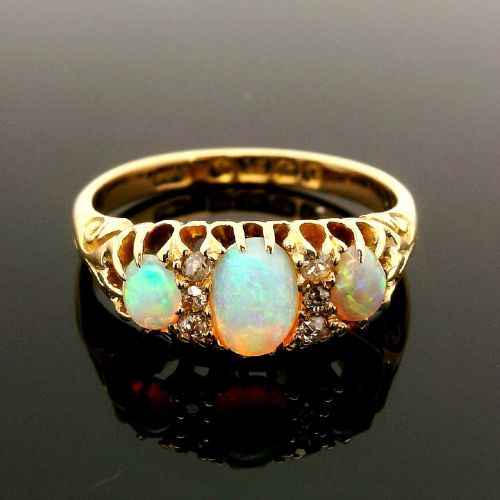
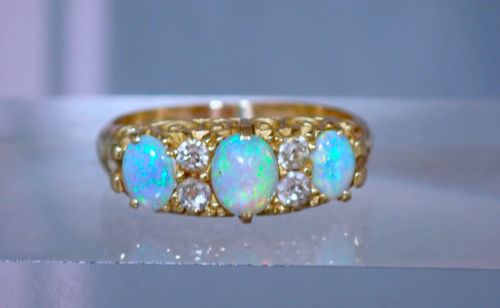
A vintage jewellery opal ring brings together natural gemstones and precious metals, taking forms such as the classic boat ring, multi-stone settings and elaborate clusters. These pieces span periods from the nineteenth century through the Edwardian era and into the mid-twentieth century.
Buyers most frequently meet nineteenth-century and Edwardian examples alongside 1950s and 1960s rings. Forms range from simple solitaire and five-stone arrangements to intricate multi-gem cluster rings incorporating diamonds, sapphires and rubies.
Originating across different decades, these rings showcase diverse regional touches including provincial hallmarks and continental bezel settings. The selection includes delicate low-profile bands as well as substantial cocktail rings designed to catch the eye.
How they were made
Goldsmiths constructed these rings primarily in 18ct yellow gold, 9ct gold, and platinum, frequently combining white and yellow metals to frame the stones. Cabochon cutting shapes the opals into smooth, rounded domes that maximise the internal flash of colour.
Master craftsmen secured the gems using traditional claw settings, bezel mounts and delicate platinum settings over gold bases. Diamond accents, including rose-cut stones, were carefully positioned around central opals in boat and cluster formations.
Listings span periods from the 16th century through the Victorian, Edwardian, and mid-century eras, utilising 18ct gold, platinum, and 9ct gold.
What varies in quality
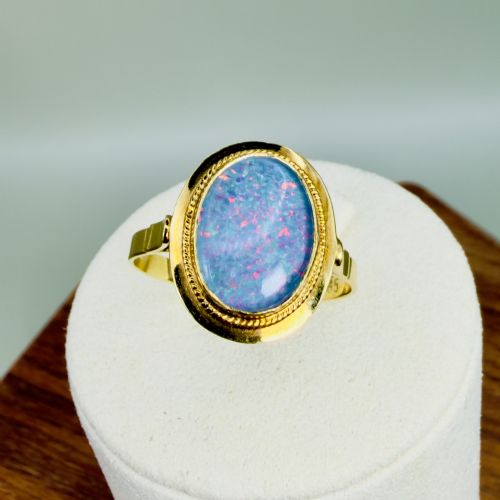
The play of colour within the opal itself sets the baseline for the piece, alongside the intensity of the stone's internal fire. Black opals and boulder opals display distinct depth compared to white water opals.
Metalwork execution and the harmonious integration of accompanying diamonds or sapphires define the upper tier of execution. The weight of the gold shank and the precision of the stone cut distinguish standard production from exceptional examples.
The Vintage Jewellery Opal Ring Glossary
- Cabochon
- A gemstone shaped and polished with a smooth rounded dome rather than faceted edges. This cut is essential for displaying the shifting play of colour in opals.
- Boat ring
- A ring setting shaped like the hull of a boat, typically featuring a central stone flanked by graduated smaller gems. This configuration was particularly popular during the Edwardian period.
- Cluster ring
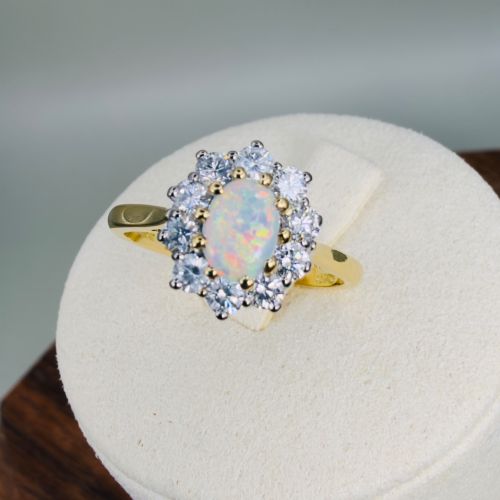
- A design featuring a prominent central stone encircled by a group of smaller gems, often diamonds. This arrangement maximises overall brilliance on the finger.
- Trilogy ring
- A three-stone ring symbolising past, present and future, frequently pairing an opal centre with diamond side stones. These settings highlight the individual character of each gem.
- Solitaire ring
- A mounting holding a single gemstone without accompanying side stones. This minimalist approach places full visual focus on the optical properties of the opal.
Vintage Jewellery Opal Ring: Frequently Asked Questions
How do I care for my opal ring?
Opals contain natural water content and require gentle cleaning with a soft damp cloth rather than harsh chemical dips or ultrasonic cleaners.
Store the ring away from extreme temperature changes and direct sunlight to maintain the integrity of the gemstone.
Are all opals white?
No, opals span a wide spectrum including deep black opals, earthy boulder opals and translucent water opals alongside traditional white stones.
Each variety offers a completely different background tone that changes how the internal colours flash.
How can I tell the period of my ring?
Hallmarks stamped inside the band often reveal assay office marks, date letters and maker details corresponding to British registration years.
Stylistic elements like platinum-topped gold settings or rose-cut diamond accents also point toward specific manufacturing eras.