

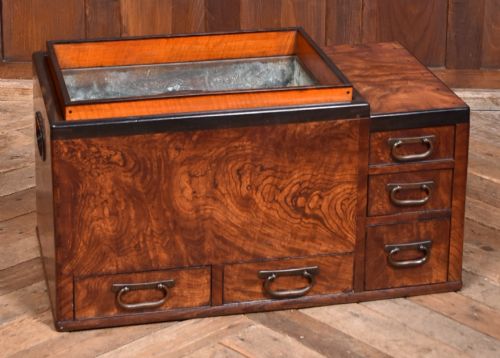


Vintage Japanese Wooden Chest
These vintage japanese wooden chest selections offer traditional storage crafted from keyaki, elm, and paulownia for practical antique utility.
Vintage Japanese Wooden Chest
When searching for a vintage japanese wooden chest, buyers encounter traditional storage forms originating from the Edo, Meiji, and Taisho periods. These pieces include tansu chests, merchant chests, kuruma-dansu wheeled chests, kitchen mizuya cabinets, and hibachi braziers.
The version most commonly met on this page is the nineteenth century Japanese tansu chest, constructed for domestic storage or mercantile use. Alongside these, related storage cabinets and storage boxes appear, reflecting the diverse domestic applications of wood in traditional Japanese interiors.
Materials and construction
Makers utilised distinct regional timbers, notably keyaki wood, elm, and paulownia wood, selected for their grain and structural properties. These woods form the primary carcass and drawer construction of the storage pieces.
Construction relied on joinery combined with heavy iron, wrought iron, and brass hardware. Strapwork, corner brackets, and lock plates reinforced the wooden structures while providing functional security for merchants and households.
Vintage Japanese Wooden Chest Retail Price Guide 2026
Typical asking prices for vintage japanese wooden chest among the pieces listed under this phrase on Sellingantiques today, from the lower quarter to the upper quarter. They describe what is for sale here now, not the wider market.
Listings span the nineteenth century, nineteen-ten, and nineteen-twenty, encompassing the Meiji and Taisho periods with traditional Japanese styles.
Quality variations
The distinction between tiers rests upon the selection of timber and the intricacy of the metalwork mounts. Dense keyaki and figured woods denote higher status pieces compared to utility carcases.
Execution of the iron and brass hardware, from simple plates to elaborate forged straps, demonstrates the workshop standard. The integration of lacquer finishes also dictates the refinement of the surface.
The Vintage Japanese Wooden Chest Glossary
- Tansu
- Traditional Japanese mobile storage chests used for clothing, documents, and valuables. These cabinets often feature multiple drawers and sliding panels.
- Keyaki
- Japanese zelkova wood, prized by makers for its hard grain and durability in tansu construction. This timber formed the front panels of high quality merchant chests.
- Hibachi
- A traditional Japanese heating device or brazier, frequently constructed from wood with a metal insert. These domestic objects share materials with contemporary storage chests.
Vintage Japanese Wooden Chest: Frequently Asked Questions
What is a tansu chest?
A tansu is a traditional Japanese wooden storage chest built for domestic or mercantile utility. These cabinets feature varied drawer arrangements designed for specific household items.
The pieces employ native timbers like elm and keyaki, reinforced with iron hardware. They served as functional furniture in traditional interiors.
How are periods identified?
Periods are identified through construction techniques, hardware styles, and timber selection. Pieces span the Edo, Meiji, and Taisho eras.
Nineteenth-century examples display hand-forged iron mounts and traditional joinery. Later items from the early twentieth century show refined industrial influences.
Where were they used?
These wooden chests were utilised throughout Japanese homes and merchant shops for storage. Kitchen cabinets stored utensils, while merchant chests held ledgers and coin.
Wheeled versions allowed rapid movement of valuables during emergencies. Table cabinets and braziers served refined living spaces.
How do I clean wood?
Wooden surfaces require gentle dusting with a dry cloth to preserve the original finish. Avoid chemical polishes that can damage antique lacquer and timber.
Maintain stable humidity levels to protect the wood and iron mounts. Proper care preserves the historical patina of the material.