


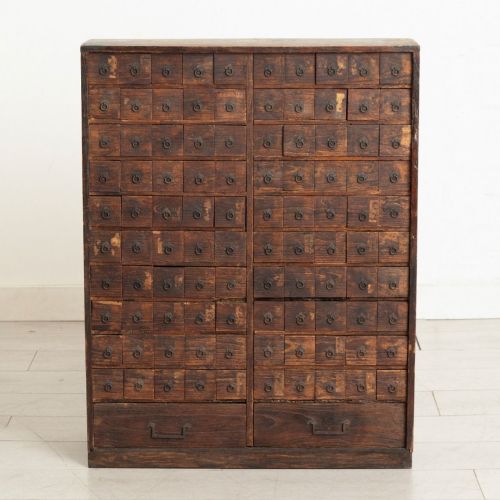


Japanese Merchant Cabinet Tansu
A Japanese merchant cabinet tansu provides robust storage built from traditional woods and iron, bringing disciplined craftsmanship and practical beauty into a modern interior.
Japanese Merchant Cabinet Tansu
When you search for a japanese merchant cabinet tansu, you are looking at utilitarian storage chests that originated in Japan during the nineteenth century and the early twentieth century. These pieces encompass various regional forms including traditional chests of drawers, apothecary cabinets, storage cabinets, and kitchen tansu.
The pieces on this page span the nineteenth century and the Meiji to Taisho periods, reflecting traditional Japanese woodworking and storage design. You will encounter forms designed for specific domestic and mercantile uses, constructed to house household goods, documents, or medical ingredients.
The most common examples you will meet here are nineteenth century tansu chests and early twentieth century storage cabinets. They utilise traditional forms that range from simple cedar storage pieces to more elaborate keyaki and elm merchant chests.
How they were made
These pieces are built from a foundation of timber such as cedar, elm, chestnut, and zelkova wood, often referred to as keyaki. Makers selected these woods for their durability and grain, pairing lighter structural timbers with harder woods for visible surfaces.
Forged iron hardware forms an essential structural and decorative component of the construction, appearing as heavy plates, corner brackets, and handles. This ironwork secures the joints and reinforces the cabinet body while providing the characteristic industrial contrast to the wood.
Japanese Merchant Cabinet Tansu Retail Price Guide 2026
Typical asking prices for japanese merchant cabinet tansu among the pieces listed under this phrase on Sellingantiques today, from the lower quarter to the upper quarter. They describe what is for sale here now, not the wider market.
The inventory spans the nineteenth century through the Meiji and Taisho periods up to nineteen ten.
What varies in quality
Quality in these pieces rests upon the choice of timber and the complexity of the internal arrangement. Cabinets utilising zelkova or keyaki wood generally represent a finer standard of construction compared to simpler cedar or general wood variants.
The execution of the forged iron hardware and the integration of multiple drawers or specialised compartments further distinguish the examples. Superior pieces display precise joinery and robust metalwork that remain fully operational after generations of use.
The Japanese Merchant Cabinet Tansu Glossary
- Tansu
- A traditional Japanese mobile chest or cabinet used for storage. These pieces were built for portability and specific domestic functions.
- Zelkova
- A dense hardwood native to Asia, frequently called keyaki in Japanese woodworking. Makers utilised this durable timber for cabinet fronts and structural elements.
- Meiji Period
- A historical Japanese era spanning from 1868 to 1912. Pieces from this time reflect traditional craftsmanship alongside opening trade influences.
- Taisho Period
- A period in Japanese history lasting from 1912 to 1926. Furniture from this era continues traditional tansu forms into the twentieth century.
- Mizuya
- A traditional Japanese kitchen tansu used for storing food and utensils. These storage cabinets form a distinct regional category within Japanese cabinetry.
Japanese Merchant Cabinet Tansu: Frequently Asked Questions
What is a tansu?
A tansu is a traditional Japanese mobile storage chest or cabinet designed for domestic or commercial utility. These pieces were built to be moved and used in various parts of the home or shop.
Constructed with integrated iron hardware and sturdy timber, tansu chests served multiple storage purposes ranging from clothing to documents and kitchen goods.
Where were these cabinets used?
These cabinets were used in Japanese merchants' shops, homes, and kitchens for organising daily goods and valuables. Merchant tansu and apothecary chests were specifically designed for business inventories and records.
Kitchen tansu, or mizuya, were placed in domestic cooking areas to hold utensils and provisions within easy reach.
How do I live with one?
Living with a tansu involves placing it as a focal storage piece in a room, utilising its drawers and compartments for modern organisation. The substantial wood and iron hardware complement minimalist or eclectic interiors.
Keep the cabinet away from direct heat sources and extreme humidity fluctuations to preserve the natural timber and iron components.