


Vintage Jacobean Cabinet
A vintage jacobean cabinet brings heavy timber and historic character to a room, offering deep storage through sturdy oak construction.
Vintage Jacobean Cabinet
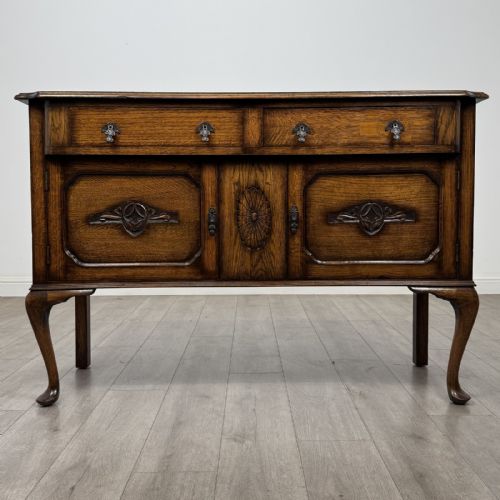
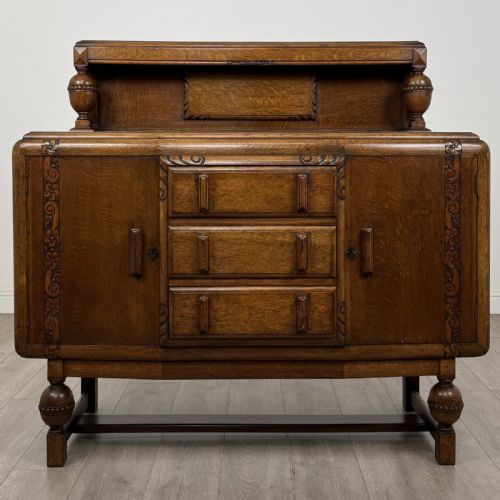
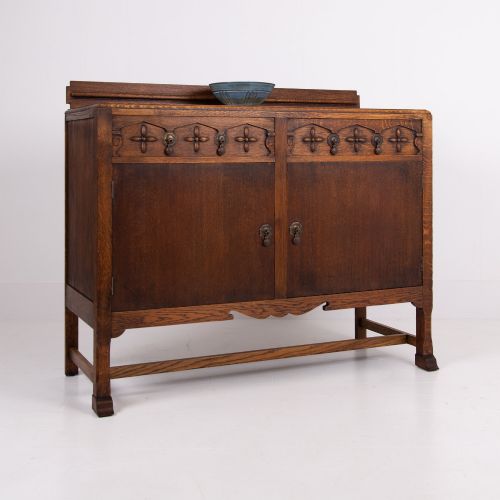
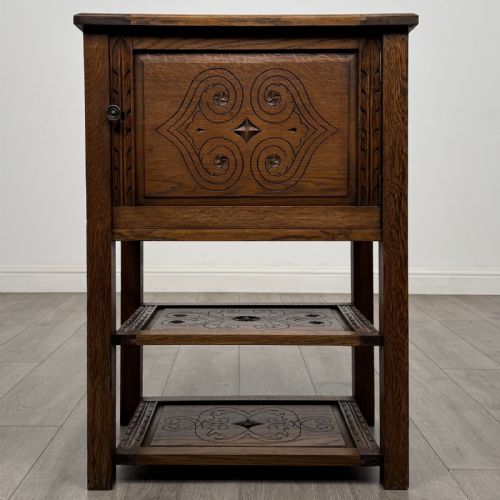
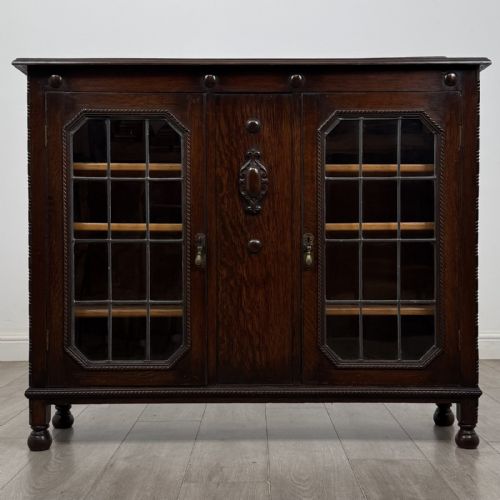
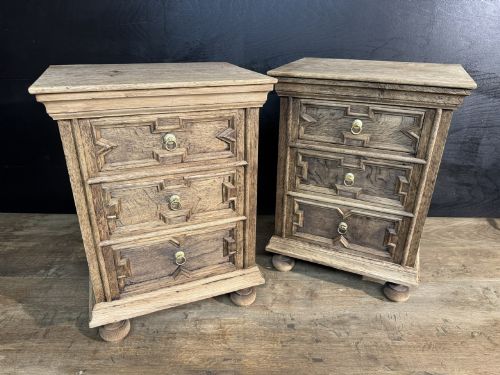
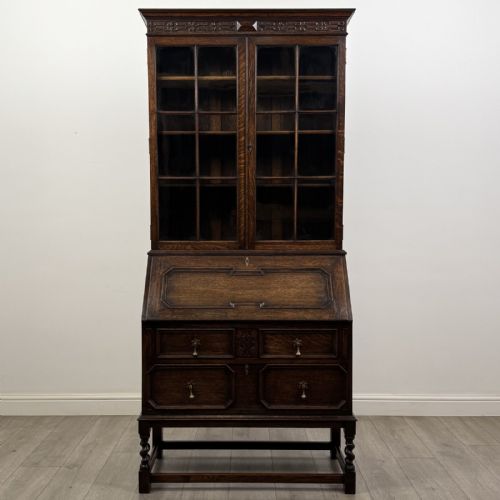
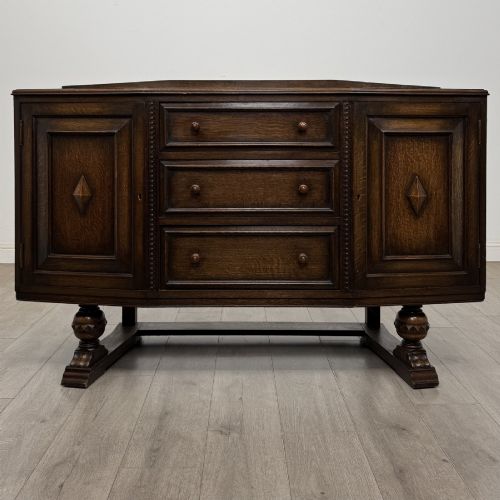
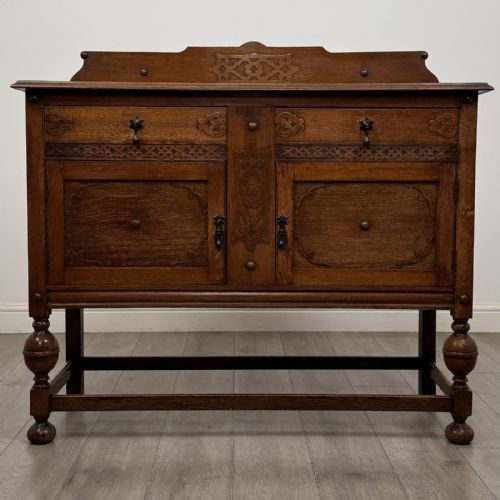
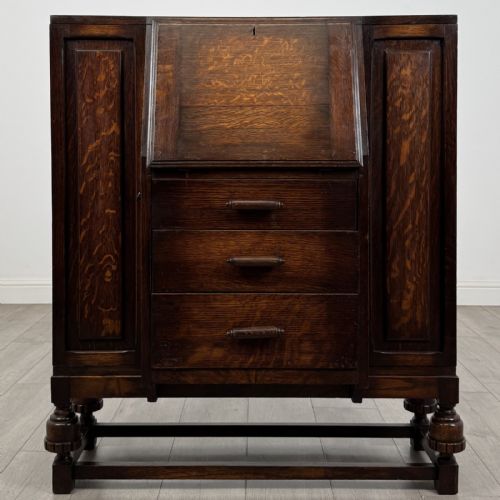
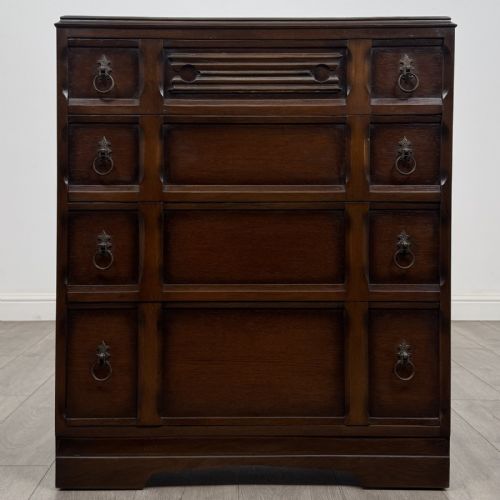
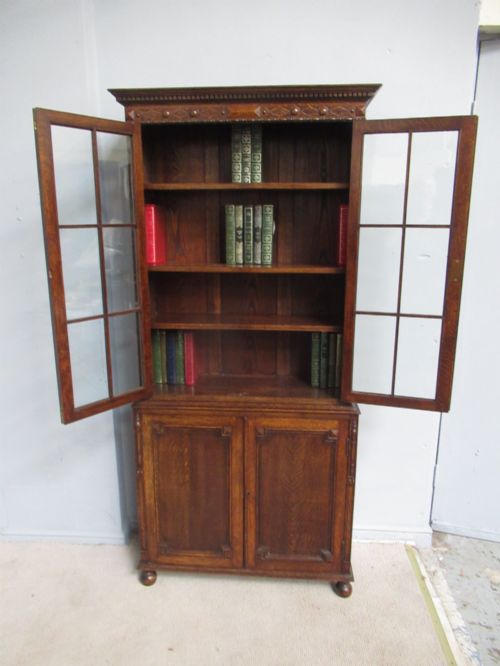
A vintage jacobean cabinet represents a sturdy domestic storage piece rooted in seventeenth century forms, though most examples encountered here date from the Edwardian era and the 1920s. Buyers searching for a vintage jacobean cabinet typically find revival sideboards, court cupboards, and bureau bookcases that emulate older craftsmanship. These pieces span bookcases, display cabinets with leaded glass doors, and narrow hall cupboards.
The material palette centres on dark oak, often accented with brass handles or iron fittings. Workshops produced these items across the nineteenth and twentieth centuries, leaning heavily on Jacobean revival and Tudor revival design idioms. Buyers select these cabinets for functional storage paired with traditional period presence.
Materials and Technique
Construction relies primarily on solid oak, selected for durability and finished to a dark tone. Artisans utilised traditional joinery methods to assemble heavy panels, frames, and fitted interiors.
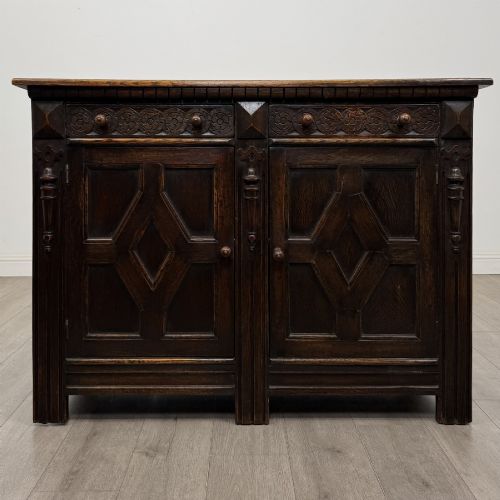
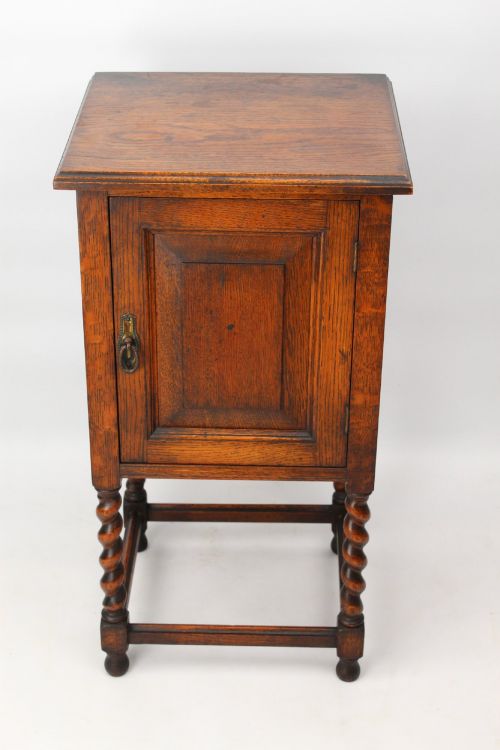
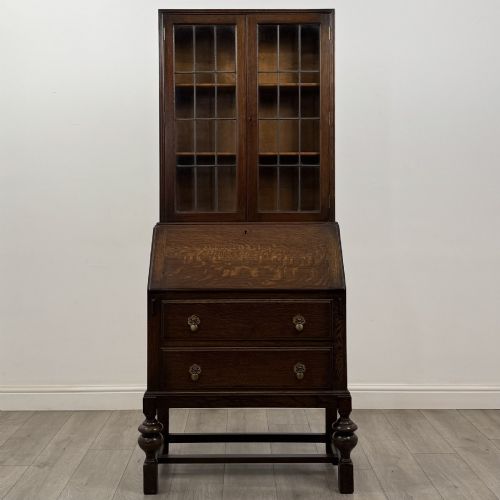
Decorative work incorporates hand carving, geometric panels, and applied mouldings. Supporting elements often feature distinct turnings such as barley twist legs or cup and cover supports, while glass doors utilise lead cames.
Vintage Jacobean Cabinet Retail Price Guide 2026
Typical asking prices for vintage jacobean cabinet among the pieces listed under this phrase on Sellingantiques today, from the lower quarter to the upper quarter. They describe what is for sale here now, not the wider market.
The inventory spans the seventeenth, nineteenth, and twentieth centuries, with a strong concentration of pieces originating in the 1910s and 1920s.
Design Depth and Construction
The distinction between standard examples and finer items rests in the crispness and depth of the carved detail. Elaborate geometric panels, carved pillar details, and linenfold motifs require skilled hand work that elevates the overall appearance.
Structural refinement shows in the choice of turning for legs and uprights, such as intricate barley twist or balanced cup and cover forms. Original hardware, including brass face handles, further separates superior items from plain utility cupboards.
The Vintage Jacobean Cabinet Glossary
- Court cupboard
- A traditional enclosed storage unit featuring a recessed upper section supported by turned pillars. These pieces provide compact display and shelving space.
- Barley twist
- A spiral turning technique applied to table legs and cabinet supports. This decorative form creates a dynamic sense of movement in heavy timber.
- Linenfold
- A style of wood carving that mimics folded fabric or linen. Cabinet makers used this motif primarily on door panels during revival periods.
- Leaded glass
- Small panes of glass held together by lead strips known as cames. This glazing method appears frequently on bookcase and display cabinet doors.
- Bureau bookcase
- A dual-purpose furniture form combining a sloping writing flap with open shelving or enclosed upper cupboards. Fitted interiors often include small drawers and pigeonholes.
Vintage Jacobean Cabinet: Frequently Asked Questions
What is a jacobean cabinet?
A vintage jacobean cabinet is a revival storage piece modelled after seventeenth century English furniture. These items typically feature dark oak timber, geometric panels, and substantial turned legs.
Most pieces found in current selections date from the Edwardian period and the 1920s. They include sideboards, court cupboards, and bureau bookcases designed for practical domestic use.
How do I style a dark oak cabinet?
Dark oak furniture anchors a room through its weighty presence and rich grain. Pairing these cabinets with neutral walls and simple lighting allows the carved details and hardware to stand out.
Consider placing a narrow hall cupboard in an entryway or utilising a glazed bookcase in a living space. The traditional forms blend effectively with both classic and contemporary interiors.
How were these cabinets used originally?
These cabinets served primary storage functions in dining rooms, halls, and studies. Sideboards held dining linen and tableware, while court cupboards stored dry goods and valuables.
Bureau bookcases provided a dedicated writing surface alongside shelving for books. The fitted interiors kept writing implements and documents organised behind locked doors.