



Vintage Italian Pedestal Table
A vintage italian pedestal table brings centuries of continental craftsmanship into a room, offering a sturdy central column that anchors small surfaces with striking presence.
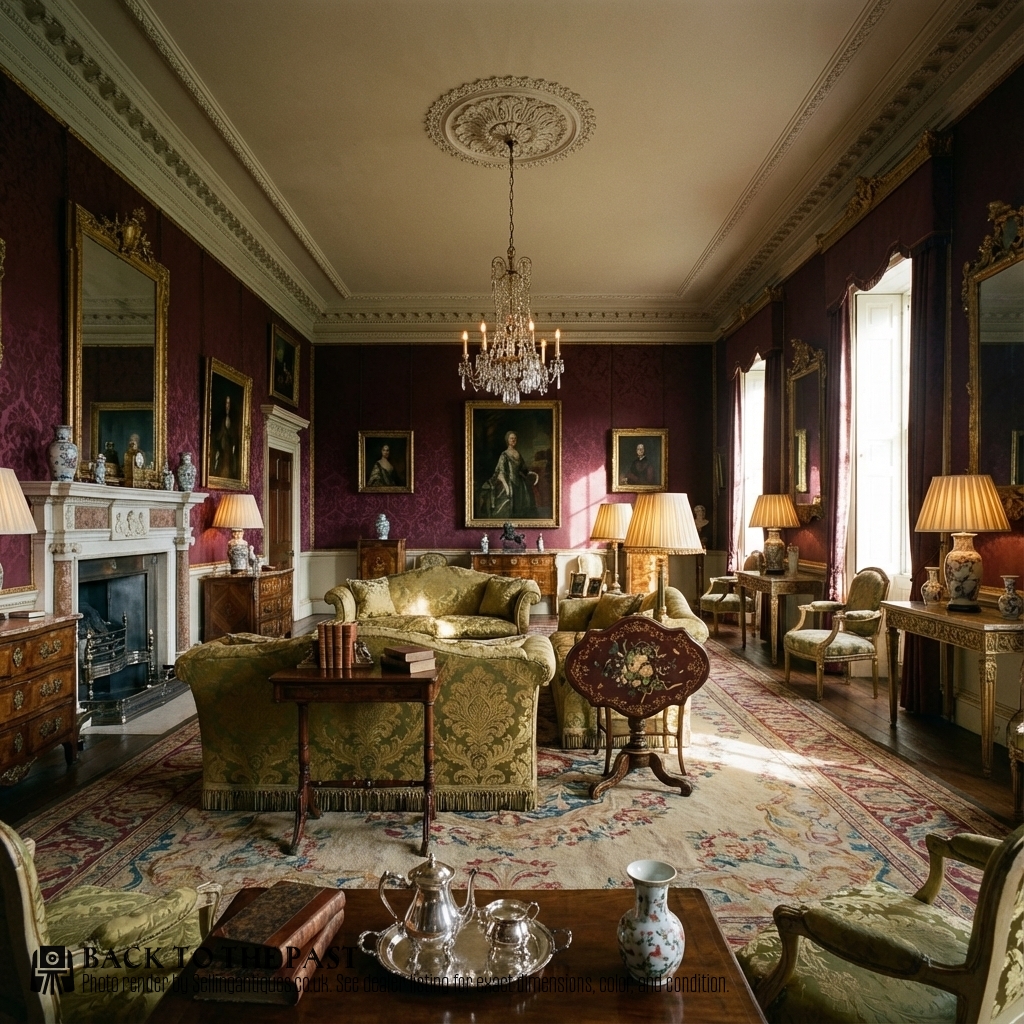
Vintage Italian Pedestal Table
When you search for a vintage italian pedestal table, you are looking at compact occasional surfaces raised on central supports rather than standard four-legged frames. These pieces appear in forms such as side tables, occasional tables, and plant stands.
The most frequent examples on this page date from the nineteenth century, alongside pieces from the eighteenth century, nineteen-twentieth, and nineteen-thirty. Styles span Italian Sorrento, Venetian Revival, Italian Rococo Revival, Art Nouveau, eighteenth century Italian, Italian Neoclassical, Victorian, and Venetian Rococo.
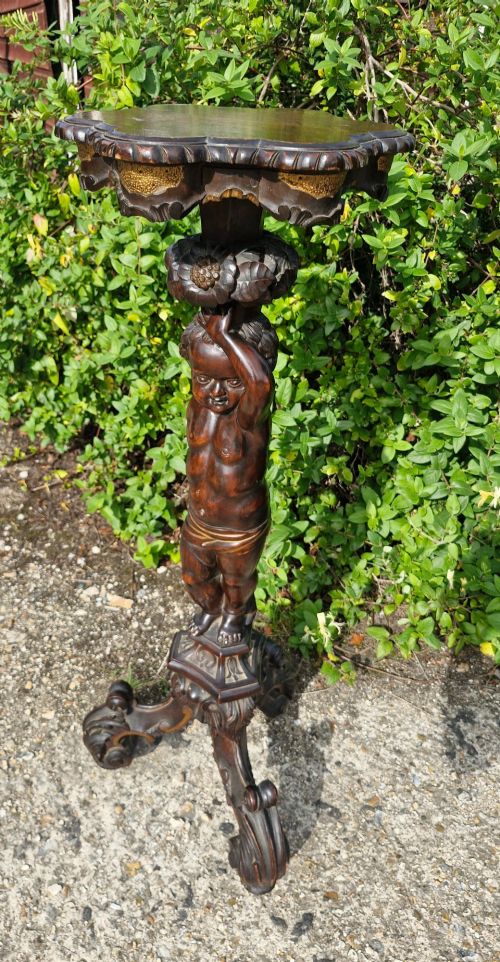
Makers and workshops utilise a variety of distinct regional motifs, from inlaid woodwork to carved wooden figures. Buyers find that these tables function efficiently beside seating or as display surfaces for lamps and ornaments.
How they were made
Surfaces receive elaborate decorative treatments including gesso, gold leaf, paint, and intricate inlaid woodwork. Brass components and engraved copper trays also appear on specific twentieth-century interpretations.
Vintage Italian Pedestal Table Retail Price Guide 2026
Typical asking prices for vintage italian pedestal table among the pieces listed under this phrase on Sellingantiques today, from the lower quarter to the upper quarter. They describe what is for sale here now, not the wider market.
The periods represented span from the eighteenth century through the nineteenth century and into the nineteen-twenties and thirties.
What varies in quality
The distinction between standard and superior pieces lies in the execution of the surface decoration and the ambition of the carving. Hand-applied paintwork, detailed marquetry, and specimen marble insets demand a higher level of artisan skill than simpler veneered surfaces.
Structural integrity of the central column and its base determines how well the table bears weight over decades of use. Balance and proportion between the top, the pedestal, and the feet dictate the visual success of the piece.
The Vintage Italian Pedestal Table Glossary
- Pedestal table
- A table supported by a single central pillar or column resting on a footed base. This design maximises legroom and floor clearance.
- Sorrento work
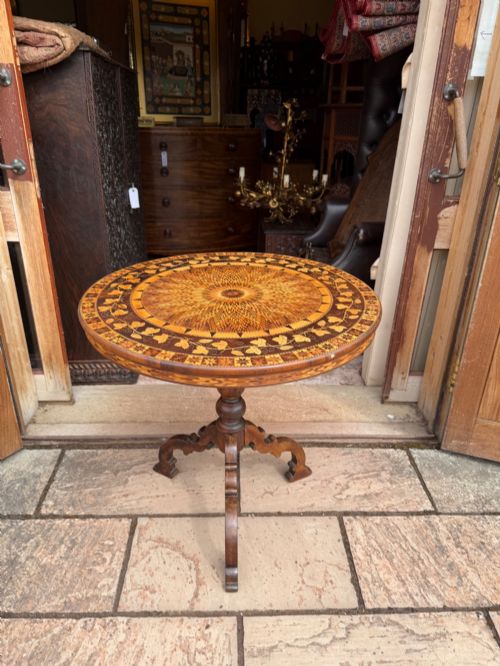
- Wood mosaic and micro-intarsia originating from the town of Sorrento, typically depicting architectural views or floral patterns. Artisans fit small wooden veneers into recesses to create pictorial surfaces.
- Specimen marble
- A tabletop composed of various distinct types of decorative marble arranged in geometric or mosaic patterns. Each marble piece showcases unique natural veining and geological colours.
- Gesso
- A plaster-like mixture applied to wood surfaces to prepare them for gilding or painting. It provides a smooth ground that artisans can carve or mould before applying gold leaf.
- Tilt top table
- A table featuring a mechanism that allows the top to pivot into a vertical position when not in use. This clever design saved space in historic domestic interiors.
Vintage Italian Pedestal Table: Frequently Asked Questions
Where should I place a pedestal table?
These compact surfaces suit tight spaces where four legs might clutter the floor plan. Place them beside armchairs as a convenient spot for a book or cup.
They also function effectively in hallways or corners as plant stands and display pedestals for decorative objects.
How do I identify a Sorrento table?
Sorrento tables are characterised by intricate wood inlay depicting geometric patterns, landscapes, or figures. Craftsmen utilise diverse natural wood tones to create pictorial depth without paint.
Running your hand across the surface often reveals the subtle texture of fitted wood veneers rather than a printed finish.
What is specimen marble?
Specimen marble tops consist of multiple small pieces of different coloured marbles assembled together. These pieces often form geometric compositions or showcase geological variety.
Such tables highlight the nineteenth-century fascination with classical materials and decorative stone collection.
How do I care for antique wood finishes?
Protect antique wood and painted surfaces by keeping them away from direct sunlight and extreme temperature shifts. Dust gently with a dry, soft cloth and avoid chemical polishes that can degrade historic varnish.
Use coasters under glasses and felt pads beneath heavy decorative objects to prevent surface scratching.