

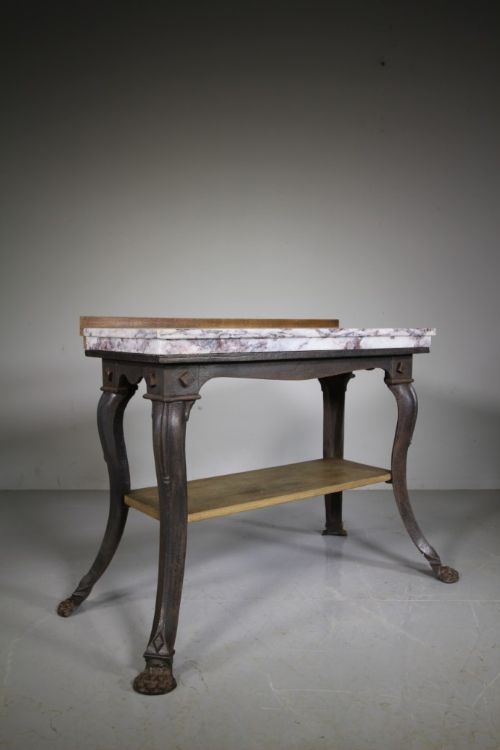


Vintage Iron Garden Console
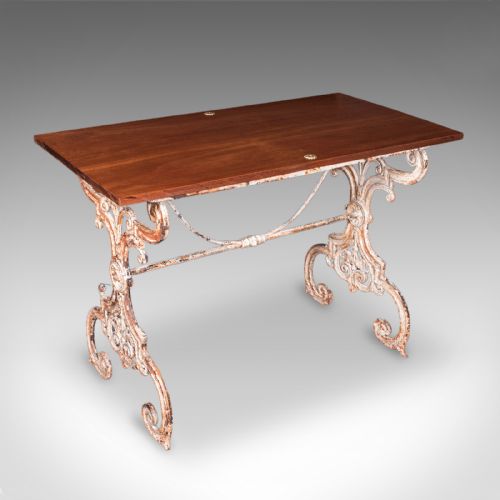
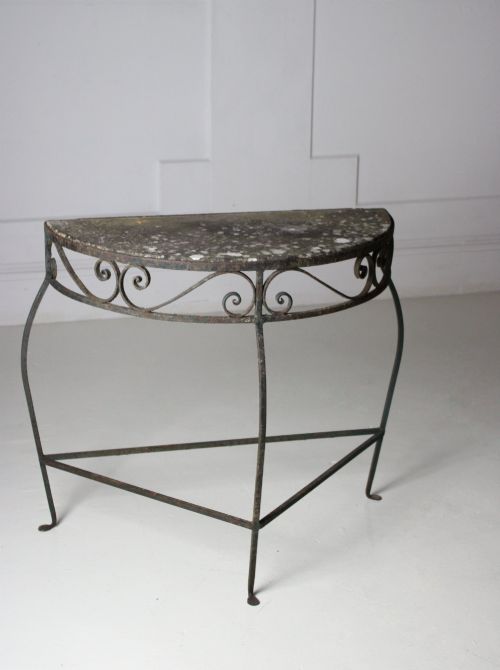
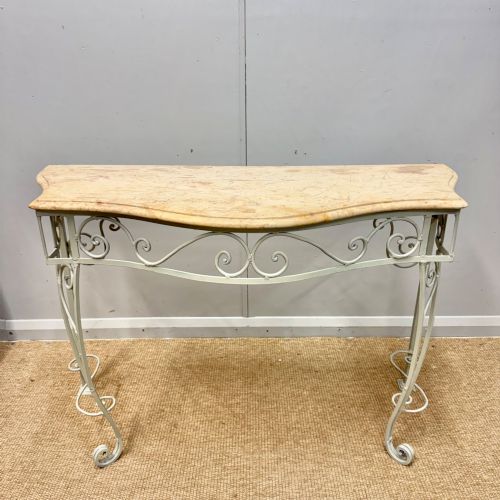
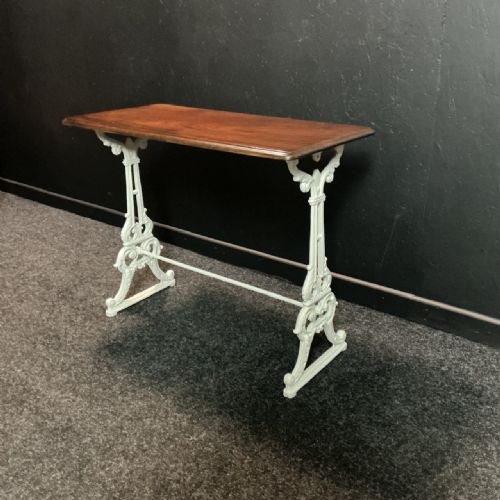
These vintage iron garden console tables bring robust metalwork and classic stone or timber surfaces straight from the terrace into the home.
Vintage Iron Garden Console
A vintage iron garden console offers a sturdy architectural profile designed originally for outdoor courtyards, orangeries, and conservatories. You will frequently encounter heavy cast or wrought metal frames paired with contrasting tops made of marble, pine, or mahogany.
The selection ranges from Victorian conservatory tables and French bistro designs to industrial pieces featuring pine mangle bases or wall-mounted shelving. These versatile tables function well as narrow side pieces or hallway consoles where space is at a premium.
Origins span across English and French workshops from the nineteenth and early twentieth centuries, encompassing Edwardian variations and pieces dated around nineteen-hundred. Their enduring appeal lies in the straightforward combination of durable metal structures and practical surfaces.
How they were made
Construction relies heavily on cast iron and wrought iron for the structural bases, shaped through founding or hand-forging to create intricate scrollwork or industrial supports. These metal frames provide the necessary heft to anchor the furniture securely against a wall or in a garden setting.
Vintage Iron Garden Console Retail Price Guide 2026
Typical asking prices for vintage iron garden console among the pieces listed under this phrase on Sellingantiques today, from the lower quarter to the upper quarter. They describe what is for sale here now, not the wider market.
Several tables repurpose heavy industrial laundry mangle mechanisms into charming garden consoles.
What varies in quality
The grade of the metalwork sets the baseline, with finely forged wrought iron or cleanly cast iron exhibiting sharper detail and superior structural integrity compared to utilitarian foundry work. Heavier gauge metal ensures the base remains stable and supports the weight above without flexing.
Surface pairing and material selection significantly influence the overall character, particularly when original marble slabs or well-patinated pine tops remain intact. The harmony between the original top and the iron base distinguishes a cohesive piece from later married assemblies.
The Vintage Iron Garden Console Glossary
- Console table
- A narrow table designed to stand against a wall, frequently supported by brackets or console legs rather than four independent posts.
- Cast iron
- Iron poured into a mould in a molten state to form rigid shapes, widely utilised for decorative garden furniture and industrial bases.
- Wrought iron
- Iron heated and hammered into shape by hand, known for its fibrous structure and resilience against bending under stress.
- Orangery
- A protected glass-walled structure built for cultivating citrus trees, which frequently housed durable tables for planting and display.
- Patina
- The surface sheen and weathering developed on materials through age, handling, and exposure to the elements over decades.
Vintage Iron Garden Console: Frequently Asked Questions
Where should I place a garden console indoors?
These narrow tables suit hallways, corridors, and living rooms where floor space is limited. Their shallow depth allows them to sit flush against walls without obstructing pathways.
They also function effectively in conservatories or garden rooms, bridging the transition between indoor living areas and outdoor landscaping.
Can these tables remain outside in the weather?
While originally built for outdoor or semi-protected spaces like orangeries, antique iron and marble benefit from shelter against harsh winter moisture. Prolonged exposure can accelerate corrosion on unprotected metal and degrade vulnerable wooden tops.
Bringing them indoors or onto a covered patio preserves the original surface materials and patina for everyday use.
How do I care for a marble top?
Marble surfaces require prompt wiping of spills to prevent staining, particularly from acidic liquids like wine or citrus juice. Use gentle, pH-neutral cleaners rather than abrasive scouring powders.
Applying a suitable stone sealer periodically helps protect the porous surface from everyday wear in a busy hallway.
How do I identify the period of the metalwork?
Victorian and nineteenth-century pieces often display heavier cast iron foundations with traditional floral or structural moulding. Later examples from the early twentieth century lean towards simpler industrial bracing or lighter folding metalwork.
Examining the construction joints and casting seams provides clear clues to the manufacturing era.