



Industrial Garden Table
An industrial garden table brings robust metal frames and sturdy wooden tops together for practical outdoor and indoor use.
Industrial Garden Table
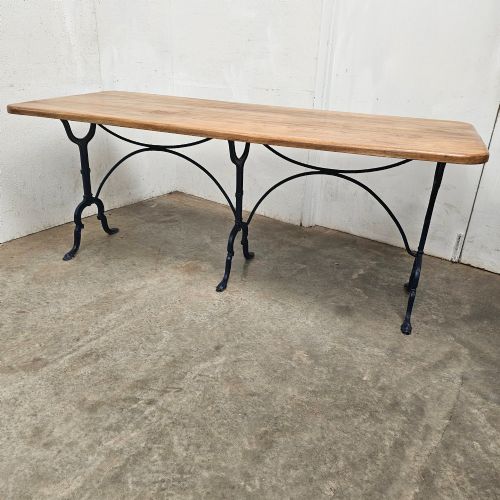
The industrial garden table category centres on heavy metal bases paired with robust wooden or stone surfaces, designed to withstand daily use. Buyers exploring this selection encounter pieces originating from the nineteenth century through to the early twentieth century.
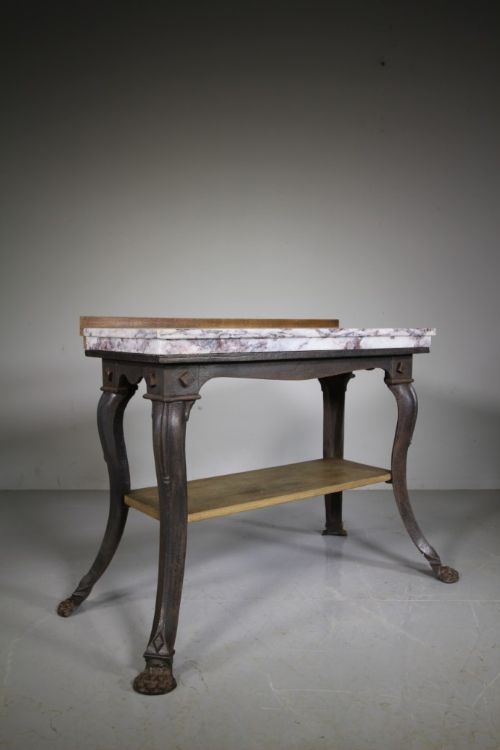
Forms vary considerably across the inventory, ranging from compact bistro tables and folding metalwork designs to long pub tables and console surfaces. Many examples display distinct French or English origins, often incorporating vintage mechanisms or salvaged bases.
Constructed primarily for utilitarian purposes, these tables bridge the gap between heavy workshop furniture and domestic garden use. Their enduring appeal lies in the straightforward combination of cast iron, wrought iron, or steel with timber tops.
Materials and Construction
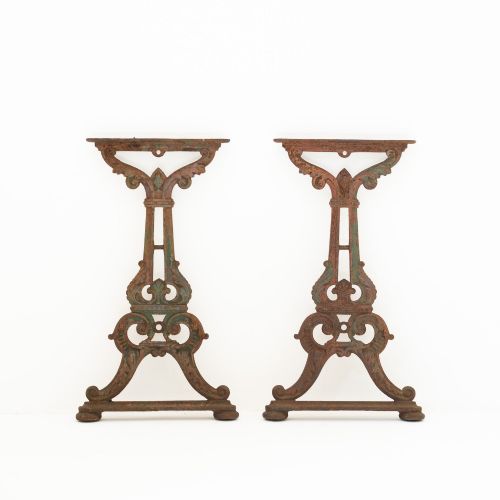
Foundational frames rely heavily on cast iron, wrought iron, and steel, often shaped through traditional foundry and metalworking techniques. These robust metal structures provide the substantial weight and stability characteristic of the genre.
Tops are fashioned from durable materials including pine, oak, elm, and marble, attached securely to the metal bases. The integration of brass and copper accents appears in select early twentieth-century examples, adding subtle textural variation.
Industrial Garden Table Retail Price Guide 2026
Typical asking prices for industrial garden table among the pieces listed under this phrase on Sellingantiques today, from the lower quarter to the upper quarter. They describe what is for sale here now, not the wider market.
Several tables repurpose nineteenth-century mangle frames, proving that household laundry equipment makes surprisingly charming garden furniture.
Evaluating Quality
Quality in these pieces rests upon the integrity of the original construction and the harmony between top and base. Superior examples exhibit well-cast iron components with crisp detailing and stable, seasoned timber or stone tops.
The proportion and balance of the frame dictate the overall utility and visual presence of the table. Pieces that retain their original working mechanisms, such as folding joints or adjustable supports, demonstrate higher craftsmanship.
The Industrial Garden Table Glossary
- Cast iron
- A strong, hard alloy of iron and carbon poured into moulds to create intricate bases and legs. This material provides the substantial weight necessary for outdoor stability.
- Bistro table
- A small café or garden table, typically featuring a central iron pedestal or four slender legs. These portable tables suit compact outdoor spaces and informal dining.
- Console table
- A table designed to stand against a wall, frequently featuring a marble or timber top supported by an ornate iron base. They offer narrow surface areas suited for hallways or sheltered terraces.
- Trestle table
- A long surface supported by two or more trestle frames rather than individual legs. This traditional form allows for unobstructed seating along the length of the table.
Industrial Garden Table: Frequently Asked Questions
Can I leave these tables outside all year?
Most pieces incorporate iron and treated timber that handle outdoor conditions well, though severe winter weather can affect wooden surfaces.
Protecting marble tops and storing folding metal tables during harsh months helps preserve their original finish and structural integrity.
How do I clean a marble top table?
Marble surfaces require gentle cleaning with warm water and a mild, non-abrasive soap to avoid etching the stone. Harsh chemicals strip the natural finish and damage the polished texture over time.
Prompt wiping of spills prevents staining, particularly when the table is used for outdoor dining or gardening activities.
Are folding tables stable enough for dining?
Vintage folding metalwork tables are engineered with robust locking braces and heavy iron frames designed for commercial or domestic use. Their sturdy construction ensures reliable support for everyday meals and gatherings.
Checking the hinge mechanisms periodically keeps the folding action smooth and the surface level.
How do I identify a nineteenth-century piece?
Nineteenth-century examples typically display heavy cast iron bases with foundry marks, hand-carved or naturally aged timber tops, and traditional joinery. The weight of the metal and the depth of the patina indicate genuine age.
Comparing the bolt types and casting quality helps distinguish period originals from later reproductions.