

Vintage Iron Cane Holder
A vintage iron cane holder brings solid weight and architectural form to a hallway, keeping wet sticks and brollies orderly.
Vintage Iron Cane Holder
A vintage iron cane holder serves as a functional hallway piece designed to store walking sticks, umbrellas and parasols. When searching for a vintage iron cane holder, buyers encounter heavy metal umbrella stands and stick stands originating from the nineteenth and early twentieth centuries.
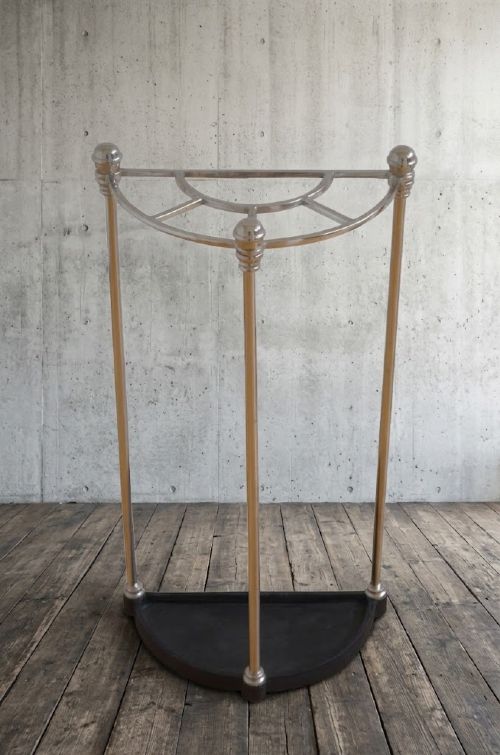
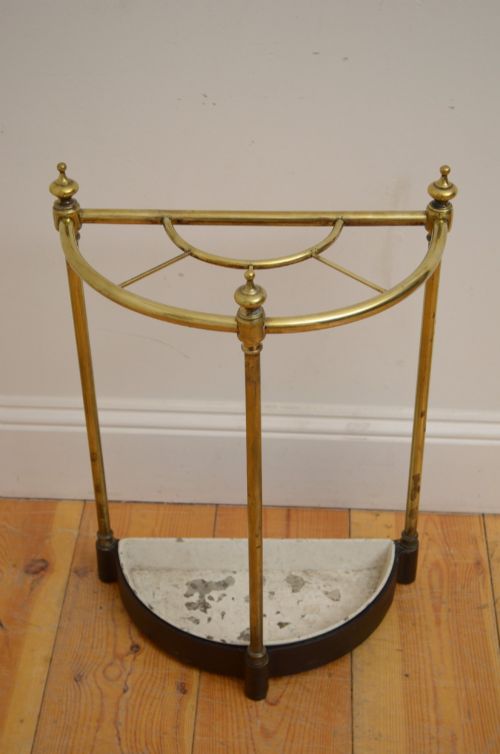
The pieces appearing on this page span the Victorian, Edwardian, Art Nouveau and Art Deco periods, encompassing designs from the 1880s through to the 1930s. Forms vary from sturdy black painted floor urns to demi-lune shapes designed to sit flat against a wall.
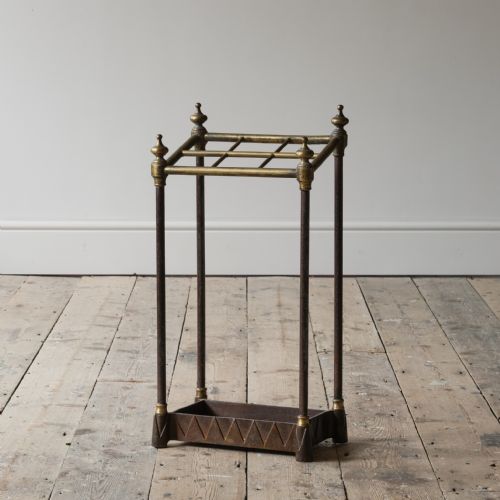
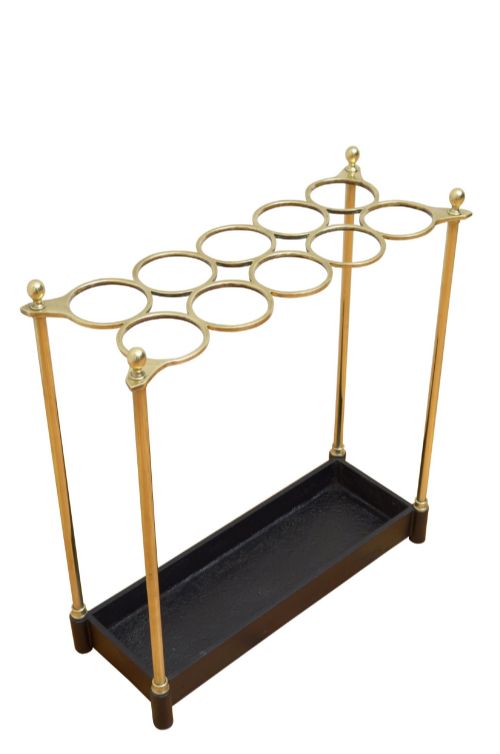
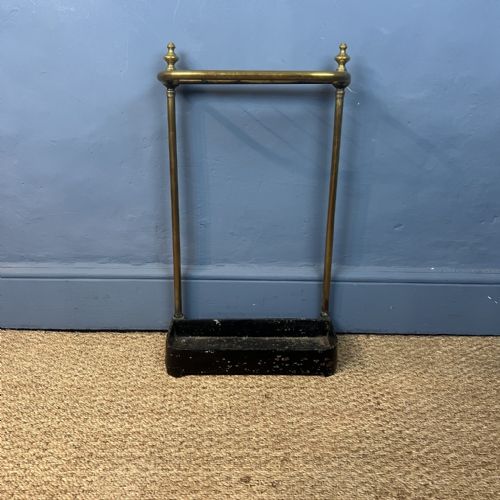
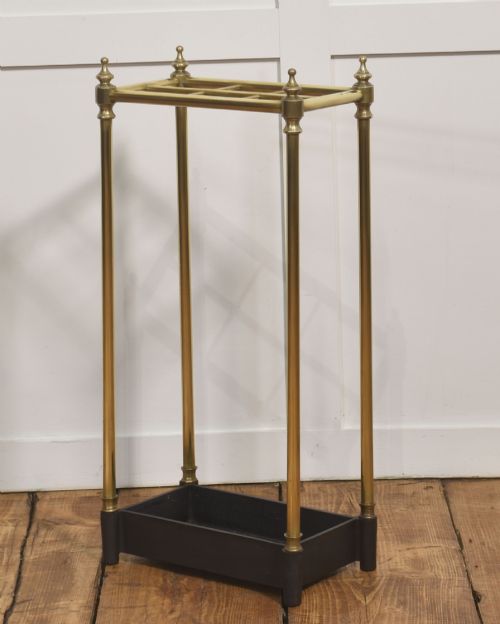
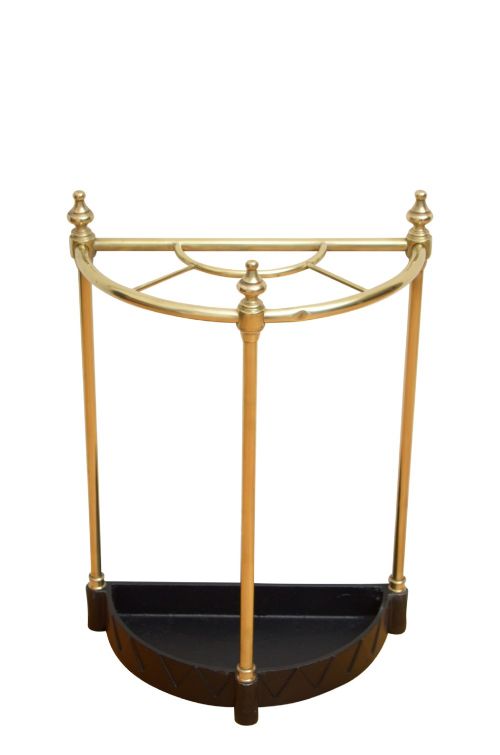
Makers utilised durable metals and combination materials, producing items that range from utilitarian hall furniture to decorative pieces with intricate casting. Many examples combine heavy cast iron bases with polished brass rails or decorative finials to manage dripping water and wet weather gear.
How they were made
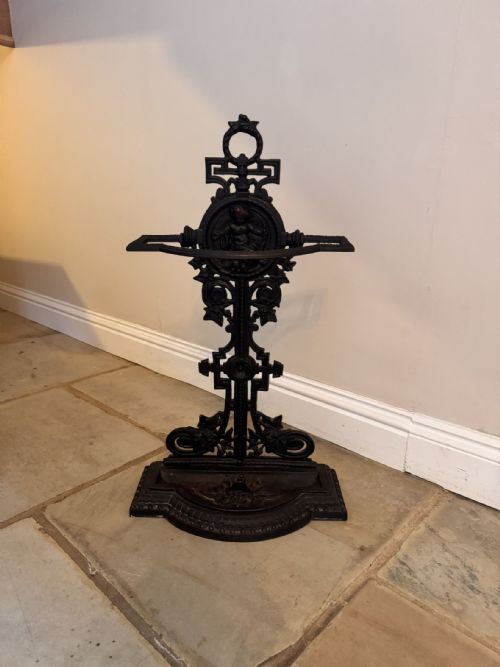
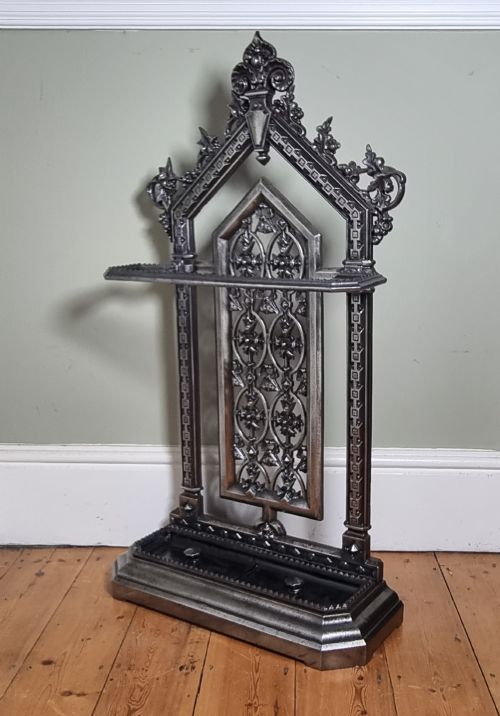
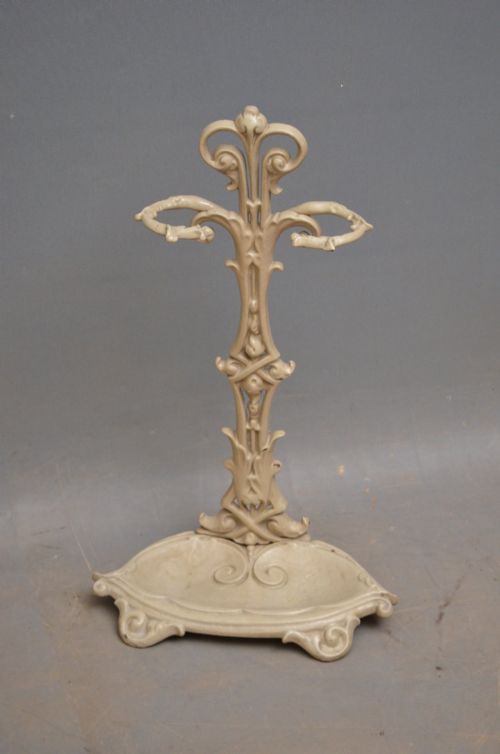
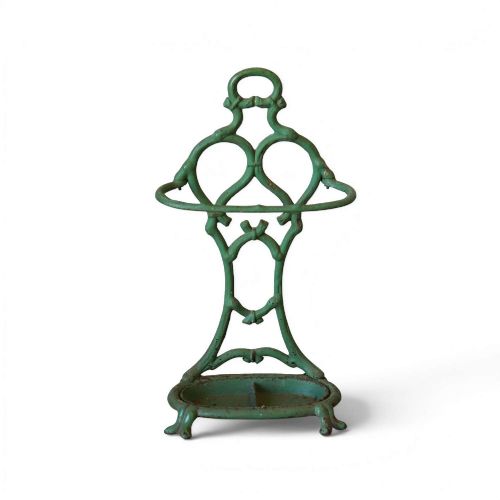
Foundries manufactured these hall stands primarily using cast iron and wrought iron, often combining them with brass components, steel rods or copper accents. Molten iron was poured into detailed moulds to create decorative pierced bodies, floral motifs and simulated bamboo or faux bois textures.
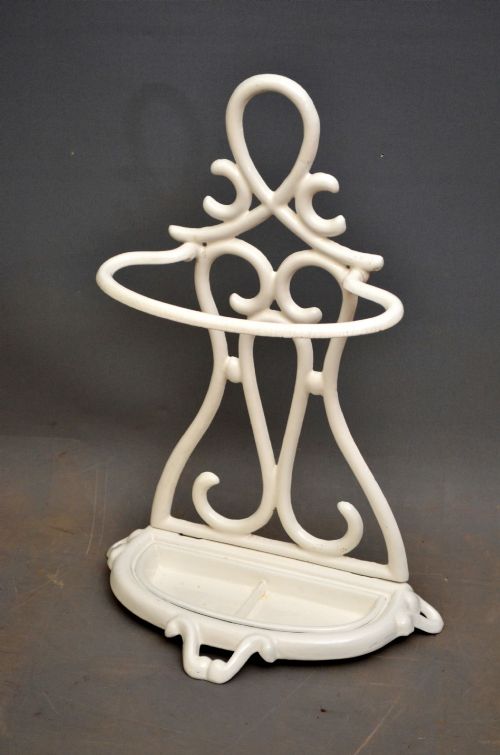
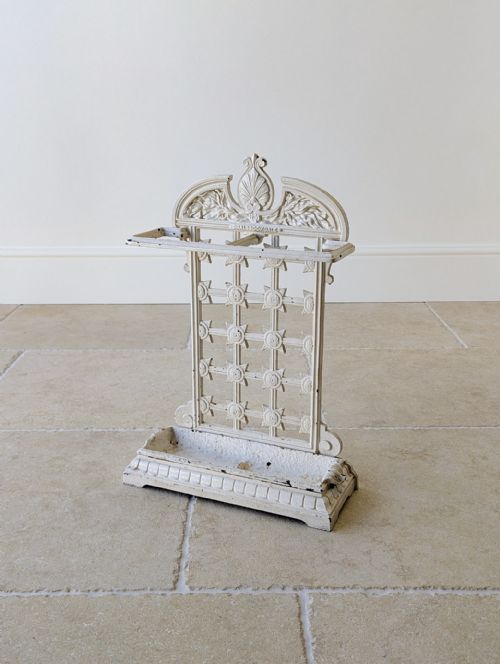
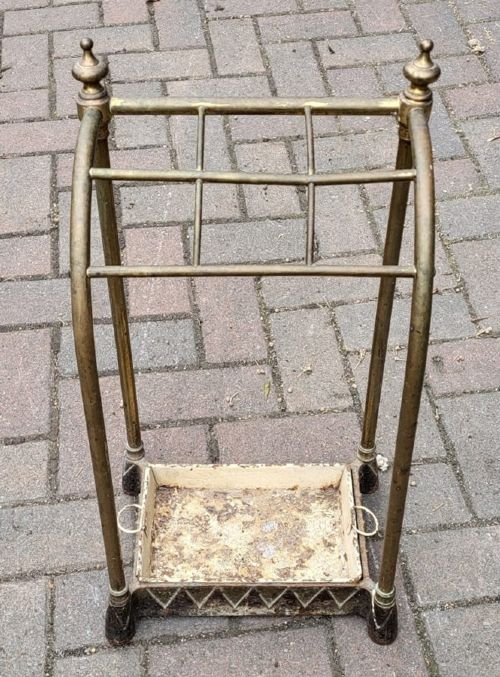
Many items incorporate a removable metal tray at the base to catch water from wet umbrellas, protecting wooden floors from moisture damage. Surface finishes applied to the iron include dark black paint, protective nickel plating and white enamel interiors.
Listings feature items spanning the Victorian, Edwardian, Art Nouveau and Art Deco eras, constructed from cast iron, brass, oak and nickel plating.
What varies in quality
The distinction between standard utility items and finer examples lies in the crispness of the iron casting and the complexity of the design. Foundries known for high artistic output produced cleaner, deeper relief work on patterns such as foliage, dogs or geometric divisions.
Quality also depends on the structural integrity of the combination materials, such as secure joints between brass rails and iron frames. Original components, including the presence of the matching drip tray at the bottom, elevate the integrity of the piece.
Coalbrookdale·Kenrick·Shoolbred
The Vintage Iron Cane Holder Glossary
- Demi-lune
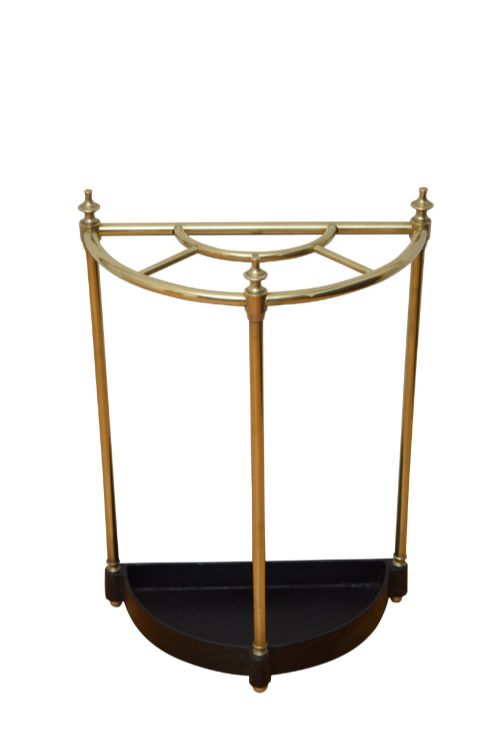
- A half-moon shape allowing the stand to sit flush against a hallway wall. This space-saving profile is common in nineteenth-century brass and iron designs.
- Faux bois
- A decorative technique mimicking natural wood grain or bamboo. Foundries cast iron to resemble tied bamboo stalks in the Art Nouveau manner.
- Drip tray
- A metal base insert designed to catch water from wet umbrellas. These removable trays protect the floor and prevent rust accumulation.
- Finial
- A decorative terminal ornament placed on top of posts or rails. Brass ball finials frequently top the corners of nineteenth-century stick stands.
Vintage Iron Cane Holder: Frequently Asked Questions
How do I clean a cast iron stand?
Dust the iron regularly with a dry cloth and avoid harsh chemical cleaners that strip the protective finish. Gentle waxing can help maintain dark painted surfaces.
Ensure any metal drip tray is emptied and dried after wet weather to prevent rust formation inside the base.
Are these stands suitable for walking canes?
These holders were originally built to accommodate both walking sticks and wet umbrellas for visitors arriving at a home. The interior divisions keep slim cane shafts upright and accessible.
Heavier cast iron frames provide enough stability to support dense wood or metal walking canes without tipping.
How do I spot an Art Nouveau design?
Art Nouveau examples display flowing organic lines, asymmetrical plant motifs and stylized natural forms. Ironwork from this movement often imitates twisted bamboo or climbing foliage.
These pieces frequently date around the nineteen hundreds and may incorporate white enamel finishes or copper highlights.