



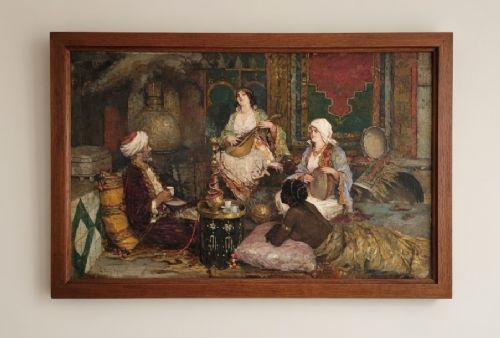
Vintage Interior Canvas
A vintage interior canvas brings domestic scenes, quiet studios, and tavern rooms onto painted fabric from the nineteenth and twentieth centuries.
Vintage Interior Canvas
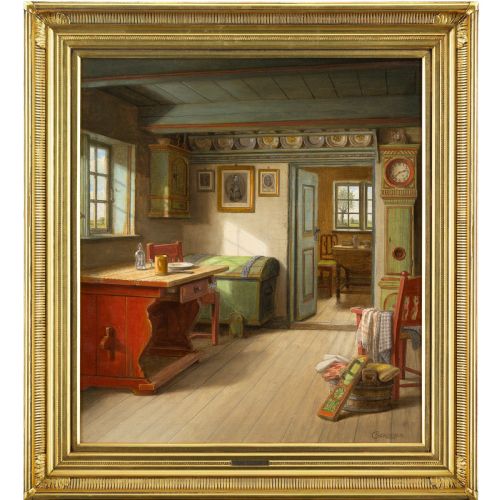
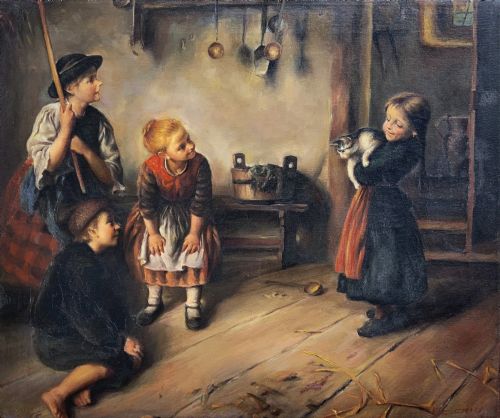
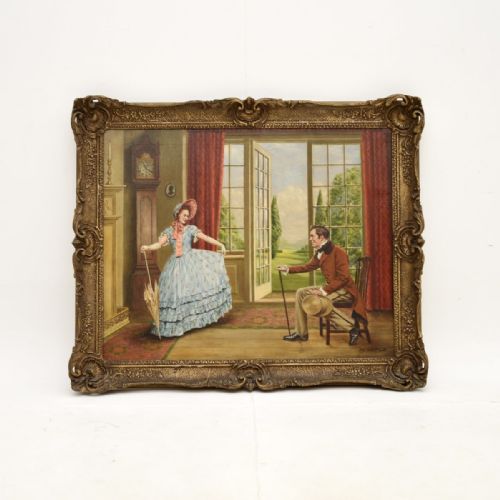
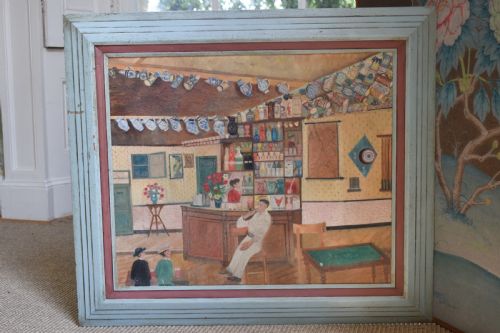
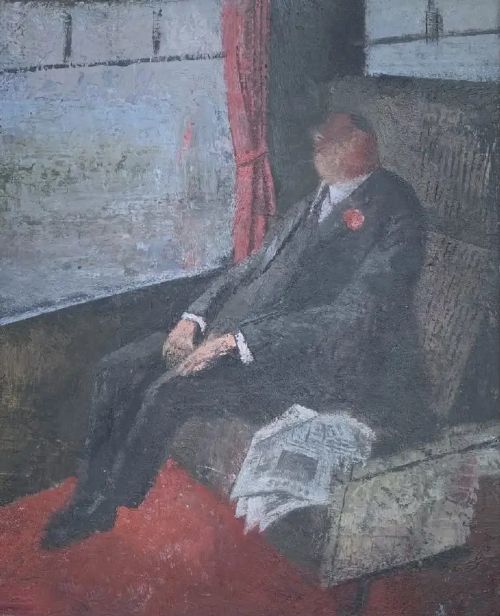
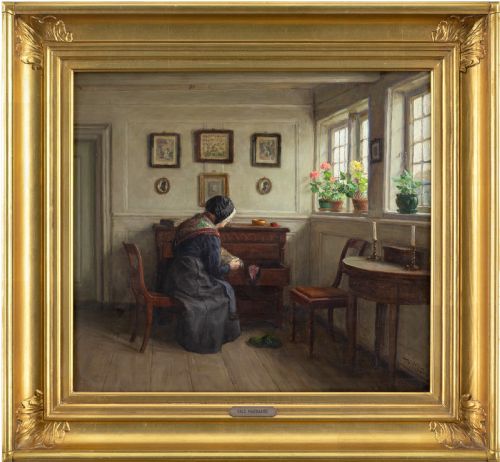
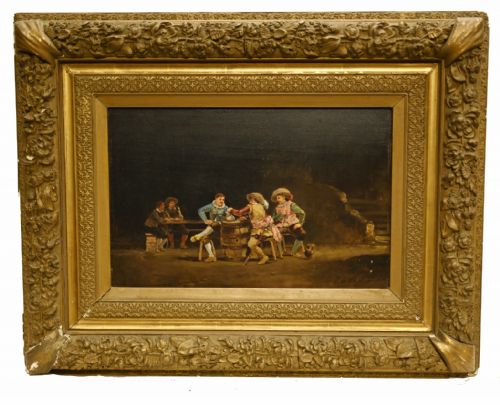
A vintage interior canvas encompasses original oil paintings on woven fabric depicting domestic rooms, tavern scenes, and artist studios. These works capture domestic rituals, social gatherings, and quiet domestic corners through the brush of regional and Royal Academy artists.
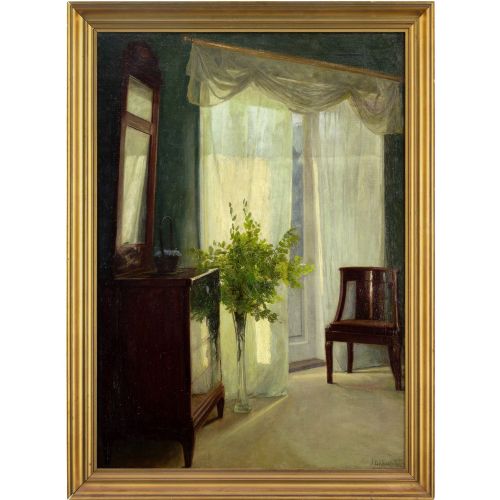
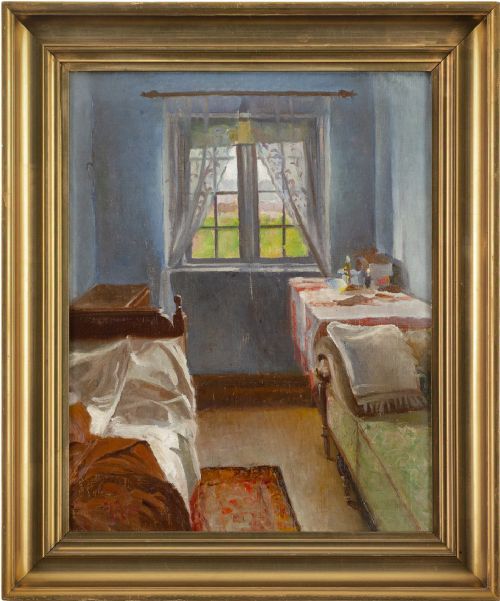
The selections available lean heavily toward nineteenth-century realism and mid-century modern interpretations. Buyers encounter depictions ranging from quiet morning bedrooms and sunlit garden doors to bustling tavern interiors and artist studios.
The formats vary from intimate panel paintings to large canvases framed in giltwood. Each piece preserves a specific slice of domestic life recorded by painters working across Britain, France, Scandinavia, and South Africa.
How they were made
The fundamental support for these works is woven canvas stretched over wooden frames, occasionally supplemented by oil on board. Artists applied oil paint using varied techniques, from pointillist touches and luminous brushwork to dark chiaroscuro shadows.
Finished surfaces were frequently housed within traditional giltwood frames that enhanced the depth of the painted interior. The interplay of oil pigment on canvas allowed creators to manipulate light, as seen in scenes rendered with sunlight through garden doors or studio windows.
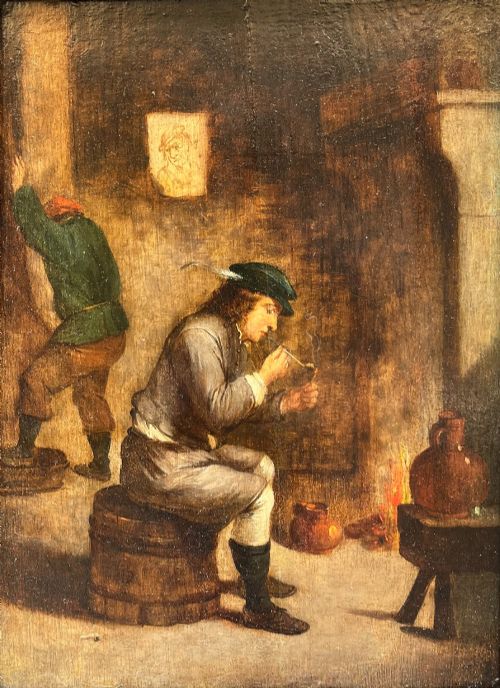
A domestic interior canvas lets you invite seventeenth-century smokers, napping spaniels, and interrupted shavers permanently into your modern sitting room.
What varies in quality
Quality in a vintage interior canvas rests upon the artist's ability to handle light and spatial depth within a confined room. Works by Royal Academy exhibitors or listed masters demonstrate superior command over anatomical proportion, architectural perspective, and atmospheric mood.
The handling of the paint medium itself dictates the upper tiers of the range, where confident brushwork brings textiles, wood grain, and human expressions into sharp relief. Lower tiers might show stiffer compositions and less nuanced colour integration across the canvas surface.
Alfred Lyndon Grace·John Lübschitz·David Teniers·Harry Kluge·Valdemar Magaard·Albert Clark·John Watkins Chapman·Gabriel Puig Roda·James Kyd·George Smith·Benjamin Cam Norton·Thomas Couture·Roland Batchelor·Charles Bilger Spalding·Ludolf de Jongh·Rolinda Sharples·Gustav Goemans·Joaquín Luque y Roselló·Ruth Prowse·Maud Frances Eyston Sumner·Charles Cameron Baillie·Herbert Butler·John Percy Cooke·Samuel John Carter
The Vintage Interior Canvas Glossary
- Canvas
- A heavy woven fabric used as a surface for oil painting. It is typically stretched tightly over a wooden frame before application of the ground layer.
- Chiaroscuro
- An artistic technique using strong contrasts between light and dark to give a three-dimensional volume to figures and interior spaces.
- Genre Painting
- The pictorial representation of scenes from everyday life, such as domestic interiors, tavern gatherings, and family moments.
- Giltwood
- Wood carved and coated with gold leaf or a gold-coloured metallic finish, commonly used for traditional picture frames.
- Luminism
- An American and European painting style emphasising effects of light in landscape and interior compositions, often softening hard edges.
Vintage Interior Canvas: Frequently Asked Questions
How do I hang a large oil painting?
Ensure the wall fixings are secured directly into studs or masonry to support the weight of the wooden stretcher and giltwood frame. Hang the centre of the canvas at standard eye level to anchor the composition within the room.
Keep the painting away from direct heat sources and strong sunlight to protect the oil pigments and canvas ground from drying out over time.
What periods do these interior canvases cover?
The listings span from the seventeenth century through the Victorian era and into the mid-twentieth century. Nineteenth-century realism sits alongside post-war and art deco interpretations.
Each period brings distinct stylistic choices, shifting from traditional genre scenes toward modernist and luminist approaches to indoor light.
Are these paintings original works?
The listings feature original hand-painted oil works rather than modern prints or reproductions. Artists applied pigment directly to canvas or board, often signing the work or leaving identifying labels on the reverse.
Historical attribution is supported by signatures, exhibition records, and framing styles characteristic of their respective periods.