

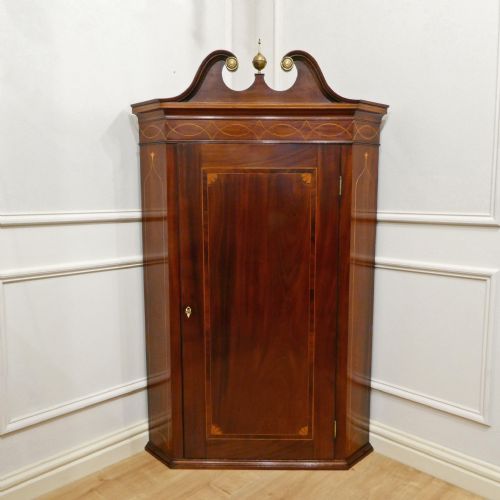


Vintage Inlaid Corner Stands
These vintage inlaid corner stands turn awkward angles into useful display space using polished timber and delicate stringing.
Vintage Inlaid Corner Stands
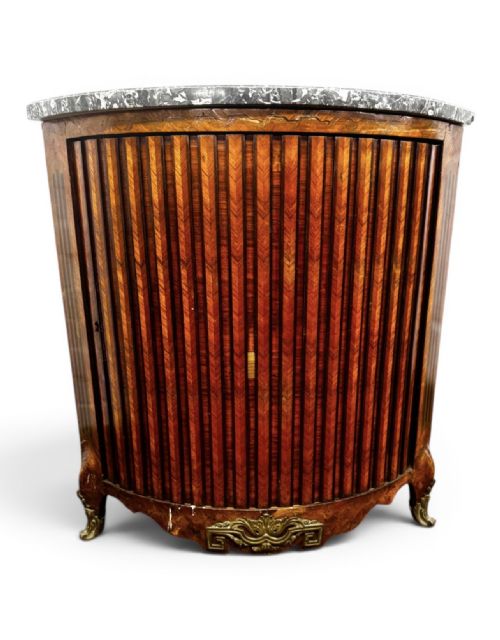
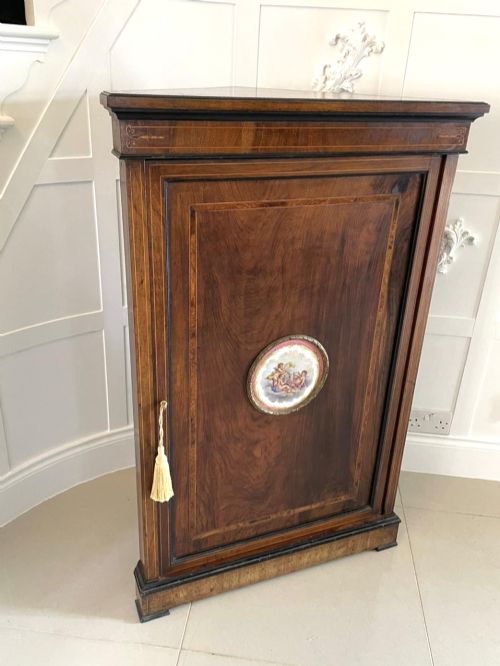
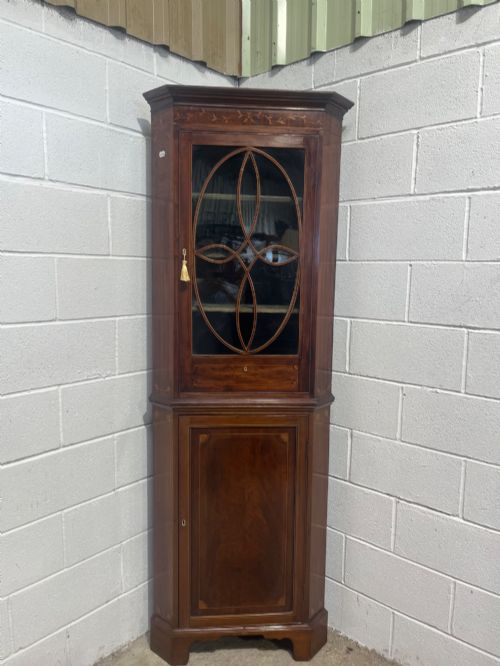
Vintage inlaid corner stands occupy the junction of two walls, making use of floor space that standard rectangular furniture leaves empty. The pieces gathered under this search phrase encompass corner cabinets, cupboards, whatnots, and display shelves.
Edwardian interpretations and pieces dating around nineteen hundred dominate the selection, often taking the form of tall standing cupboards with glazed doors or open tier shelving. These designs owe much to the earlier Sheraton Revival, repeating the proportion and detail of the eighteenth century.
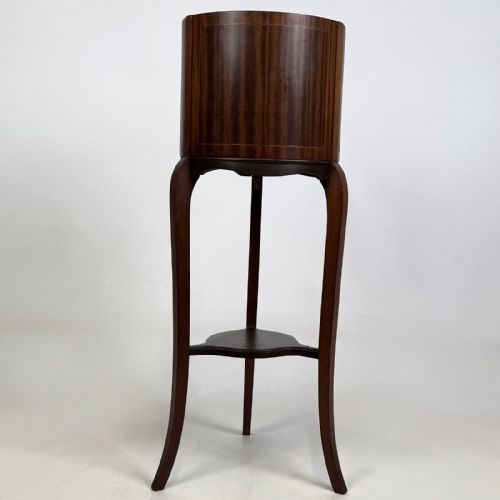
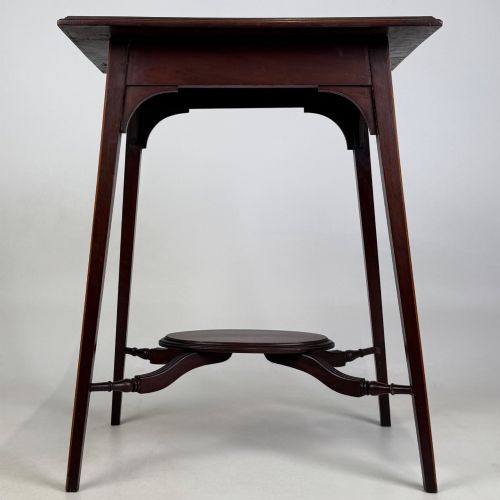
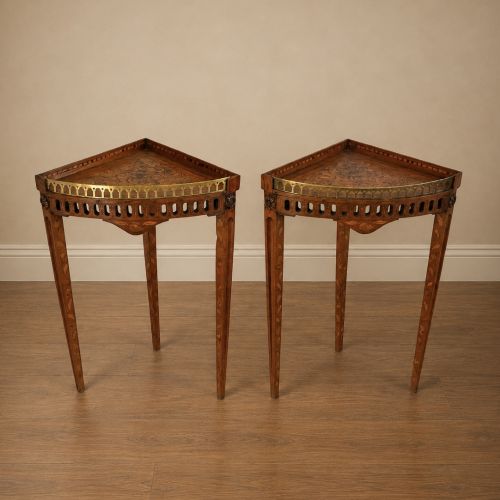
Makers built these items primarily for domestic display and storage, incorporating glass panels to showcase porcelain or books. Alongside upright cupboards, the inventory includes occasional tables and low floor-standing stands designed to fit snugly into a room boundary.
How they were made
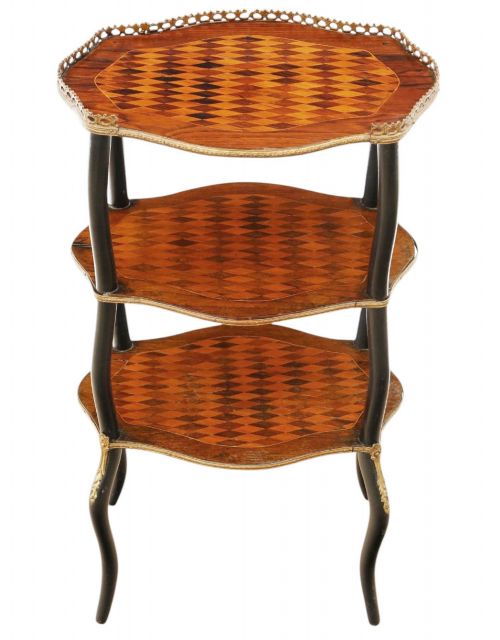
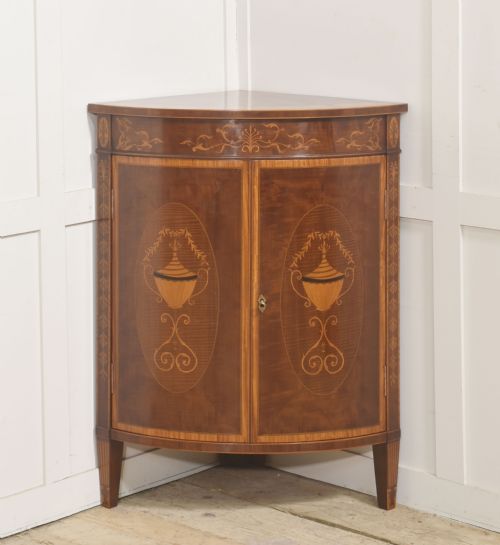
Carpenters relied heavily on mahogany and walnut as the primary structural timbers, frequently applying veneers over secondary woods. Satinwood and fruitwood provided contrasting tones for delicate marquetry and parquetry patterns.
Inlay work took the form of fine lines, floral motifs, and geometric patterns set flush into the primary surface. Brass galleries and hardware often completed the construction, adding metal highlights to the timber edges.
Vintage Inlaid Corner Stands Retail Price Guide 2026
Typical asking prices for vintage inlaid corner stands among the pieces listed under this phrase on Sellingantiques today, from the lower quarter to the upper quarter. They describe what is for sale here now, not the wider market.
Mahogany appears as the dominant structural timber across the selection, accompanied by walnut, oak, rosewood, and occasional hardwood.
What varies in quality
The precision of the timber matching and the intricacy of the marquetry distinguish finer examples from plain utilitarian versions. Superior items display crisp mitres, tight joints, and well-figured grain across every visible surface.
Heavier standing pieces often show greater architectural ambition, such as serpentine fronts, multiple glazed tiers, or ebonised accents. Simpler constructs rely solely on basic corner positioning without the refined details of specialised cabinet makers.
Edwards And Roberts
The Vintage Inlaid Corner Stands Glossary
- Marquetry
- The art of forming decorative patterns by fitting together small pieces of veneer. This technique creates pictorial designs or geometric motifs on cabinet doors and table tops.
- Whatnot
- A piece of furniture consisting of a set of open shelves for displaying small objects. These tiered stands often fit into room corners to maximise vertical space.
- Sheraton Revival
- A late nineteenth and early twentieth century style inspired by the neoclassical furniture designs of Thomas Sheraton. Pieces in this manner feature light mahogany construction and delicate satinwood inlay.
- Parquetry
- A geometric mosaic of wood pieces used for decorative floors and furniture surfaces. It produces repeating patterns of squares, triangles, or diamonds.
- Etagere
- A piece of furniture with a number of open shelves for displaying ornaments. They appeared frequently in Edwardian drawing rooms.
Vintage Inlaid Corner Stands: Frequently Asked Questions
How do I place a corner cabinet?
Position the piece firmly into a ninety-degree room junction where it can anchor the surrounding walls without obstructing foot traffic. Taller standing versions work well in dining rooms or drawing rooms where vertical display space is needed.
Ensure the adjacent walls allow the doors to swing open fully without hitting skirting boards or picture frames. Smaller tier stands suit narrower hallways or unused landing angles.
What is a serpentine front?
A serpentine front describes a cabinet door or drawer configuration shaped with a convex centre flanked by concave curves. This subtle wave adds movement and depth to the timber facade.
Cabinet makers used this technique on higher quality standing cupboards to break up the flat planes of corner furniture.
Are Edwardian stands well made?
Edwardian furniture from around nineteen hundred often displays high standards of cabinet work, utilising traditional joinery alongside revival designs. Workshops reproduced eighteenth-century proportions with reliable structural stability.
Mahogany and walnut constructions from this era benefit from mature timber selection and careful veneer application.
How do I clean inlaid mahogany?
Dust the surfaces regularly with a soft, dry cloth to prevent grit from settling into the grain or the delicate veneer joints. Avoid using modern silicone sprays or heavy liquid polishes that can cloud the aged finish.
Apply a traditional beeswax sparingly to nourish the timber and maintain a soft, natural lustre across the inlay work.