



Inlaid Wooden Corner Tables
These inlaid wooden corner tables turn neglected angles of a room into useful focal points through careful cabinet work and contrasting stringing.
Inlaid Wooden Corner Tables
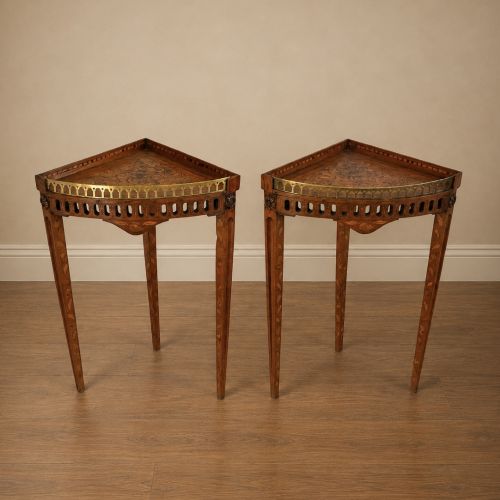
Inlaid wooden corner tables bring together functional surface area and decorative marquetry designed specifically to fit into the ninety-degree junction of two walls. When searching for inlaid wooden corner tables, you encounter forms that serve as lamp tables, washstands, and small side pieces originating across the Georgian, Victorian, and Edwardian eras. The selection ranges from eighteenth-century pairs fitted with brass galleries to late nineteenth-century occasional tables displaying distinct regional styles.
Makers utilised various native and exotic timbers to construct these triangular and multi-sided surfaces, often accentuating the grain with lighter stringing. The inventory demonstrates how cabinetmakers adapted the corner footprint to domestic needs, producing everything from standing cupboards to drop-leaf surfaces. These domestic items demonstrate how period craftsmen maximised small spaces through intelligent geometric design.
How they were made
Workshops built these tables using solid foundations of mahogany, rosewood, and walnut, frequently applying contrasting veneers of boxwood and satinwood to form geometric borders and floral motifs. Artisans cut thin sections of timber and embedded them directly into the primary surface, securing the contrasting elements with animal glue before smoothing the top. Brass galleries, hinges, and drop handles added functional hardware that complemented the intricate woodwork.
Makers employed specialised joining techniques to ensure the angular frames remained stable over centuries of use, particularly in items designed to hold heavy lamps or washbasins. The surface decoration relied on precision hand-sawing, where dark woods like ebonised timber received bright bone or boxwood insets to create sharp visual contrast. Each piece reflects the specific joinery standards of its period, from Georgian cabinet construction to Edwardian veneering methods.
Inlaid Wooden Corner Tables Retail Price Guide 2026
Typical asking prices for inlaid wooden corner tables among the pieces listed under this phrase on Sellingantiques today, from the lower quarter to the upper quarter. They describe what is for sale here now, not the wider market.
Several tables feature hidden drop leaves that transform a flat corner into a sudden workspace for a hurried nineteenth-century letter writer.
What varies in quality
Quality rests upon the precision of the marquetry and the tightness of the timber joints where the triangular surfaces meet the supporting rails. Finer examples display crisp, unbroken inlay work without gaps between the contrasting woods, whereas lesser pieces show shrinkage or crude repairs around the borders. The choice of primary timber also dictates value, with dense mahogany and figured rosewood standing apart from simpler secondary woods.
The integrity of the original hardware, such as brass galleries and drop-leaf hinges, significantly influences the overall standard of a piece. Master craftsmen ensured that the internal corner blocks and leg joints remained robust, whereas ordinary production items relied on simpler, less durable fastenings. Evaluating a piece involves looking at how cleanly the stringing follows the contours of the corner top.
Liberty and Co
The Inlaid Wooden Corner Tables Glossary
- Marquetry
- Decorative patterns formed by fitting together thin slices of wood, shell, or ivory onto a structural surface. This technique allows artisans to create complex pictorial or geometric designs across tabletops.
- Stringing
- Thin strips of contrasting wood inlaid into channels cut into the primary timber. It creates a fine border that outlines the shape of the furniture.
- Drop leaf
- A hinged flap on a table that folds down when not in use to save space. This mechanism appears frequently on occasional tables designed for compact rooms.
- Gallery
- A raised decorative rail or pierced metal border fitted around the edge of a tabletop. It prevents objects from sliding off the surface.
- Ebonised wood
- Timber treated with a dark stain or finish to imitate expensive ebony. This process was common in nineteenth-century workshops to provide high-contrast backgrounds for lighter inlay.
Inlaid Wooden Corner Tables: Frequently Asked Questions
Where do I put a corner table?
These tables fit naturally into empty ninety-degree room angles where standard rectangular furniture wastes floor space. They serve well in hallways, living rooms, and bedrooms to hold small lamps or decorative objects.
Because of their specific geometric shape, they anchor awkward corners and draw the eye upward using their inlaid top surfaces and polished timber legs.
How do I clean inlaid wood?
Dust the surface regularly with a soft, dry cloth to prevent dirt from settling into the fine channels of the boxwood or satinwood inlay. Avoid harsh chemical cleaners or excess moisture, which can loosen the glue holding the veneer in place.
Apply a microcrystalline wax periodically to nourish the timber and protect the historical finish without building up a heavy, cloudy residue.
Are these tables sturdy enough for daily use?
Period corner tables handle everyday items like lamps and books easily, provided the leg joints and internal corner brackets remain secure. Their triangular footprint inherently distributes weight toward the walls, giving them good stability.
Avoid overloading drop-leaf versions or placing them in areas where people might lean heavily against the projecting edges.
How do I date an inlaid table?
Examine the underlying construction timbers, secondary woods, and the style of the marquetry to determine the period of manufacture. Georgian pieces often display heavy mahogany frames, while Edwardian examples use lighter rosewood and delicate boxwood stringing.
Hardware such as brass galleries and hinge types also provide reliable clues to the decade the table left the workshop.