

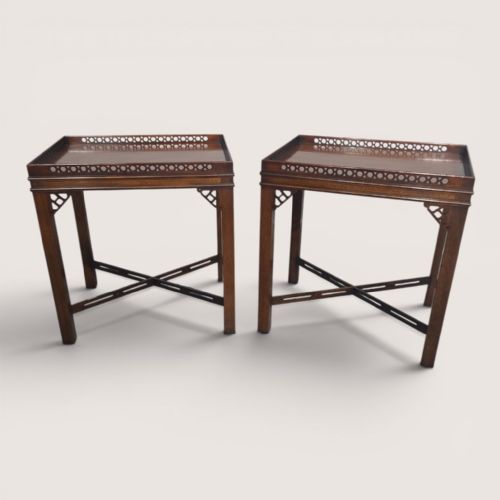
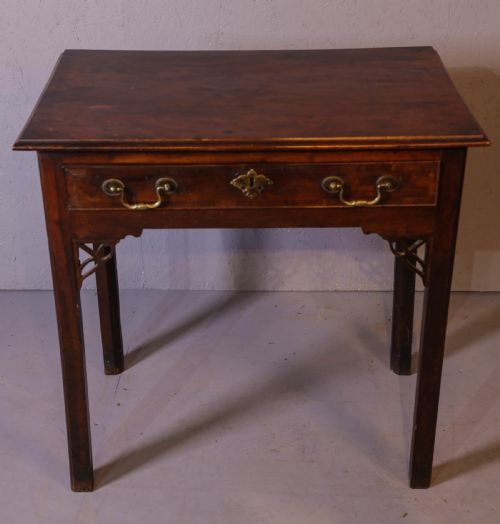


Georgian Style Corner Tables
Georgian style corner tables are compact architectural pieces that make use of neglected room angles while providing functional surface space.
Georgian Style Corner Tables
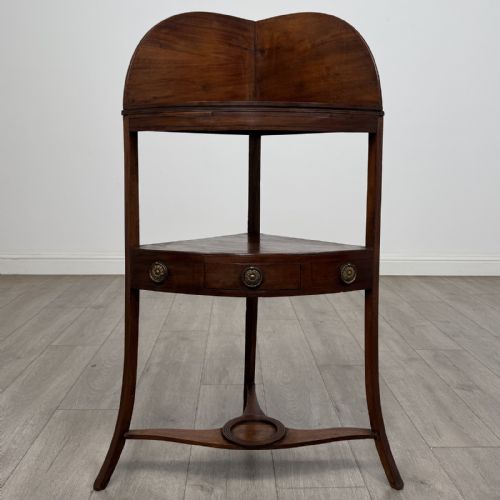
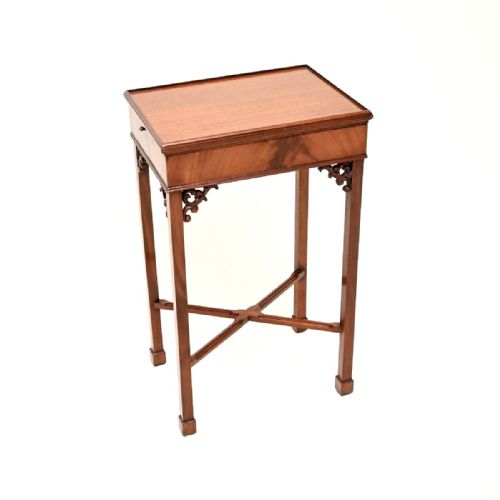
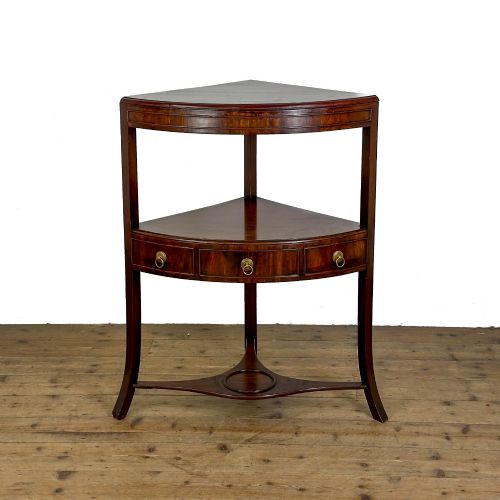
When you search for georgian style corner tables, you encounter fitted triangular furnishings designed to stand flush against room junctions. The inventory on this page spans foundational 18th Century and George III eras alongside later Revival interpretations from 1910, 1920, and 1930.
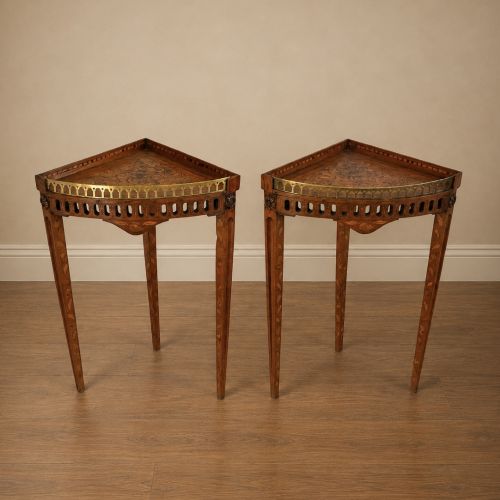
The objects take several forms beyond standard corner tables, including washstands, folding tables, and lamp tables. Materials range from solid mahogany and walnut to decorative satinwood, burr yew, and brass accents.
How they were made
Cabinetmakers utilised dense timbers such as mahogany and yew, often enhancing surfaces through marquetry inlay or the distinct grain patterns of burr yew. Carved woodwork defines George III examples.
Functional elements incorporated brass galleries and folding mechanisms, requiring precise joinery to ensure stability within tight angles.
Georgian Style Corner Tables Retail Price Guide 2026
Typical asking prices for georgian style corner tables among the pieces listed under this phrase on Sellingantiques today, from the lower quarter to the upper quarter. They describe what is for sale here now, not the wider market.
Some corner tables featured clever folding tops to hide secrets or save space before tea time.
What varies in quality
Distinctions in quality rest upon the selection of timber figures, such as burr yew or satinwood, and the crispness of carved details found on George III pieces. Marquetry inlay execution also separates standard production from finer work.
The integration of brass hardware and the cleverness of folding mechanisms demonstrate the maker's technical capability.
The Georgian Style Corner Tables Glossary
- George III
- The period spanning the reign of King George III, noted for refined mahogany furniture and neoclassical influences. It forms a central benchmark for these designs.
- Marquetry
- The art of applying decorative pieces of veneer to a structure to form intricate patterns. This technique frequently employs satinwood.
- Burr Yew
- A prized timber growth showing swirling grain patterns used on occasional tables. It provides distinct visual texture.
- Campaign
- Portable furniture designed for travel, typically fitted with brass hardware for durability. These items adapt well to compact spaces.
Georgian Style Corner Tables: Frequently Asked Questions
Where do corner tables fit best?
These tables fit directly into room angles to utilise dead space effectively. They provide useful surfaces without blocking pathways.
Their triangular footprint anchors awkward corners in both traditional and modern interiors.
How do I date a table?
Dating relies on timber selection, construction methods, and stylistic cues like neoclassical carving. Earlier pieces show 18th-century origins, while later items reflect 20th-century revival periods.
Examining secondary woods and hardware also helps establish age.
What is a washstand?
A washstand is a specialised functional table adapted for washing utensils in bedrooms. They share the same space-saving corner configuration.
Many retain original proportions suited for compact areas.
Are these tables sturdy?
Their three-legged or fitted triangular construction provides inherent stability against walls. Solid mahogany and yew frames offer robust support.
Properly fitted joints ensure durability during daily use.