


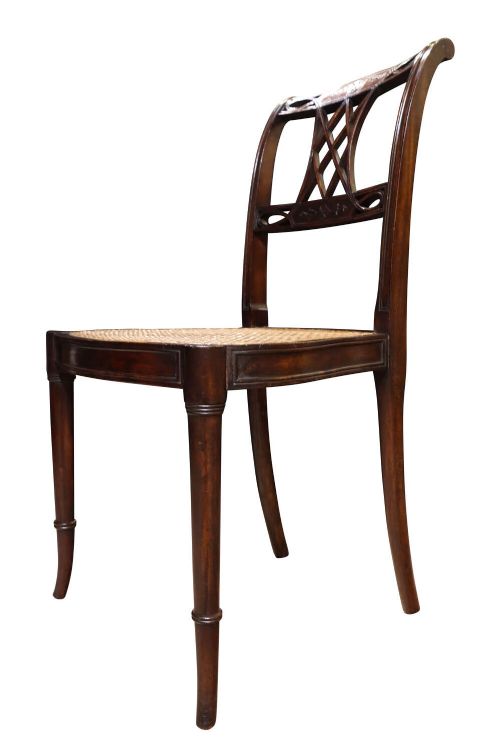
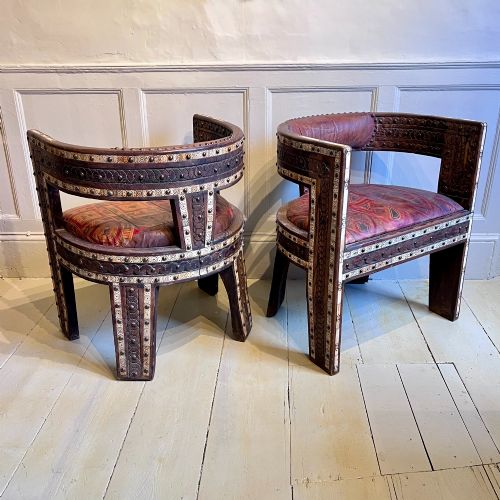
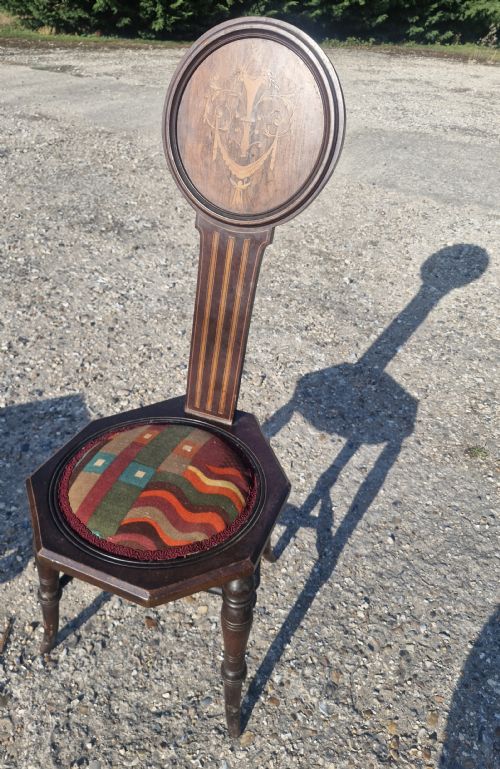
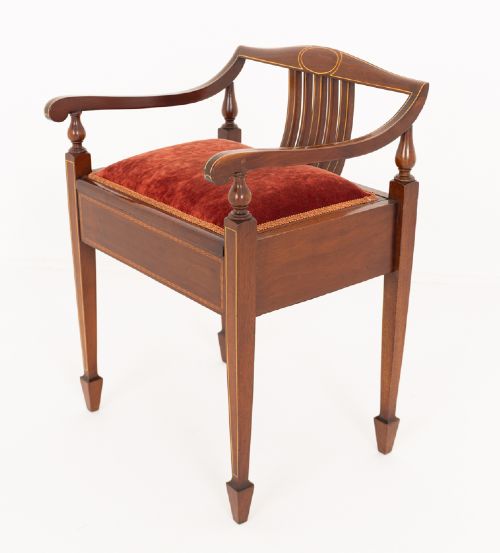
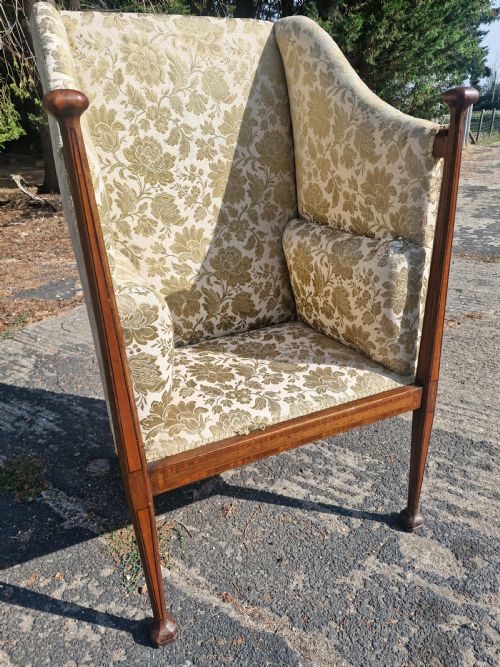
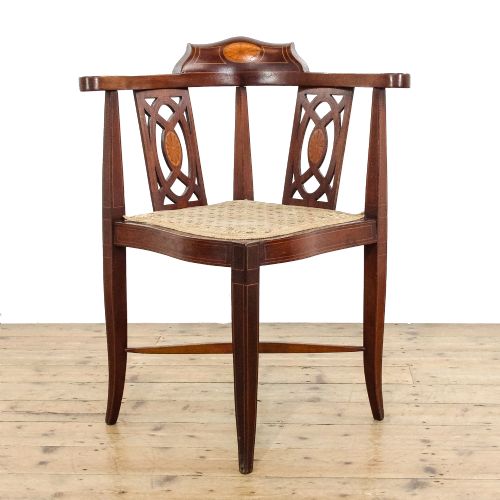
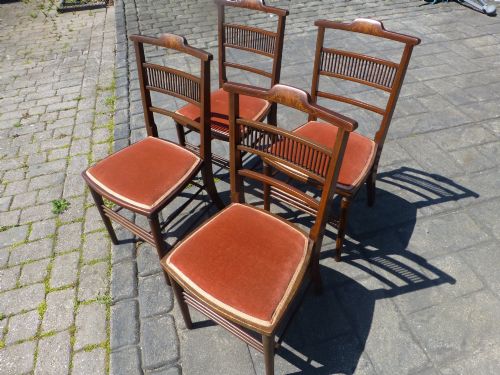
Vintage Inlaid Chairs
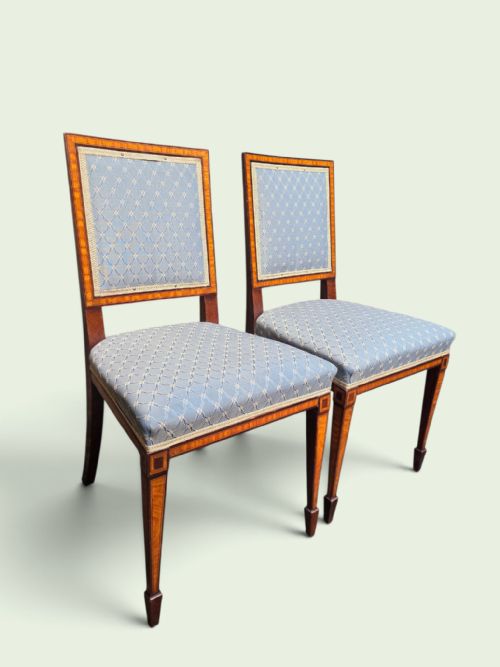
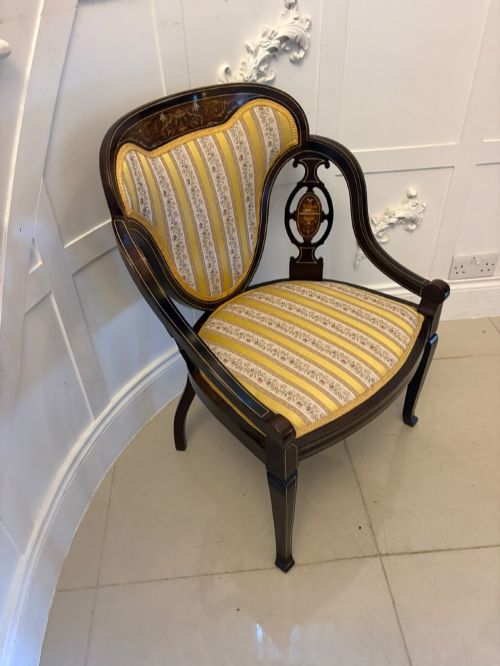
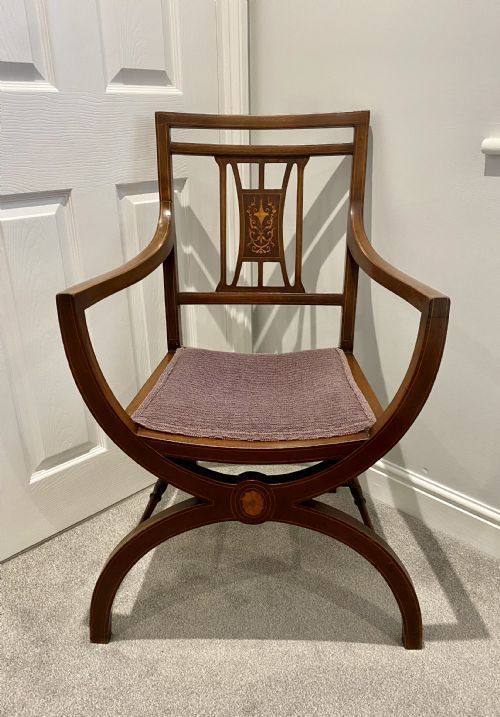
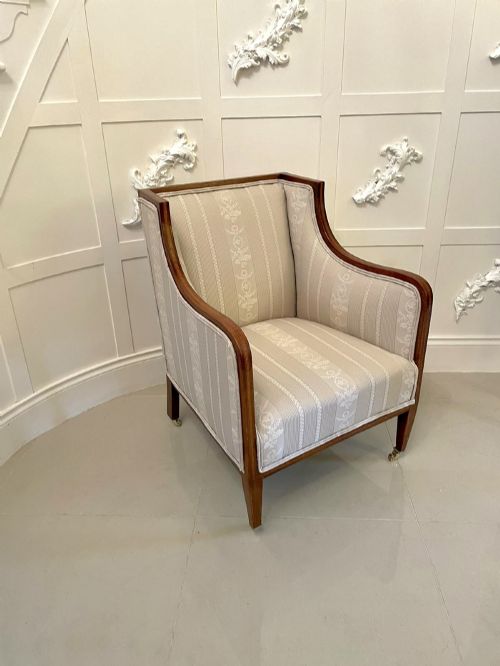
Vintage inlaid chairs bring distinct period craftsmanship into a room, offering both decorative wood details and practical seating.
Vintage Inlaid Chairs
Vintage inlaid chairs encompass a broad selection of seating, ranging from dining sets and side chairs to armchairs, library chairs, and occasional pieces. Buyers exploring vintage inlaid chairs frequently encounter Edwardian and Victorian examples alongside 19th-century designs.
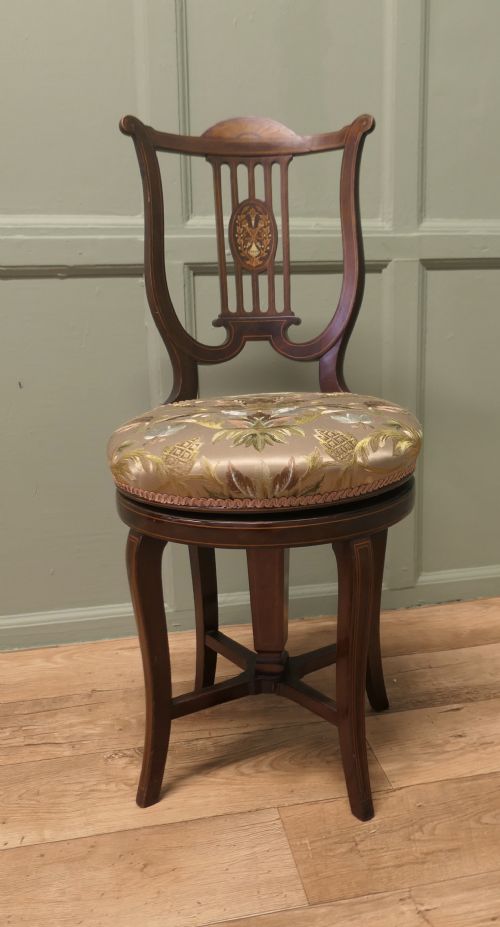
The assortment includes specialised forms like piano stools, music chairs, corner chairs, and nursing chairs. Mahogany and satinwood appear alongside rosewood, oak, beech, and walnut, frequently accented with contrasting wood inlay or brass detailing.
Styles span from Sheraton Revival and Regency to Art Nouveau, Art Deco, and Jacobean Revival. These pieces originate from various periods including the nineteenth century, nineteen-hundred, and nineteen-thirty.
Materials and Technique
Construction relies heavily on timbers such as mahogany, satinwood, rosewood, and oak, shaped into frames for dining, lounging, and occasional use. Wood inlay and string inlay introduce contrasting tones and geometric or floral motifs directly into the timber surfaces.
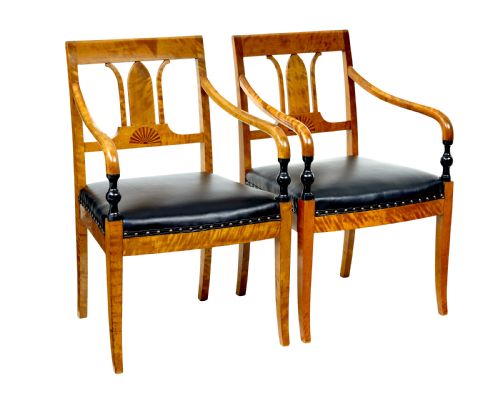
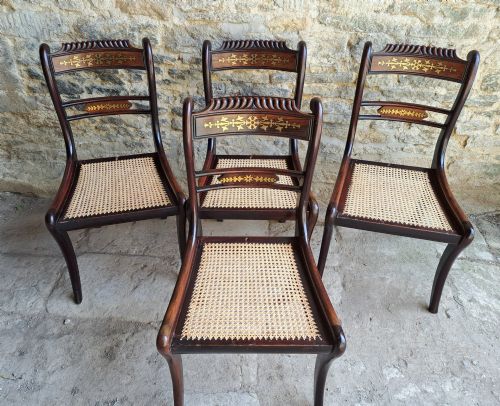
Brass inlay provides metallic contrast on Regency and nineteenth-century dining and elbow chairs. Upholstery, leather, cane, and fabric are integrated into seats and backrests across various armchairs, library chairs, and salon chairs.
Vintage Inlaid Chairs Retail Price Guide 2026
Typical asking prices for vintage inlaid chairs among the pieces listed under this phrase on Sellingantiques today, from the lower quarter to the upper quarter. They describe what is for sale here now, not the wider market.
Cellists and harpists can rest easy knowing dedicated music chairs with revolving seats exist to assist their performance.
Assessing Craftsmanship
Quality rests in the precision of the timber joinery and the execution of the inlay work, distinguishing refined cabinet-making from simpler production. The crispness of brass or wood inlay set flush into mahogany, satinwood, or rosewood indicates the level of skill involved.
The integrity of the structural frame, whether supporting a dining chair, library armchair, or piano stool, dictates the piece's durability. Original upholstery materials and preserved cane work further separate standard examples from superior survivals.
Cowtan And Sons
The Vintage Inlaid Chairs Glossary
- Inlay
- A technique where pieces of contrasting wood, brass, or other materials are inserted into recessed portions of a wooden base to form a decorative pattern. This method defines the surface decoration found across Edwardian and Victorian seating.
- Satinwood
- A durable, yellowish timber prized for its smooth grain and reflective surface, frequently used for stringing and decorative inlays on mahogany frames. It appears across nineteen-hundred and later twentieth-century pieces.
- String Inlay
- A narrow, linear strip of contrasting wood embedded into the surface of furniture to outline panels and borders. This delicate detail is common on Edwardian salon and dining chairs.
- Klismos
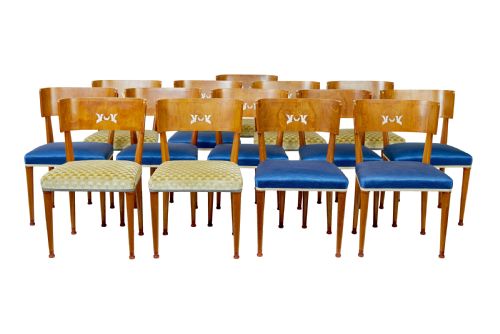
- An ancient Greek chair design revived during later periods, characterised by curved, sweeping legs and a concave backrest. Examples appear in Art Deco dining chair forms from nineteen-thirty.
- Sheraton Revival
- A late nineteenth and early twentieth-century design movement inspired by late eighteenth-century neoclassical furniture. Pieces in this style utilise mahogany, satinwood, and subtle inlay.
Vintage Inlaid Chairs: Frequently Asked Questions
What periods do these chairs come from?
The selection includes pieces spanning the nineteenth century, the Victorian era, the Edwardian period, and into the nineteen-twenties and nineteen-thirties. These dates reflect diverse manufacturing eras from Georgian times onward.
Styles shift across these decades, moving from Regency and Sheraton Revival through to Art Nouveau, Art Deco, and Jacobean Revival.
How were these chairs used originally?
Many served specific domestic functions, such as dining chairs gathered around a table, or library chairs designed for reading rooms. Other forms include piano stools, music chairs, nursing chairs, and occasional salon seating.
Specialised designs like revolving music chairs and corner armchairs catered to particular household activities in Victorian and Edwardian drawing rooms.
What woods are commonly found?
Mahogany forms the primary frame material for numerous dining and library chairs, often paired with satinwood or rosewood elements. Beech, oak, and walnut also appear across various regional and period pieces.
Inlay work frequently utilises contrasting timbers or brass to create decorative patterns against these darker primary woods.
How do I distinguish Edwardian from Victorian chairs?
Victorian pieces often display heavier proportions and deeper finishes, encompassing styles like Jacobean Revival and elaborate rosewood framing. Edwardian examples tend to feature lighter mahogany frames, delicate string inlay, and Sheraton Revival influences.
Construction details and prevailing decorative motifs help separate the nineteenth-century examples from those made around nineteen-hundred.