


Vintage Inlaid Accent Chair
A vintage inlaid accent chair brings precise cabinet work and rich timber into a room, offering both seating and decorative presence.
Vintage Inlaid Accent Chair
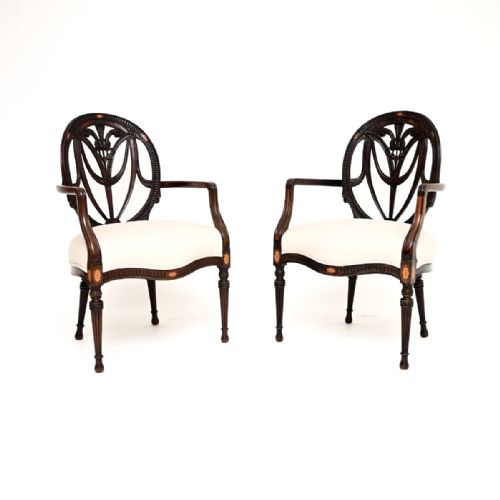
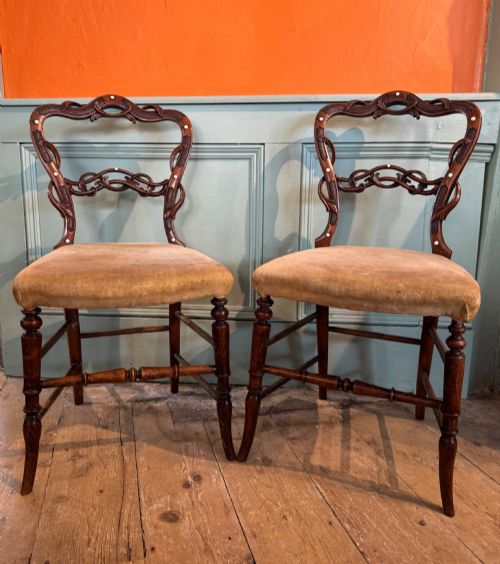
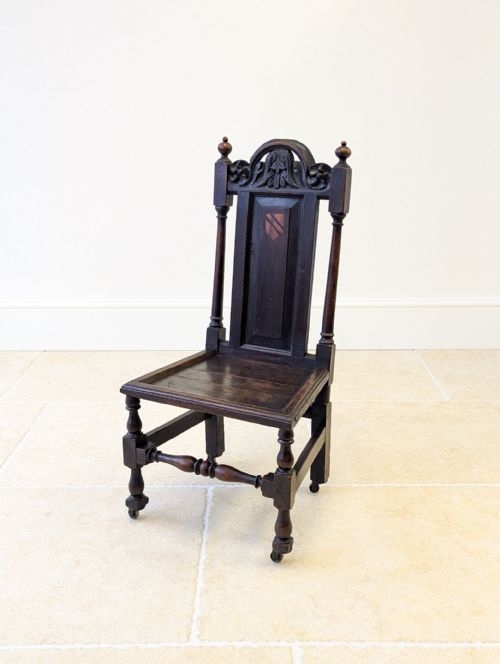
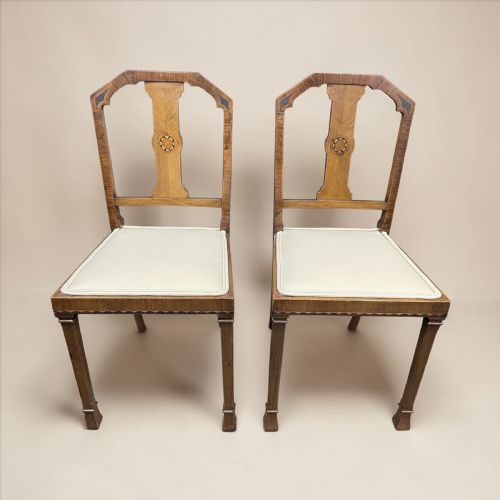
A vintage inlaid accent chair is a decorative seat designed to add character to a room rather than serve as primary seating. The examples found here span the Victorian, Edwardian, and Art Deco eras, capturing late nineteenth and early twentieth-century design.
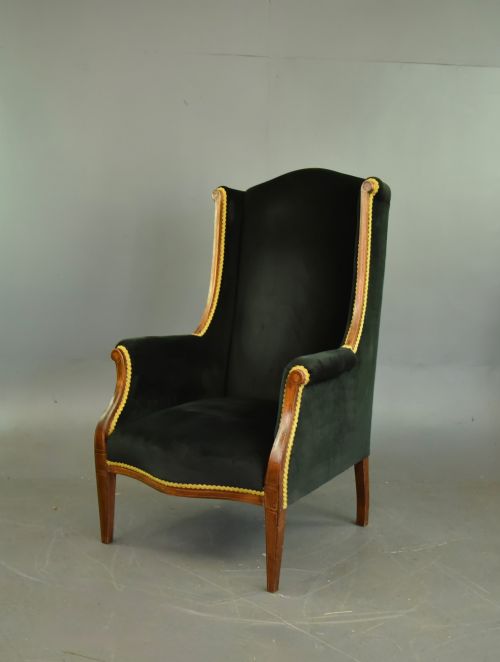
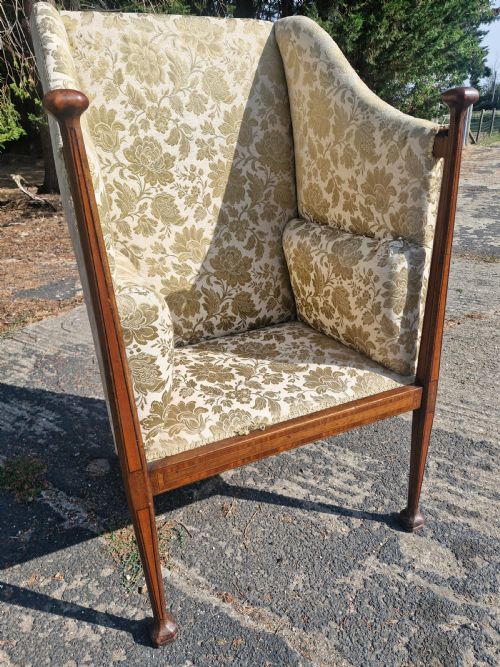
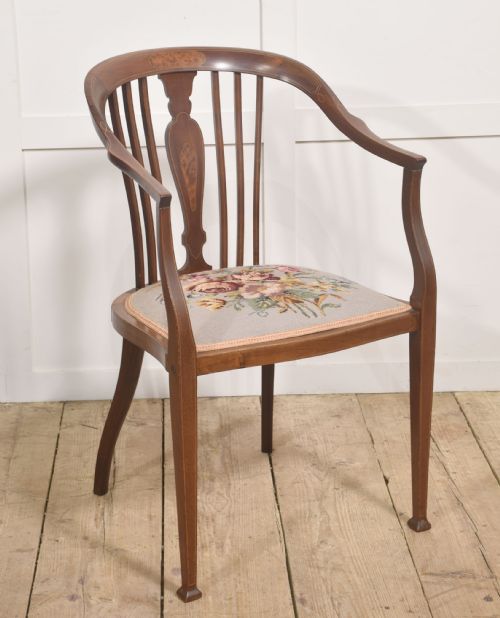
Most specimens on this page are Edwardian or turn-of-the-century occasional chairs, bedroom chairs, and salon armchairs. These forms often feature compact proportions suited for corners, desks, or dressing tables.
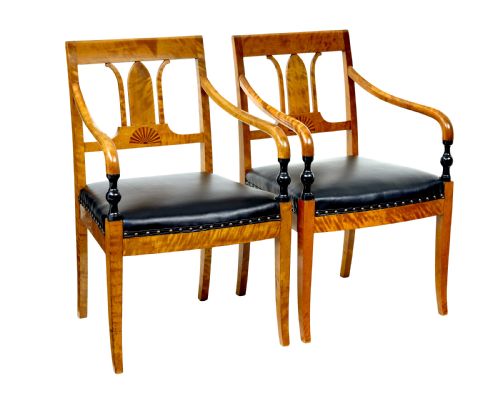
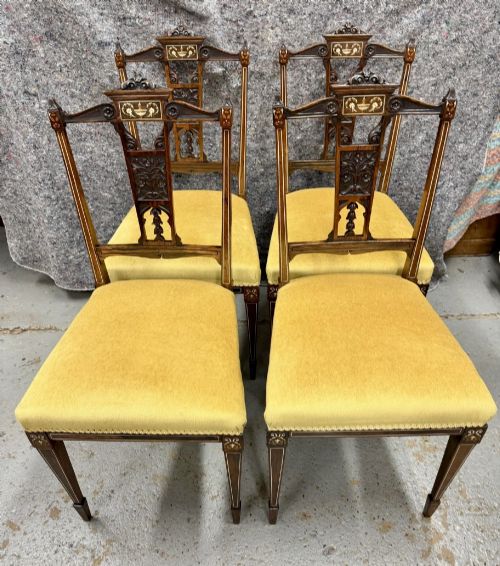
Makers utilised various timber frames, most notably mahogany and satinwood, embellished with contrasting wood inlay or brass details. The selection ranges from straightforward side chairs to sophisticated elbow chairs and tub armchairs.
Materials and construction methods
The underlying frames of these chairs rely heavily on solid mahogany, beech, rosewood, and walnut, providing structural integrity. Cabinet makers shaped these timbers into delicate curves, cabriole legs, or X-frame supports.
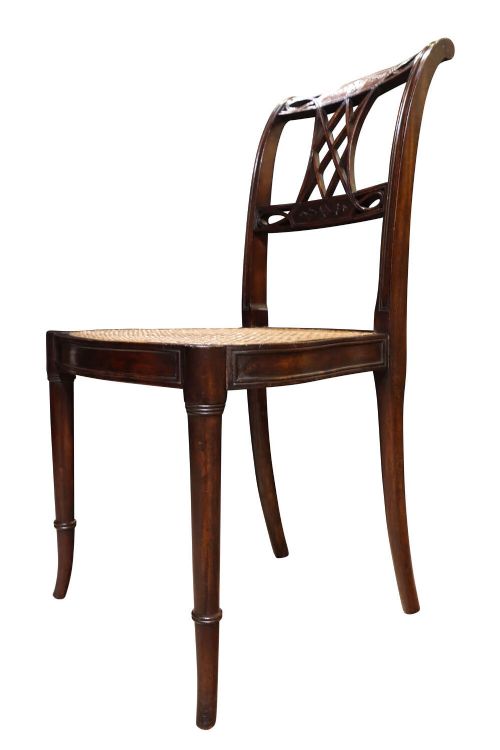
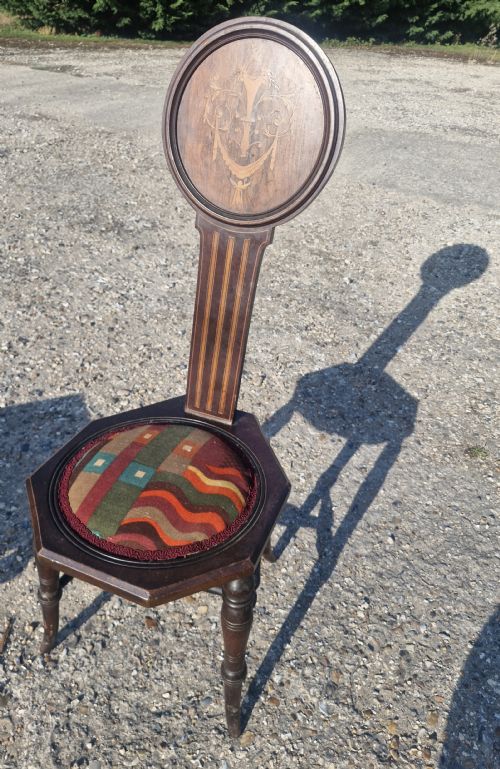
Surface ornamentation is achieved through detailed wood inlay, incorporating contrasting elements such as boxwood and satinwood into the primary timber. Some pieces also integrate brass inlay or cane inserts to add texture and visual lightness.
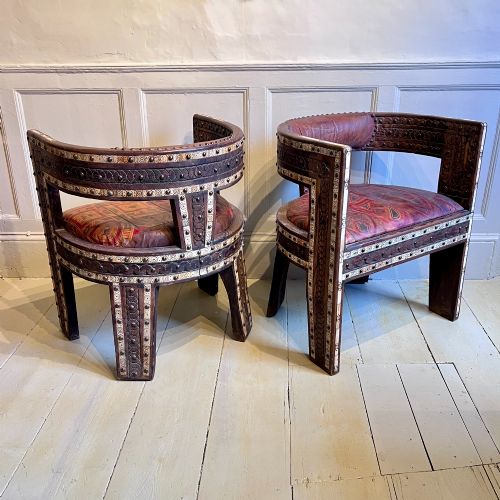
Upholstery materials include traditional fabric, velvet, and leather, often secured to sprung or padded seats. Scroll carving and turned woodwork frequently complement the flat inlaid panels.
Spinning chairs make an unexpected appearance, offering low-slung seating designed originally for comfortable hand-spinning tasks beside the hearth.
Assessing quality in inlaid seating
Quality rests heavily on the crispness of the cabinet work and the precision of the timber inlay. Sharp, tight joints between the contrasting woods indicate superior craftsmanship, whereas sloppy gaps reveal rushed production.
The structural integrity of the timber frame determines everyday utility, as lighter occasional chairs need tight joinery to withstand weight. Finer examples balance delicate aesthetic forms with robust internal construction.
The choice of primary wood and secondary veneers elevates a piece, with figured mahogany and finely grained satinwood commanding greater attention. Original upholstery materials and well-preserved cane seating also influence the integrity of the surviving item.
The Vintage Inlaid Accent Chair Glossary
- Inlay
- A decorative technique where pieces of contrasting wood, brass, or other materials are inserted into recessed portions of a timber base.
- Satinwood
- A lustrous, hard timber from tropical trees, prized for its pale yellow colour and smooth finish in fine cabinet work.
- Occasional chair
- A light, movable seat intended for sporadic use in various rooms rather than as a permanent seating arrangement.
- Sheraton Revival
- A late nineteenth-century design style emulating the neoclassical furniture forms of George Sheraton, often featuring satinwood and delicate floral inlay.
- Savonarola style
- A type of folding chair featuring multiple intersecting curved wooden slats, creating a distinctive X-frame appearance.
Vintage Inlaid Accent Chair: Frequently Asked Questions
Where should I place an accent chair?
These compact chairs suit corners, bedrooms, or entrance halls where space is limited. Their decorative backs and inlaid details allow them to stand freely away from walls.
They function well as secondary seating in a living room or as a desk chair in a study, adding character without overwhelming the floor plan.
How do I care for antique wood inlay?
Keep inlaid furniture away from direct sunlight and strong heat sources to prevent the wood veneers from drying and lifting. Regular dusting with a soft, dry cloth protects the polished surface.
Apply a quality wax polish sparingly to nourish the timber and maintain the contrast between the primary wood and the inlaid motifs.
Are these chairs comfortable for daily use?
Most pieces on this page are occasional or salon chairs designed primarily for visual elegance rather than long periods of lounging. Their upright backs and smaller proportions suit short-term seating.
Chairs with upholstered pads or padded arms offer more comfort than plain wood or cane-seated variants, though cushion support varies by individual piece.
How do I identify an Edwardian chair?
Edwardian seating typically dates from the reign of King Edward VII or the surrounding turn-of-the-century years, showing lighter proportions than heavy Victorian furniture. They frequently display Sheraton Revival influences with mahogany frames and delicate boxwood stringing.
Look for symmetrical floral motifs, satinwood panels, and tapered legs that define the refined aesthetic of this period.