


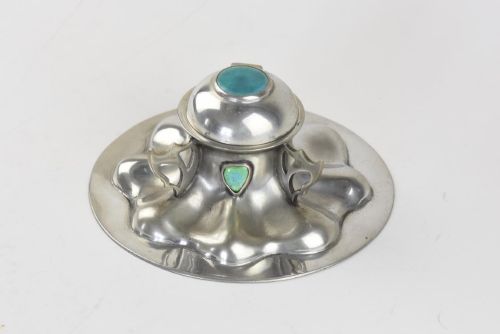

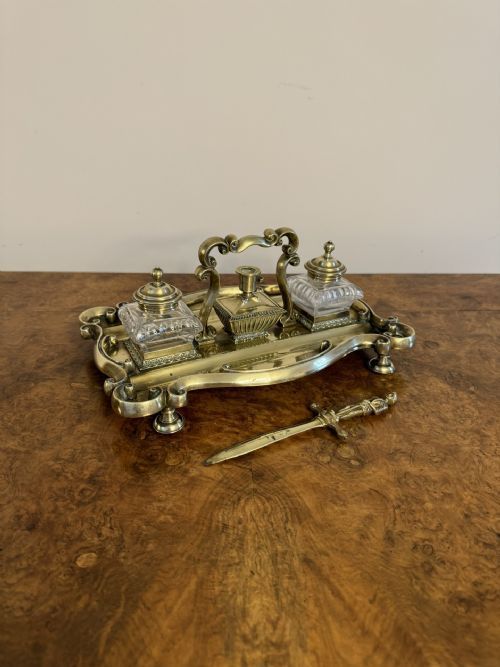
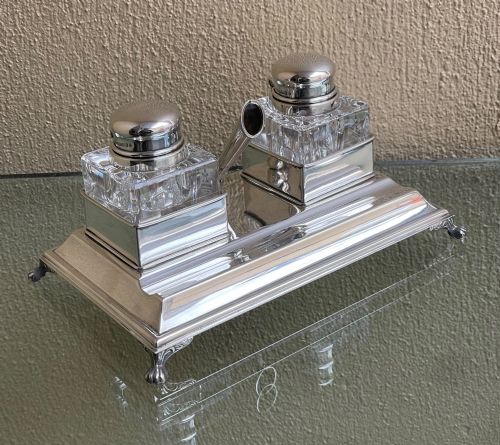

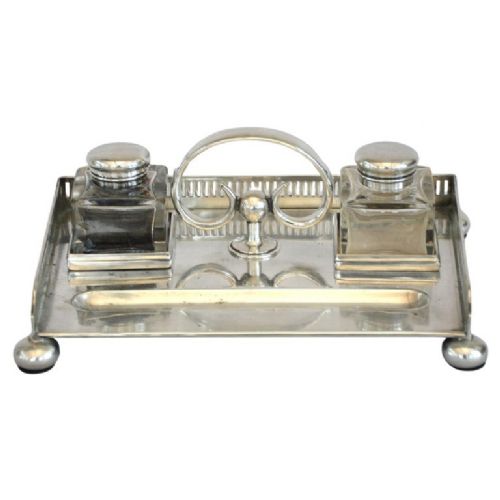



Vintage Inkwell Stand
These vintage inkwell stand examples provide functional desk organisation alongside period material craftsmanship.
Vintage Inkwell Stand
A vintage inkwell stand combines a reservoir for ink with a platform or tray to hold writing implements, serving as a permanent desk accessory. When searching for a vintage inkwell stand, a buyer encounters forms ranging from simple wooden blocks to elaborate multi-piece sets with integrated clocks or calendars.
The material evidence spans brass, sterling silver, glass, marble, ceramics, and various woods like walnut and mahogany. Victorian and Edwardian examples dominate the selection, alongside pieces spanning the nineteenth century through the early twentieth century.
Makers and designers embraced diverse decorative movements, resulting in styles that include Art Nouveau curves, Art Deco geometry, Arts and Crafts hand-finishing, and traditional Dutch Delft faience. These pieces functioned as centerpieces of personal correspondence before the widespread adoption of the fountain pen.
Materials and Construction
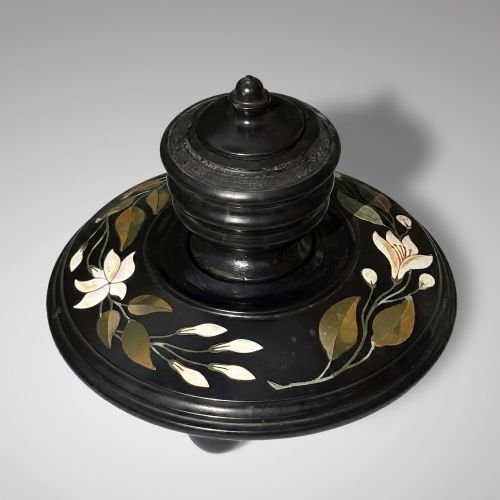
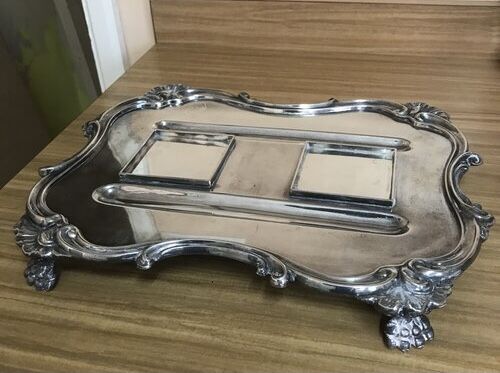
Metalworking techniques shape many pieces in this category, utilising cast brass, repoussé copper, silver plate, and solid sterling silver alongside ormolu mounts. Founders and silversmiths combined these metals with heavy glass inserts or stone bases such as Ashford marble, onyx, and green marble.
Cabinetmakers constructed wooden desk stands from timbers like walnut, burr walnut, mahogany, coromandel, and ebony, frequently incorporating brass hinges, pen rests, and inlaid details. Carved alternatives include Black Forest wood sculptures and papier-mâché structures.
Ceramic and glass components are represented by Staffordshire pottery, continental porcelain, and cut glass bottles, which fit securely into metal or wooden collars on the main stand.
Vintage Inkwell Stand Retail Price Guide 2026
Typical asking prices for vintage inkwell stand among the pieces listed under this phrase on Sellingantiques today, from the lower quarter to the upper quarter. They describe what is for sale here now, not the wider market.
A carved Black Forest wooden inkwell takes the distinct form of a curious cat, guarding the ink supply.
Distinguishing Quality
Quality rests upon the integrity of the materials and the precision of the assembly, distinguishing heavy cast brass and solid silver from lighter plated alternatives. Finer pieces integrate complementary media, such as lapis lazuli, champlevé enamel, or Ruskin cabochons, set securely into the primary structure.
The presence of original matched components, such as cut glass ink bottles with matching silver or brass lids, elevates a desk stand above pieces with mismatched replacements. Sculptural modelling, crisp carving on wood or marble, and named maker signatures demonstrate higher workshop standards.
William Hutton·Walker And Hall·James Cartland And Sons·Albert Marionnet
The Vintage Inkwell Stand Glossary
- Inkstand
- A complete desk assembly holding one or more inkwells, pen trays, and sometimes sanders or bell containers. It forms the primary stationery station on a writing table.
- Capstan inkwell
- An inkwell shaped like a ship's capstan, featuring a wide circular base tapering upwards to a hinged lid. This design prevents tipping during use.
- Desk tidy
- A multi-compartment desktop organiser that incorporates ink receptacles alongside slots for letters, stamps, and pens. These items manage correspondence paraphernalia.
- Cabochon
- A gemstone or decorative ceramic disc shaped and polished with a smooth, convex top rather than faceted edges. They frequently accent Arts and Crafts metalwork.
- Champlevé
- An enamelling technique where troughs or cells are hollowed out of a metal surface and filled with vitreous enamel before firing. It decorates various nineteenth-century metal stands.
Vintage Inkwell Stand: Frequently Asked Questions
What is an inkwell stand used for?
These stands provided a stable desktop station for holding liquid ink and resting dip pens during the era of handwritten correspondence.
They kept writing fluids contained and prevented ink stains on fine wooden desks by gathering all necessary tools in one designated tray.
How do I identify a Victorian inkstand?
Victorian pieces often display ornate brass casting, heavy mahogany or walnut woodwork, and decorative ceramic elements such as Staffordshire figures.
They reflect the period's preference for elaborate desk accessories, frequently incorporating multiple ink bottles and dedicated pen grooves.
What materials are common in Edwardian stands?
Edwardian examples frequently feature sterling silver mounts, cut glass inserts, and capstan shapes designed to sit stably on a writing surface.
Cabinetmakers also utilised polished brass and inlaid woods, aligning with the refined tastes of the early twentieth century.
How should I clean a brass inkstand?
Dust the surfaces gently with a soft, dry cloth to remove surface particles without disturbing any aged patina or protective coatings.
Avoid harsh chemical dips that strip historical character from brass, silver plate, or carved wooden frames.