


Vintage Industrial Workbench
A vintage industrial workbench brings heavy timber tops and robust metal framing into modern interiors as a practical surface with honest utility.
Vintage Industrial Workbench
When you search for a vintage industrial workbench, you encounter heavy utilitarian pieces originating from workshops, post offices, and factories across the nineteenth and early twentieth centuries. These surfaces combine thick timber tops in oak, pine, elm, and beech with structural iron, cast iron, and steel supports designed for heavy manual labour.
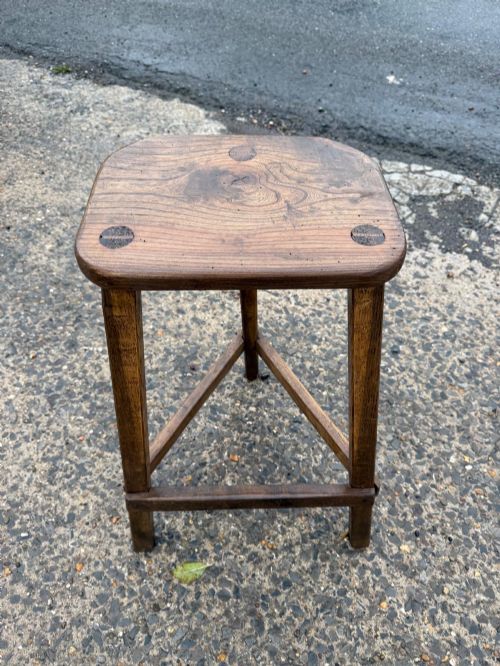
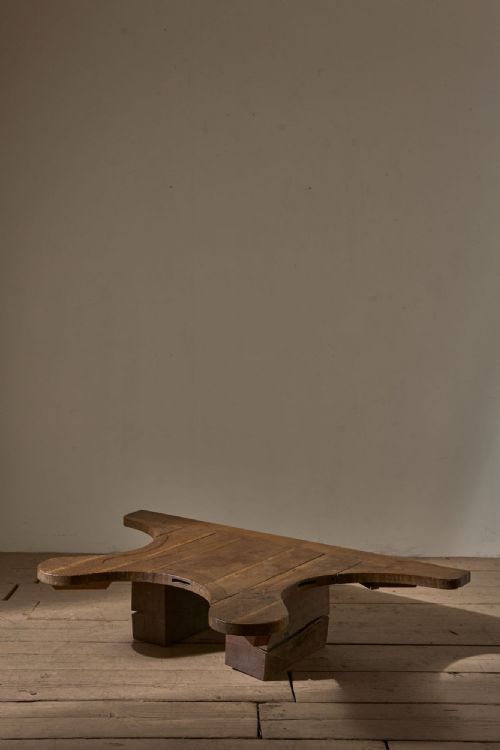
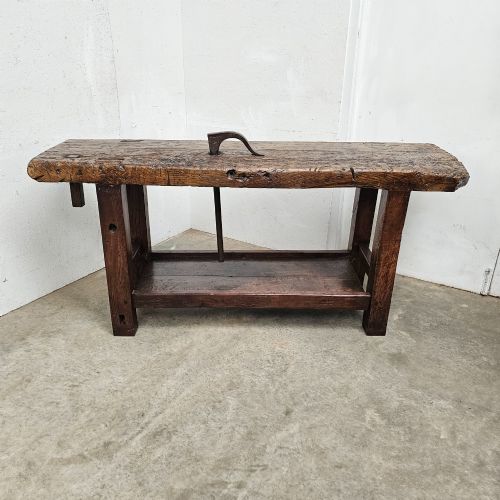
The most common versions met on this page include French artisans' workbenches fitted with traditional vices and clamping bars, alongside English and Swedish pine or oak work tables. Forms extend from long country house benches and post office sorting tables down to compact jewellers' benches adapted for modern coffee tables.
Workbenches differ fundamentally from domestic furniture through their scars of trade, integrated vises, and heavy trestle bases built for endurance rather than parlour display. Buyers select them to anchor kitchens, hallways, or studies with authentic historical utility and robust materiality.
How they were made
Construction relies on thick solid timber slabs of oak, pine, elm, beech, and hardwood joined to heavy-gauge cast iron, steel, and iron frameworks. Joinery prioritises rigid structural integrity, utilising substantial through-tenons, bolt-fastened trestles, and integrated wooden vices.
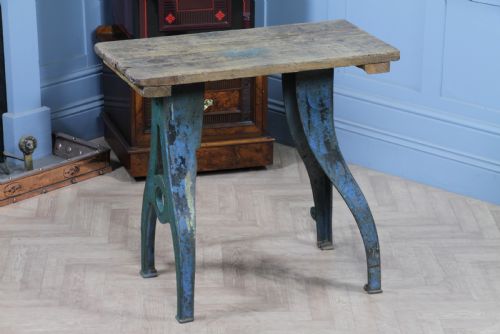
Surfaces bear the physical marks of original workshop use, ranging from deep tool scores and paint splashes to bleached patinas developed through decades of artisan trade. Iron and steel elements often feature exposed rivet work, cast foundations, and original painted finishes that record their industrial origins.
Listings feature nineteenth and early twentieth-century workbenches constructed from oak, pine, elm, beech, iron, cast iron, and steel.
What varies in quality
Quality in a vintage industrial workbench rests upon the integrity of the original timber top and the industrial substructure working as a cohesive unit. Benches retaining their original wooden vices, clamping mechanisms, and heavy cast iron bases command greater architectural presence than later adaptations.
The distinction between a top-tier workshop survivor and a basic utilitarian table lies in the scale of the timber, the presence of maker adjustments, and the depth of natural patina earned through active trade. Original French artisan benches with complete vises demonstrate superior craftsmanship compared to simpler assembled tables.
The Vintage Industrial Workbench Glossary
- Clamping bar
- A sliding wooden beam integrated into a workbench top used alongside a screw mechanism to hold timber securely during hand planing or joinery.
- Trestle table
- A table structure consisting of two or more support frames connected by a horizontal beam, commonly found in heavy work tables and refectory forms.
- Sorting table
- A large utilitarian table featuring shallow compartments or expansive flat surfaces designed for postal or industrial sorting operations.
- Patina
- The surface sheen and colour depth developed on wood and metal through years of handling, wear, and environmental exposure.
- Cast iron
- An iron-carbon alloy poured into moulds to create rigid, heavy machine bases and structural supports capable of bearing immense loads.
Vintage Industrial Workbench: Frequently Asked Questions
How do I clean a workbench top?
Maintain the surface by wiping it down with a dry or barely damp cloth to preserve the accumulated layers of historical wax and oil.
Avoid harsh chemical strippers that strip away the authentic patina earned through decades of workshop use.
Are these benches suitable for daily dining?
Many solid timber work tables and benches adapt well to dining rooms, offering generous legroom and sturdy construction that handles heavy family use.
Consider the height of integrated vices or lower stretchers to ensure comfortable seating positions around the table.
How do I identify a French artisan bench?
French artisan workbenches typically feature distinctive face vises, thick beech or oak tops, and heavy wooden screw mechanisms operated by sliding handles.
They often display refined proportions and specific joinery methods characteristic of continental craft traditions from the nineteenth century.
Can I use an industrial workbench outdoors?
Most antique workbenches utilise unsealed timbers and untreated iron components that degrade rapidly when exposed to constant moisture and changing weather.
Keep these pieces within interior environments or protected garden rooms to prevent warping and rust formation.