



Antique Iron Base Desk
These antique iron base desk pieces combine robust metal framework with timber surfaces, offering practical workspace utility and enduring industrial character for the modern interior.
Antique Iron Base Desk
An antique iron base desk centres on structural metal supports combined with wooden surfaces, reflecting the utilitarian designs of the nineteenth and early twentieth centuries. When searching for this category, buyers frequently encounter related workspace and industrial forms including work tables, console tables, and adjustable tables dating from the Victorian, Edwardian, and later periods.
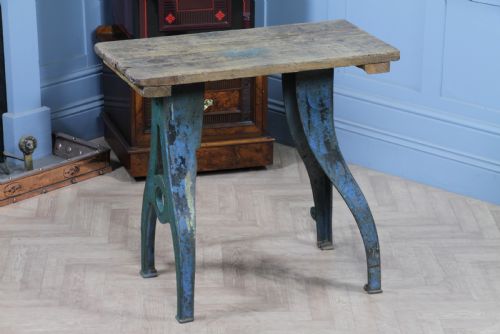
The construction typically pairs heavy cast iron or wrought iron legs and frames with timber tops made from oak, pine, elm, or mahogany. These practical furnishings originate from various contexts such as workshops, offices, and maritime environments, demonstrating how robust materials served functional purposes.
While true desks appear alongside related items like work tables and side tables, the defining element remains the substantial metal underframe that provides stability and industrial aesthetic appeal. Pieces range from simple trestle designs to adjustable mechanisms engineered for specific trades and tasks.
Assessing quality and authenticity
Quality in these pieces is determined by the integrity of the original materials and the proportion of the design. Superior examples display honest wear on both the cast iron base and the wooden top, retaining their original surface patination rather than over-restored finishes.
The sophistication of the mechanical joints and the weight of the casting also separate standard items from finer productions. A well-proportioned frame with clean industrial lines and compatible timber indicates a higher grade of period manufacture.
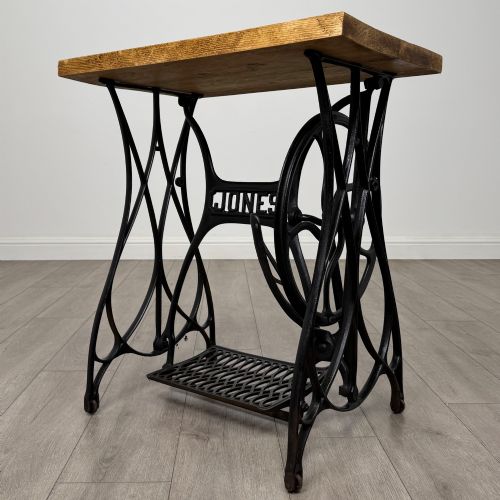
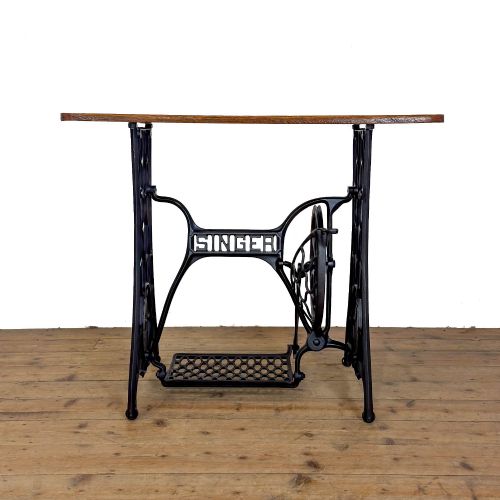
Early twentieth-century workspaces occasionally incorporated sewing machine mechanisms into sturdy cast iron bases long before office desks became standardised.
The Antique Iron Base Desk Glossary
- Cast iron
- A strong, hard alloy of iron and carbon poured into moulds to create complex structural shapes. It forms the heavy, durable base frames seen on many period tables and work benches.
- Wrought iron
- Iron that has been heated and hammered into shape by hand, resulting in a fibrous material with high tensile strength. This medium is typically utilised for decorative or structural brackets and lighter table bases.
- Trestle table
- A table comprising a horizontal top supported by two or more vertical frame structures. This form provides maximum legroom and structural stability for heavy work surfaces.
- Patina
- The surface sheen and colour acquired by materials through age, handling, and use over many decades. A good patina indicates genuine period character on both wood and metal components.
Antique Iron Base Desk: Frequently Asked Questions
How do I care for an iron and wood desk?
Keep the timber surfaces clean with a dry or slightly damp cloth and apply occasional natural wax to nourish the grain. Protect the iron base from moisture to prevent rust, treating any bare metal with suitable protective oils.
Avoid placing these items in direct sunlight or near extreme heat sources, as fluctuating temperatures can cause timber to split or warp over time.
Are these pieces suitable for daily home office use?
Their original sturdy construction makes them exceptionally well-suited for contemporary workspace demands. The heavy iron bases offer complete stability for modern computer equipment and paperwork.
Buyers should verify the height and knee clearance of individual pieces to ensure comfortable seating arrangements for daily tasks.
How can I tell the period of an iron base?
Victorian and Edwardian examples often feature more ornate casting details, manufacturer marks, or simpler industrial engineering associated with early workshops. Later twentieth-century versions tend towards streamlined profiles and different joining techniques.
Examining the type of screws, bolts, and metal casting quality helps establish whether a piece belongs to the nineteenth century or the interwar period.
Did these iron bases originate as desks?
Many iron frames served diverse functions in factories, drafting rooms, and commercial premises before being adapted for domestic use as desks or tables. Trestle work tables and industrial stands were frequently paired with wooden tops to create functional writing surfaces.
This utilitarian background means individual items often show signs of their original working life through markings and surface wear.