




Vintage Industrial Table
A vintage industrial table brings hard-wearing metal bases and heavy timber tops together for practical daily use.
Vintage Industrial Table
A vintage industrial table combines utilitarian origins with robust construction, often taking the form of workbenches, bistro tables, and console tables. These pieces draw from nineteenth-century and early twentieth-century workshops, pubs, and railway spaces to provide sturdy surfaces for modern rooms.
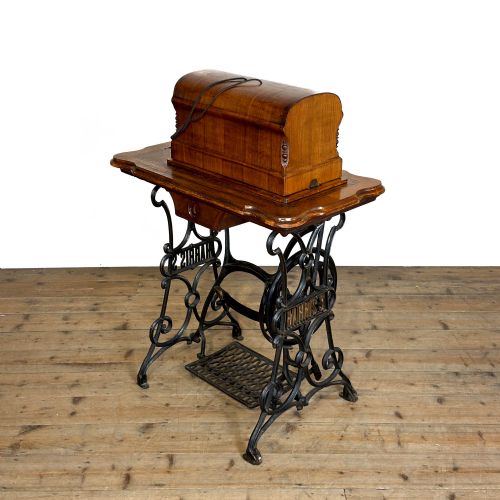
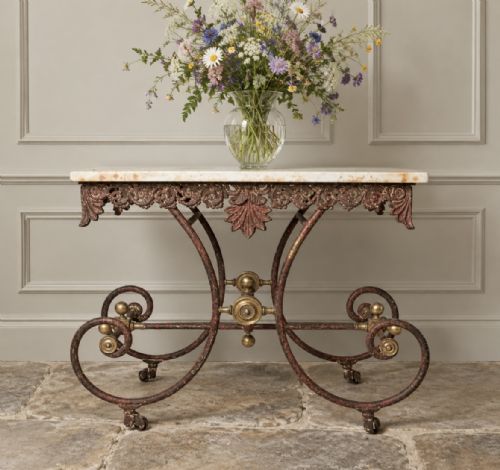
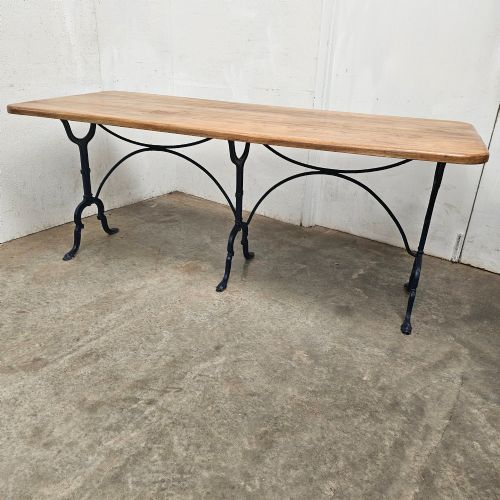
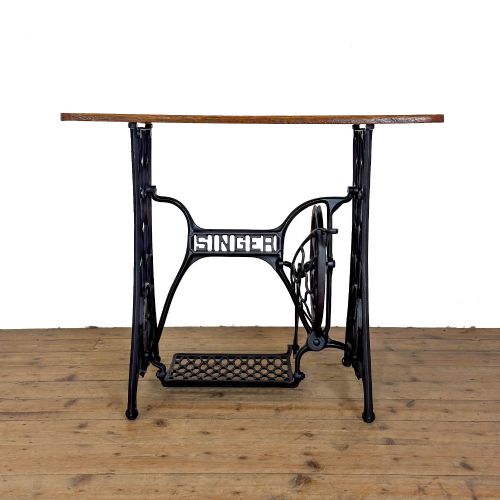
The selections available here lean heavily toward cast iron and iron framing paired with pine, oak, elm, or marble tops. Buyers encounter repurposed sewing machine bases, heavy cast-iron pub tables, and artisan workbenches fitted with vices or clamping bars.
Origins stretch across British, French, and Hungarian workshops, mixing functional practicality with plain utility. Console tables, side tables, and refectory dining formats dominate the configuration types seen in these listings.
How they were made
Makers built these pieces using heavy structural metals like cast iron and steel for the underframes, ensuring stability for manual labour and commercial use. Legs and supports frequently incorporate machine bases or heavy foundry castings designed to bear substantial weight.
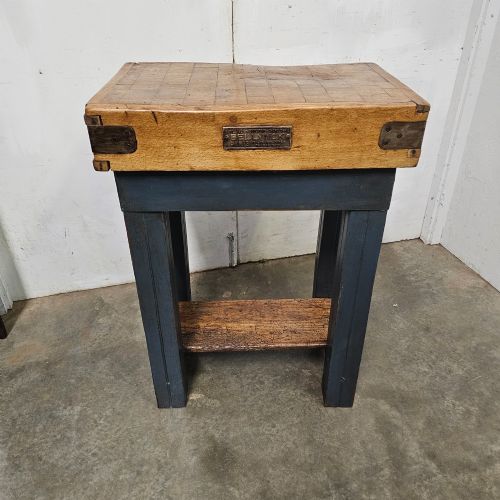
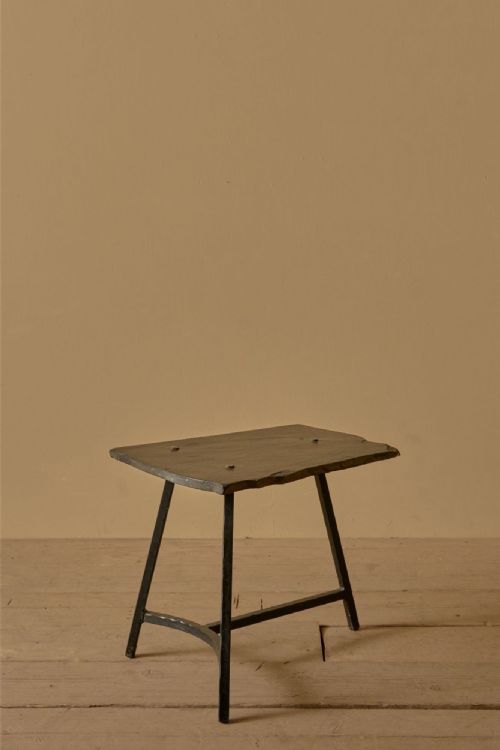
Wooden elements utilise thick slabs of pine, oak, elm, or mahogany for table tops, prep surfaces, and butcher blocks, joined to withstand rigorous daily handling. Marble and slate also appear on specific side and console variants, providing durable, non-porous surfaces.
Assembly methods rely on straightforward mechanical fixings, bolts, and iron brackets rather than delicate cabinetry, reflecting their working-life origins.
Vintage Industrial Table Retail Price Guide 2026
Typical asking prices for vintage industrial table among the pieces listed under this phrase on Sellingantiques today, from the lower quarter to the upper quarter. They describe what is for sale here now, not the wider market.
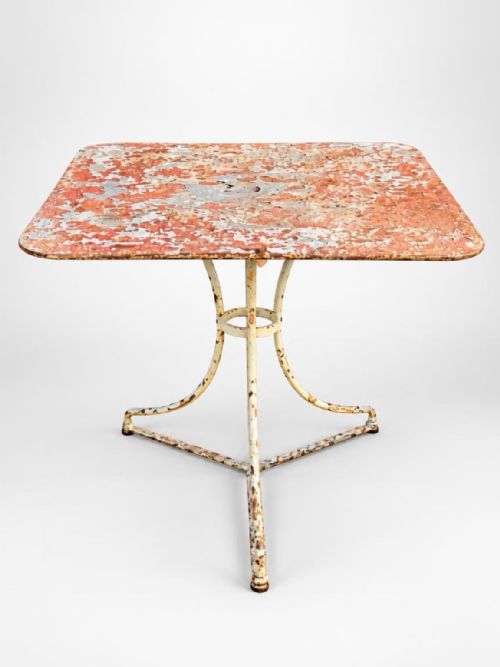
Some cast-iron table bases still wear the stray paint splatters from decades spent supporting busy workshop tools.
What varies in quality
The integrity of the original metal frame and the character of the timber top set individual examples apart. Unaltered bases paired with genuine period wood command attention through their honest wear and patination.
The proportion and weight of the cast iron elements dictate the structural presence of the piece. Heavier, crisper foundry work offers a solidity that lighter, later adaptations lack.
Carters Of London·Herbert Terry·Jones Sewing·TANNS DEFIANCE LONDON
The Vintage Industrial Table Glossary
- Cast iron
- A hard, brittle alloy of iron and carbon poured into moulds to create heavy, decorative, or structural furniture bases. It provides the rigid support characteristic of nineteenth-century work tables.
- Refectory table
- A long dining table traditionally used in communal halls. Examples here utilise heavy timber boards and substantial side stretchers.
- Bistro table
- A small café or tavern table typically featuring a central cast-iron pedestal base and a round or square top. They were designed for compact commercial spaces.
- Workbench
- A sturdy table used by artisans and carpenters featuring heavy timber tops, sometimes equipped with wooden vices or clamping bars. Their surfaces show the deep marks of manual labour.
- Patina
- The surface sheen and colour acquired by materials through age, wear, and polishing. It indicates the genuine historical use of the wood and metal.
Vintage Industrial Table: Frequently Asked Questions
What is a vintage industrial table?
A vintage industrial table is a heavy-duty surface built from nineteenth or early twentieth-century commercial materials like cast iron and thick timber. These pieces originated in factories, workshops, and pubs before finding a place in modern homes.
They combine utilitarian function with robust construction, offering durable surfaces for dining, prep work, or display.
How do I clean a cast iron base?
Cast iron frames require gentle dusting and occasional wiping with a dry or slightly damp cloth to remove accumulated dirt. Avoid harsh chemical cleaners that strip the protective surface.
Applying a light coat of neutral wax helps preserve the dark metal finish and protects against moisture.
Can I use an old workbench for dining?
Many workbenches and prep tables serve well as dining or kitchen surfaces due to their generous proportions and sturdy timber construction. Their height and depth accommodate seating while providing ample workspace.
Knee clearance varies depending on whether the original base includes lower stretchers, drawers, or attached vices.
How do I date a cast iron table?
Dating relies on examining the casting quality, assembly bolts, and the style of the foundry work. Victorian and Edwardian examples often display registration marks, maker names, or patent details cast directly into the iron.
The matching timber top also provides clues through its construction joints, saw marks, and wear patterns.