


Vintage Industrial Pendant Light
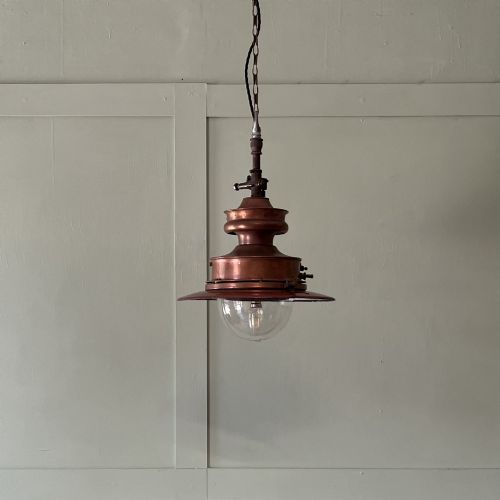
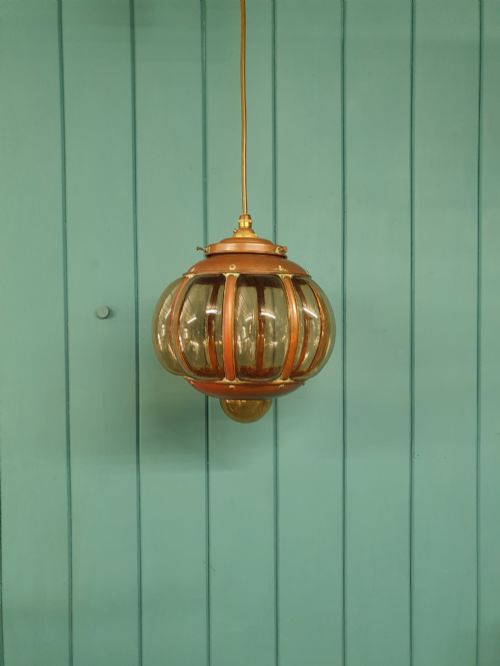
These vintage industrial pendant light fixtures bring robust utility and functional charm straight from period factories, railways and maritime settings into modern spaces.
Vintage Industrial Pendant Light
A vintage industrial pendant light draws upon utilitarian forms originating from Victorian times through to the mid-20th century, spanning Edwardian, 1910, 1920, 1930 and 1940 periods. These pieces serve primarily as ceiling lighting, pendant lighting, chandeliers and ceiling lights designed originally for functional workspaces rather than domestic decoration.
Buyers will encounter specific forms including factory pendant light fittings, chapel lights, trade sign lights, railway hanging lanterns and nautical pendants. Materials range from basic steel, cast iron and wrought iron to polished copper, brass, chrome galleries and specialised glass shades.
The aesthetic bridges several documented styles, specifically industrial, Edwardian industrial, Victorian industrial, nautical, Art Deco and mid-century industrial. Pieces appear individually, in pairs, in sets of four or eight, or as larger single architectural items like witches hat shades and wagon wheel chandeliers.
Materials and construction methods
Construction relies heavily on durable metals including spun steel, cast iron, wrought iron, copper and brass, often paired with specialised glass components. Metal galleries secure the shades while providing structural support for hanging.
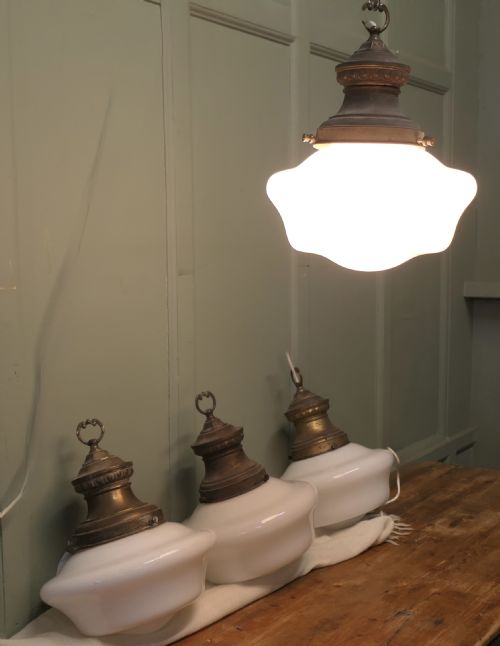
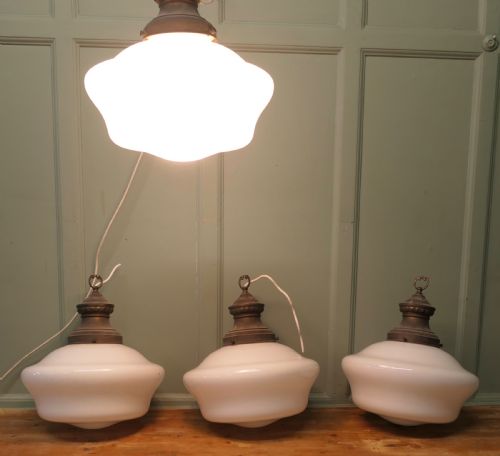
Glass elements utilise opaline glass, smoked glass, mercury mirrored glass and prismatic or double prismatic glass designed to diffuse harsh illumination efficiently. Enamel coatings provide protective finishes in green or other colours for factory and trade environments.
Some factory pendants survived decades of grime only to be polished back into gleaming centrepieces for modern kitchens.
Factors influencing quality and desirability
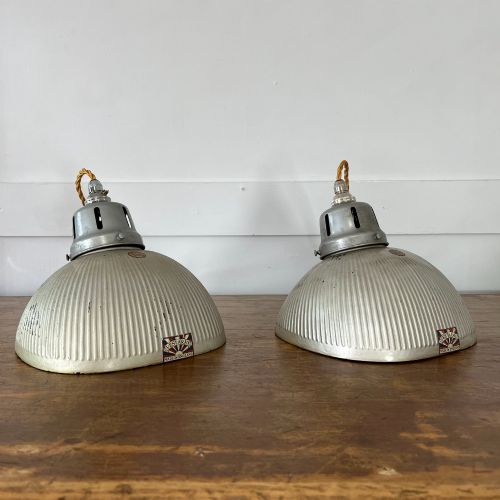
Quality rests upon the integrity of the original materials and the presence of specialist optical glass components, particularly branded Holophane shades that manipulate light diffusion. The heaviness and purity of cast iron, brass or copper components directly reflect the robustness intended for heavy trade use.
Subtleties in proportion, the retention of original factory enamel surfaces and matching sets of multiple pendants elevate specific pieces above standard single items. The integration of period hardware like chrome galleries or maker-marked elements distinguishes superior examples from simpler utilitarian survivors.
VESTARAY·Holophane
The Vintage Industrial Pendant Light Glossary
- Holophane
- A type of scientific glassware featuring patterned prisms designed to shape and distribute light effectively while reducing glare. This material appears frequently across Edwardian and 1920s pendant listings.
- Gallery
- The metal collar or holder at the top of a pendant shade that secures the bulb holder and suspension cord or chain. Chrome and brass galleries are common across industrial lighting.
- Opaline glass
- A milky, semi-translucent glass used in factory and chapel pendants to soften illumination evenly across a room. It dates largely to early 20th century production.
- Prismatic glass
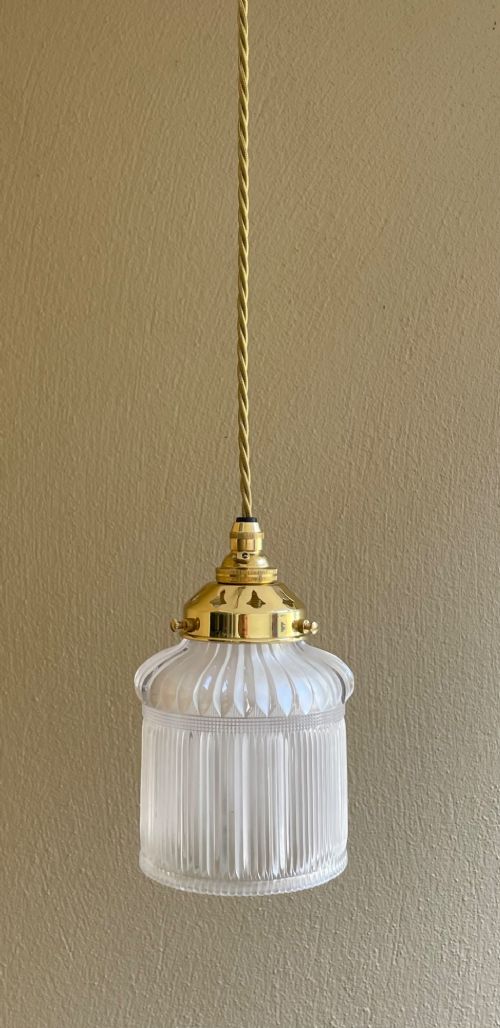
- Glass moulded with intricate geometric ribs that refract and multiply light output. Double prismatic variations offer enhanced optical performance.
- Witches hat
- A wide, conical shade profile resembling a pointed hat, seen on large cast iron ceiling lights. This shape maximises downward light spread in industrial spaces.
Vintage Industrial Pendant Light: Frequently Asked Questions
Where were industrial pendant lights originally used?
These fixtures served practical roles in factories, railway stations, naval vessels, chapels and trade signs during the 19th and early 20th centuries. Their robust construction was engineered for harsh working environments requiring dependable overhead illumination.
Over time, these utilitarian objects transitioned from workplaces into domestic and commercial interiors, valued for their authentic historical character and durable materials.
How do I identify a Holophane shade?
Holophane shades feature distinctive moulded glass prisms designed to diffuse and direct light efficiently. You will notice geometric ribbing across the surface that bends the illumination while reducing harsh glare.
These shades appear frequently in Edwardian and 1920s listings, often paired with metal galleries made of brass or chrome.
What is the difference between opaline and prismatic glass?
Opaline glass is a milky, translucent material that creates a soft, even glow without exposing the bulb directly. It is commonly found in chapel and factory lights from the early 20th century.
Prismatic glass relies on moulded ridges and prisms to actively refract and amplify light. This scientific approach was favored in workspaces requiring precise optical distribution.
How can I hang a heavy cast iron pendant?
Large cast iron and steel pendants require secure ceiling fixings capable of supporting substantial weight, particularly multi-light chandeliers and witches hat shades. Professional electrical installation ensures the hanging chain and wiring safely carry the load.
Matching the drop length to your ceiling height preserves the intended proportions of these industrial fixtures within a room.