





Edwardian Brass Light Gallery
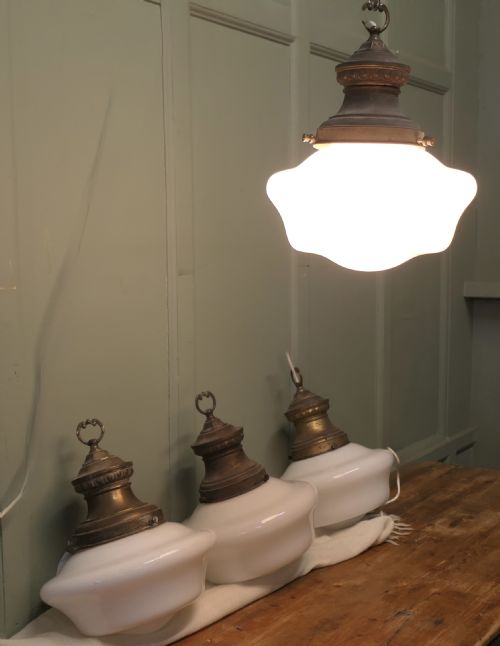
These Edwardian brass light gallery pieces hold glass shades securely while bringing period character to a room.
Edwardian Brass Light Gallery
When you search for an edwardian brass light gallery, you are looking at the metal collar or mount designed to support a glass pendant, shade, or chandelier. The pieces listed here span the Edwardian period alongside the 19th century, 1910, 1920, 1930, and 1940.
The form appears most frequently as part of pendant lights, ceiling lights, and chandeliers fitted with glass components. You will encounter styles ranging from straightforward Edwardian and industrial designs to Art Deco and French Chateau influences.
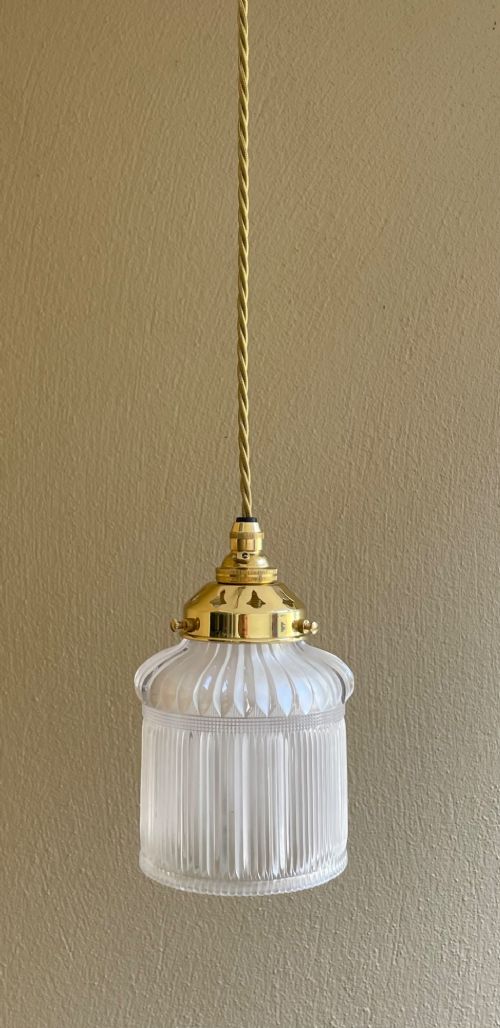
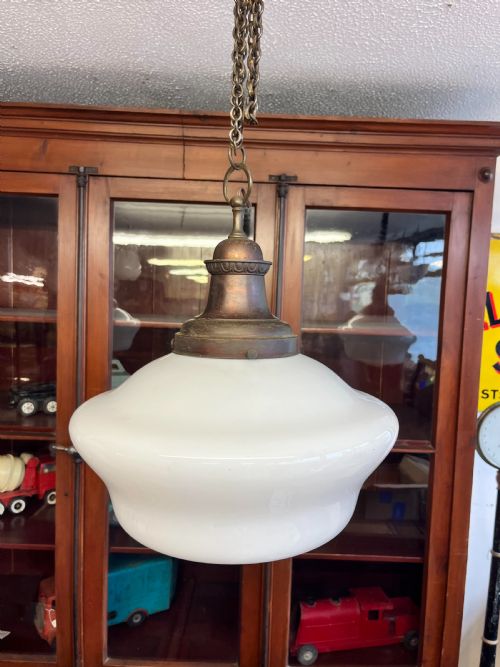
Many examples combine the brass mount directly with opaline glass, prismatic glass, cut glass, crystal, moonstone glass, or frosted glass shades. The archive records pieces specifically featuring original brass galleries holding domed and oval shades.
How they were made
The construction relies heavily on brass metalwork, shaped through casting to form the galleries that grip the glass shades. These metal mounts are paired with various glass-making techniques, including moulded prismatic patterns, opaline finishes, and hand-cut crystal.
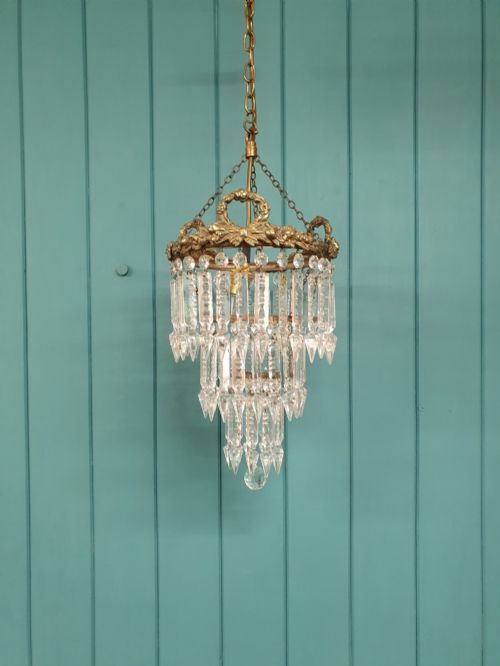
Makers utilised specialised glass types such as Holophane, moonstone, and frosted surfaces to diffuse light effectively. The physical evidence shows combinations of cast brass hardware holding suspended glass pendant shades and larger multi-tier chandeliers.
The documented periods span the 19th century, Edwardian era, 1910, 1920, 1930, and 1940.
What varies in quality
The distinction between tiers rests upon the weight and finish of the brass gallery itself, particularly where cast details remain sharp and defined. Heavier metal mountings and robust fixings separate standard production from finer examples.
Quality also shows in the clarity and finish of the paired glass shade, whether it is heavy cut crystal, patterned prismatic glass, or smooth opaline. Original components that retain their matching brass galleries without replacement score higher among collectors.
The Edwardian Brass Light Gallery Glossary
- Light gallery
- The metal ring or collar fitted with screws to hold a glass shade in place. It forms the structural connection between the ceiling suspension and the glass.
- Opaline glass
- An opaque or translucent white glass developed to soften light distribution. It appears frequently in Edwardian pendant and chapel lighting.
- Prismatic glass
- Glass moulded with precise optical ribs or prisms on the surface to direct and diffuse illumination. Holophane lighting relies heavily on this technique.
- Bag chandelier
- A light fixture shaped like a tapered bag or pouch, densely hung with small crystal drops. These compact fixtures often incorporate brass framing.
- Moonstone glass
- A soft, milky variety of glass possessing a gentle opalescence resembling the stone. It creates a warm, diffused glow when illuminated from within.
Edwardian Brass Light Gallery: Frequently Asked Questions
What is a light gallery?
A light gallery is the brass collar or rim that grips a glass shade and connects it to the hanging ceiling wire.
It provides both the mechanical support for the glass and the decorative transition between suspension and shade.
How do I hang an Edwardian pendant light?
These lights suspend from the ceiling using standard electrical flex or chain fixed to a ceiling rose.
Ensure the brass gallery securely tightens onto the lip of the glass shade before hanging.
Are these lights rewired?
Some pieces retain original wiring while others have been updated with modern electrical flex to meet current standards.
Check individual listings to confirm whether the wiring has been renewed for modern installation.
How do I identify an Edwardian brass gallery?
Edwardian brass galleries feature specific casting weights, patination, and screw thumb-tacks typical of early twentieth-century metalwork.
They often accompany opaline, moonstone, or prismatic Holophane shades from the same era.