



Vintage Impressionist Tree Landscape
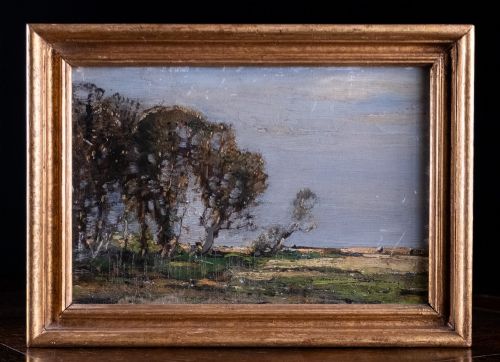
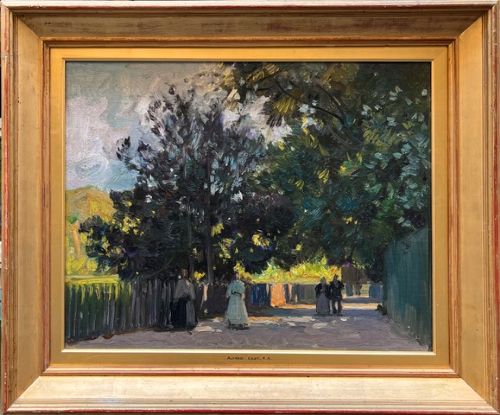
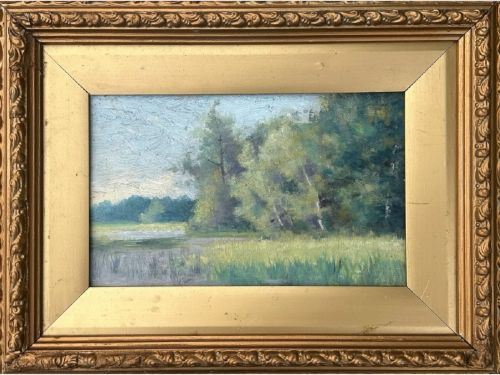
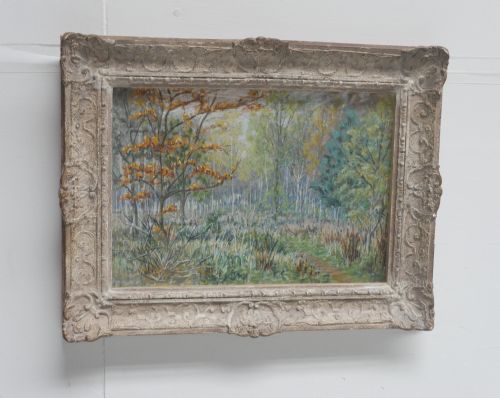
A vintage impressionist tree landscape captures light and foliage through loose brushwork, bringing domestic walls the atmosphere of past pastoral scenes.
Vintage Impressionist Tree Landscape
A vintage impressionist tree landscape brings together pastoral scenery and the expressive brushwork characteristic of nineteenth-century and mid-century movements. Buyers seeking a vintage impressionist tree landscape will find works spanning from the nineteenth century through the mid-twentieth century, capturing rural paths, woodlands, and riverbanks.
The selection on this page relies heavily on British and French schools, alongside Canadian and European regional artists. Canvases, boards, and paper surfaces record rural life, wooded valleys, and Mediterranean groves through varied interpretations of light and shadow.
Most entries concentrate on oil paintings and watercolours depicting trees, orchards, and country lanes. These works range from small intimate panels to larger canvases designed for prominent display in a home.
How they were made
Artists painted primarily with oil or watercolour, applying pigments to prepared canvas, wooden panel, board, or heavy paper. Oil paint allowed for thick impasto textures and layered colour mixing, while watercolour utilised translucent washes on paper.
Supports varied according to the period and region, with nineteenth-century and twentieth-century works utilising stretched canvas or sturdy wood boards. Frames often consisted of gilded wood or simple mouldings that complemented the painted surface.
Listed items span from the nineteenth century through the 1960s, representing British and European landscape traditions.
What varies in quality
Quality rests upon the artist's handling of light, atmospheric depth, and the assurance of the brushwork. Works that capture the vitality of foliage and the interplay of sun and shadow demonstrate superior command over standard academic formulas.
The stability of the support and the preservation of the original paint layer also distinguish finer examples. Superior pieces retain vibrant pigments and secure adhesion to canvas or board without intrusive overpainting.
George Graham·Kershaw Schofield·Sir Alfred East·Maud Raphael Jones·William JB Jenkins·Herbert Royle·Rowland Henry Hill·Berthe des Clayes·Frederick W. Jackson·Alois Arnegger·George Harrison·Owen Bowen·John J. Hamer·Hermoine Hammond·Antoine Bouvard·Fred Lawson
The Vintage Impressionist Tree Landscape Glossary
- Impressionism
- A nineteenth-century art movement characterised by relatively small, thin, yet visible brush strokes and an open composition. It emphasises accurate depiction of light in its changing qualities.
- Post-Impressionism
- A predominant style extending Impressionism while rejecting its limitations, focusing instead on symbolic content, formal order, and heavier structure.
- Impasto
- The process or technique of laying on paint or pastel thickly so that it stands out from a surface. This technique adds tactile dimension to foliage and tree bark.
- Provenance
- The chronology of the ownership or location of a historical object. Documented origins help confirm an artist's studio output.
- Watercolour
- Artists' paint made with water-soluble binders and thinned with water rather than oil, producing transparent washes on paper.
Vintage Impressionist Tree Landscape: Frequently Asked Questions
What is a vintage impressionist tree landscape?
These works are paintings and watercolours created between the late nineteenth century and the mid-twentieth century featuring wooded scenes, orchards, and country lanes rendered with loose, expressive brushwork.
They capture natural light and atmospheric conditions rather than strict botanical detail, reflecting regional schools from Britain, France, and beyond.
How were these landscape paintings displayed originally?
Original presentation typically involved wood frames, often gilded or moulded, chosen to suit the domestic interiors of their period.
Many remained in private collections or artist studios before entering the art market through sales and exhibitions.
How do I care for an oil painting on board?
Oil paintings on board require stable indoor humidity and temperature to prevent warping of the wooden support and cracking of the paint layer.
Keep them out of direct sunlight and dust the surface gently with a soft, dry brush without applying moisture or cleaning agents.
How can I tell a watercolour from an oil painting?
Watercolours are painted on paper and typically displayed under glass with a matte surface, showing translucent washes where the paper shows through.
Oil paintings use thicker pigments on canvas or board, possessing a textured surface and a subtle sheen from the oil binder.
What subjects appear alongside trees in these landscapes?
Common companion subjects include rivers, country lanes, farmyards, and coastal scenes such as the Mediterranean coast or French gardens.
Figures occasionally appear, including fishermen by riverbanks or figures walking along shaded paths beneath willow and olive trees.