


Vintage Impasto Still Life
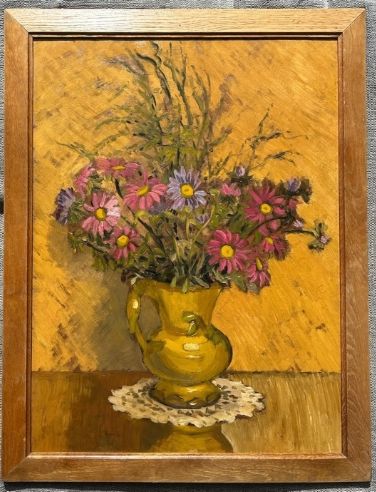
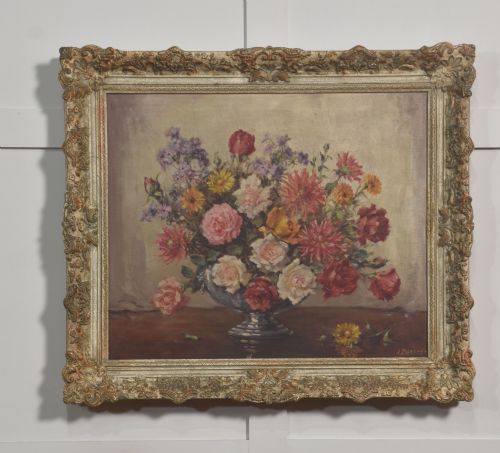
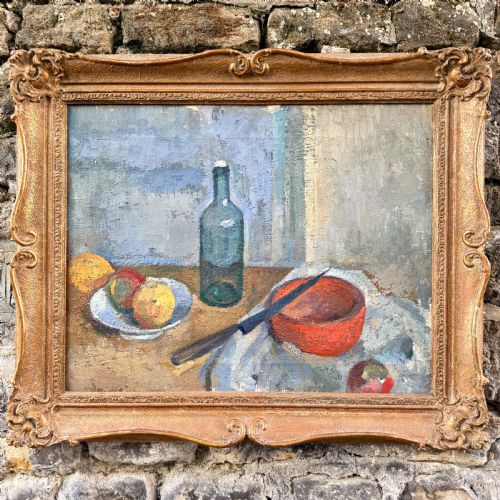
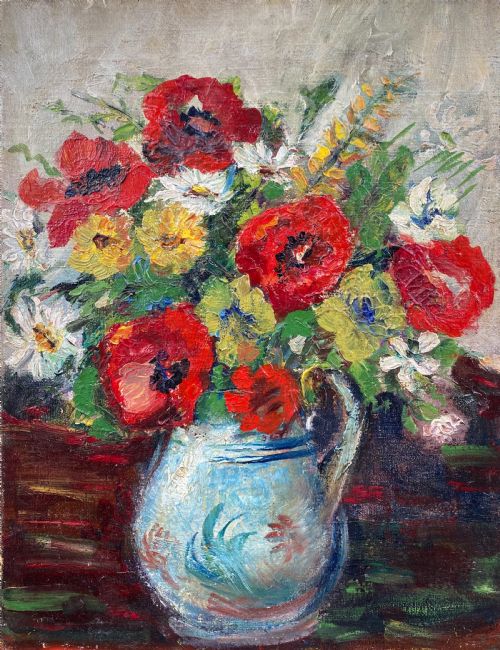
These vintage impasto still life paintings bring thick oil paint and textured surfaces into a room, offering tactile depth and rich colour.
Vintage Impasto Still Life
A vintage impasto still life captures objects like flowers, fruit, and rabbits through heavy applications of oil paint that stand proud of the canvas or board. These works range from early twentieth-century pieces and Edwardian impressionism to mid-century modern and post-war creations.
The most common examples encountered here date from the mid-twentieth century, specifically the 1950s and 1960s, executed in oil on canvas or board. French modernist, post-impressionist, and expressionist influences frequently shape these floral and interior compositions.
Buyers select these paintings to introduce strong texture and painterly gesture to interior spaces. The physical presence of the pigment creates shifting shadows across the surface throughout the day.
How they were made
Artists built these compositions using oil paint loaded thickly onto stretched canvas, wooden board, or panel supports. Palette knives and stiff-bristled brushes applied the pigment in heavy strokes, leaving visible ridges and peaks that dried to a hard finish.
Gilt frames and plaster mouldings often enclose the finished paintings, adding weight and reflective contrast to the dense matte paint surfaces. The combination of thick media and rigid supports allowed the heavy pigment to age stably over decades.
Several rabbits and pheasants hide quietly amongst the floral arrangements, frozen in thick oil paint.
What varies in quality
Quality rests in the confidence of the brushwork and the structural relationship between the painted objects and the surrounding space. Stronger examples demonstrate deliberate control over heavy pigment, where each thick stroke defines form and light rather than merely building bulk.
The integration of colour harmony across the palette distinguishes superior works from standard decorative pieces. The condition of the canvas support and the stability of the thick impasto layers also determine the standing of an individual painting.
Kenneth Cozens·I. Berezny·Sir Matthew Smith·Elizabeth T. Sutcliffe·Bertoldo Taubert
The Vintage Impasto Still Life Glossary
- Impasto
- A technique where oil paint is laid onto a surface in very thick layers that stand out from the canvas. This allows the texture of the brush or palette knife to remain visible.
- Still life
- An artwork depicting mostly inanimate subject matter, typically commonplace objects like flowers, fruit, or game. These compositions focus on arrangement, light, and colour harmony.
- Post-Impressionism
- An art movement developing roughly from the 1880s onwards that extended impressionism while rejecting its limitations. Artists rejected faithful depiction in favour of symbolic colour and heavy form.
- Canvas
- A closely woven fabric stretched across a wooden frame to serve as a foundation for oil painting. It provides a flexible yet durable support for heavy pigment.
- Gilt
- A thin layer of gold leaf or gold paint applied to wooden frames or decorative surfaces. This finish provides a bright border that separates the painted canvas from the surrounding wall.
Vintage Impasto Still Life: Frequently Asked Questions
Are these paintings ready to hang?
Most works arrive fitted with original or period frames that include hanging wire or fixings on the reverse. Check the structural stability of the frame and cord before mounting.
Ensure wall fixings match the weight of the wooden frame and plaster mouldings. Keep the paintings away from direct sunlight and damp environments to protect the canvas.
How do I date an impasto still life?
Examine the stretcher bars, canvas type, and framing materials for period characteristics. Mid-century works often use commercial boards or standard canvas sizes from specific decades.
Signatures, exhibition labels, and stylistic markers like post-war modernist abstraction help narrow down the execution period. Compare the pigment handling with documented works from known art movements.
Can I hang them in bright sunlight?
Direct sunlight accelerates the degradation of oil paint and can cause canvases to dry out or warp. Position these artworks on interior walls away from direct windows.
Stable room temperatures and moderate humidity levels prevent the thick impasto layers from cracking. Good ambient lighting allows the textured brushstrokes to catch the light properly.