





Vintage Imari Dish
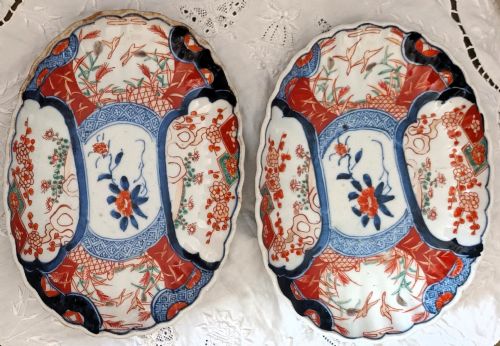
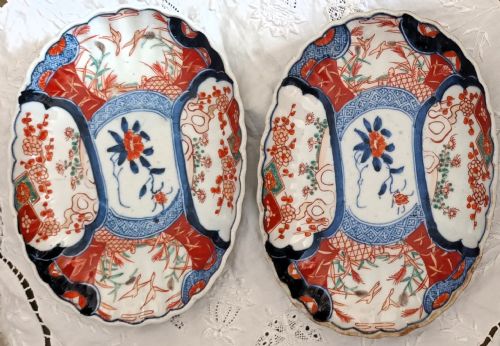
A vintage imari dish brings centuries of rich colour and complex hand-painted pattern into a room through vibrant porcelain.
Vintage Imari Dish
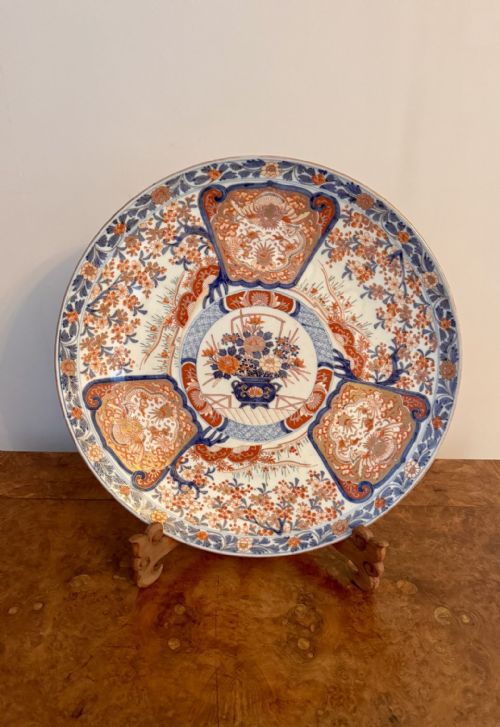
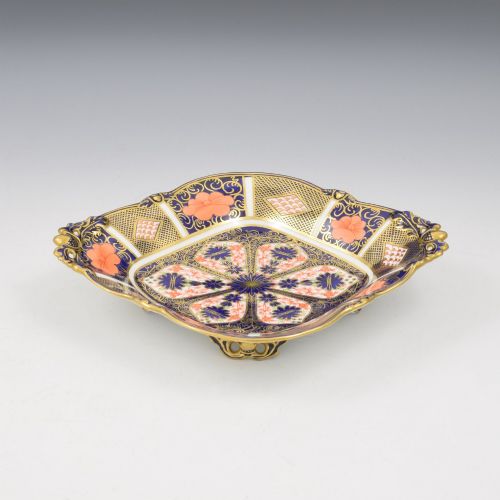
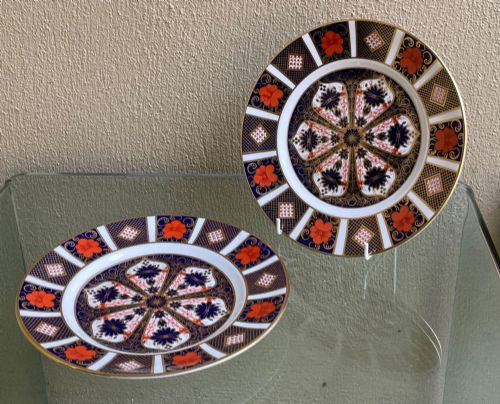
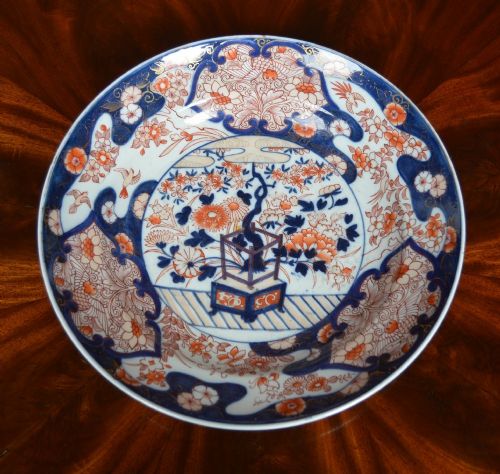
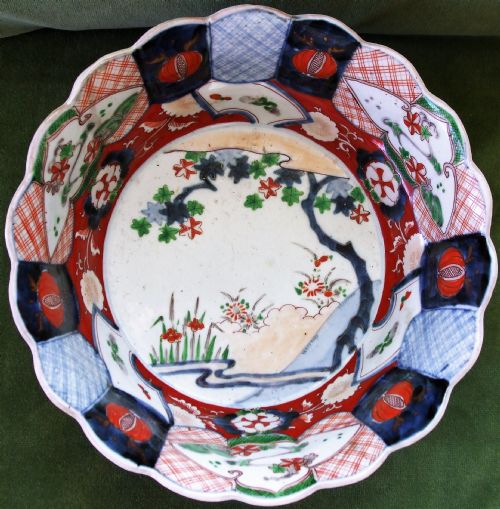
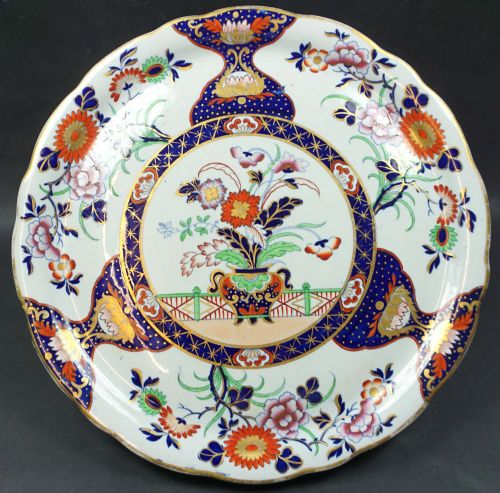
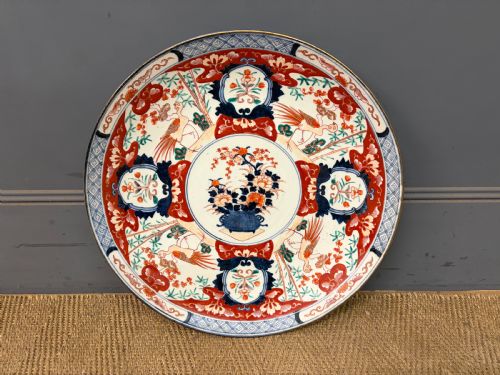
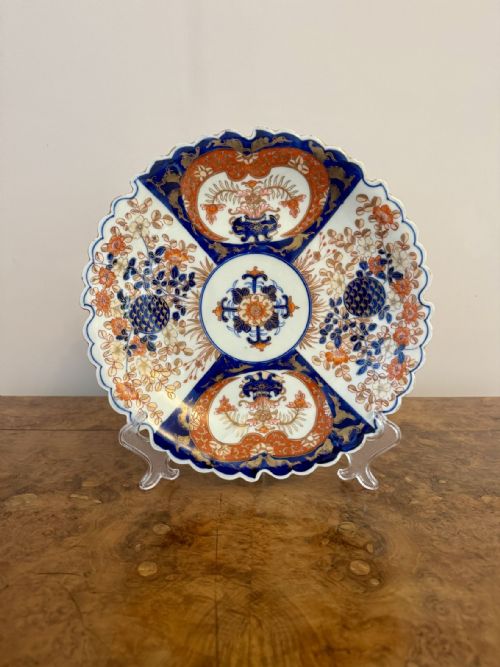
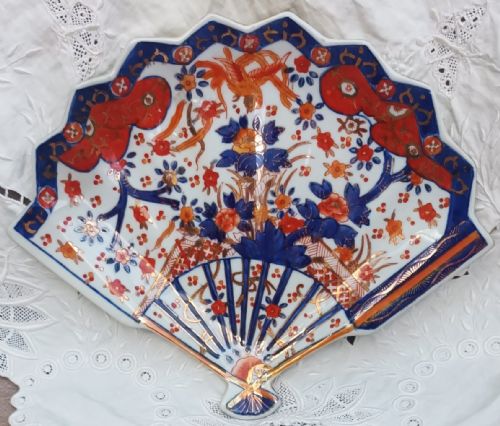
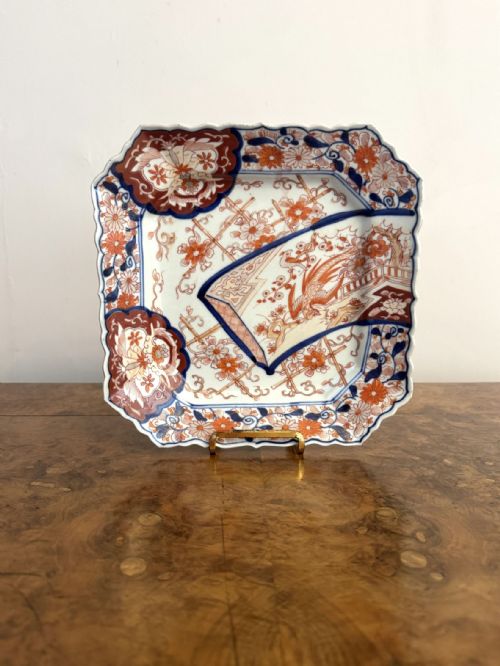
A vintage imari dish encompasses a range of decorative plates, bowls, chargers, and serving trays produced in Japan and by English makers. The pieces on this page span the nineteenth century, the Meiji period, and the early twentieth century, showing both traditional Eastern artistry and domestic adaptations.
Most encounters on this page involve Japanese imari porcelain chargers and plates alongside English ceramic interpretations. Forms vary from standard round plates and deep scallop-edge bowls to unusual square plates, hexagonal bowls, and clamshell dishes.
Buyers frequently find large chargers depicting traditional motifs like the Seven Lucky Gods alongside simpler Victorian and twentieth-century imari pattern plates. The selection balances robust decorative chargers with smaller domestic dishes suited for display or service.
How they were made
Makers shaped porcelain, bone china, and ceramic bodies before applying underglaze blue and overglaze enamel pigments. Artisans then added gold leaf, gilt, and gilding highlights by hand to accentuate the intricate surface designs.
The firing process required precise control to fuse the complex glaze colours and metallic additions onto the ceramic base. Traditional Japanese Arita kilns and English potteries utilised similar glazing techniques to achieve the characteristic rich palette.
Vintage Imari Dish Retail Price Guide 2026
Typical asking prices for vintage imari dish among the pieces listed under this phrase on Sellingantiques today, from the lower quarter to the upper quarter. They describe what is for sale here now, not the wider market.
Listings feature porcelain, bone china, and ironstone across Victorian, Meiji, and twentieth-century periods.
What varies in quality
The precision of the hand painting and the crispness of the enamel work set the finer examples apart from standard output. Superior pieces display deep, saturated cobalt underglazes and carefully applied gilding that remains intact across the decorated surface.
Form and balance also dictate distinction, particularly in unusual shapes such as square plates, ribbed edges, and scalloped bowls. Exceptional items maintain symmetry and deliberate composition in their figurative or geometric motifs.
Royal Crown Derby·Hicks and Meigh·Masons
The Vintage Imari Dish Glossary
- Imari style
- A decorative scheme originating in Japan featuring a distinct palette of underglaze blue, iron red, and gilt. It heavily influenced later English ceramic production.
- Meiji period
- The era of Japanese history spanning from 1868 to 1912, known for prolific porcelain export and intricate hand-painted motifs. Pieces from this time show exceptional artistic refinement.
- Charger
- A large decorative plate or dish traditionally used for presentation rather than dining. These items often hang on walls or sit centrally on furniture.
- Overglaze enamel
- Coloured glass paste applied on top of a fired and glazed ceramic surface, then fixed with a lower temperature second firing. This technique provides the vibrant reds and greens characteristic of the ware.
- Ironstone
- A durable type of ceramic developed in nineteenth-century England as a robust alternative to porcelain. It frequently carried imari patterns on tureens and heavy tableware.
Vintage Imari Dish: Frequently Asked Questions
How do I hang a heavy imari charger?
Large chargers require robust, coated wire spring hangers that distribute the weight evenly across the reverse rim. Ensure the wall fixing secures firmly into masonry or a stud rather than plaster alone.
Position the display away from direct sunlight and heavy foot traffic vibrations to protect the historic enamel and gilt surfaces from accidental impact.
Are these dishes safe for daily dining?
Most vintage imari porcelain and ceramic pieces serve primarily as decorative objects rather than functional tableware. Overglaze enamels and applied gilding can wear down with frequent washing and cutlery use.
Gentle hand washing in lukewarm water preserves the painted surface. Avoid dishwashers and harsh abrasives entirely.
How do I date a Meiji period imari dish?
Meiji period pieces align with the Japanese imperial reign between 1868 and 1912. Stylistic indicators include dense pictorial compositions, rich cobalt tones, and varied baseline marks.
Examination of the foot ring and glaze pooling on the reverse provides further clues to the manufacturing era and regional kiln origin.