


Vintage Hunting Painting
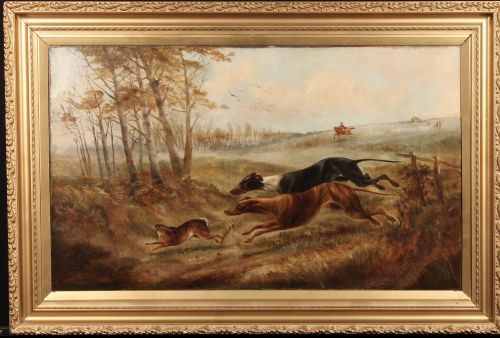
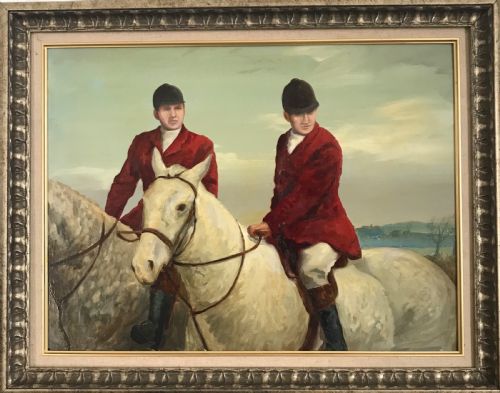
These vintage hunting painting works record hounds, horses, and field sports across oil on canvas and watercolour from the nineteenth and twentieth centuries.
Vintage Hunting Painting
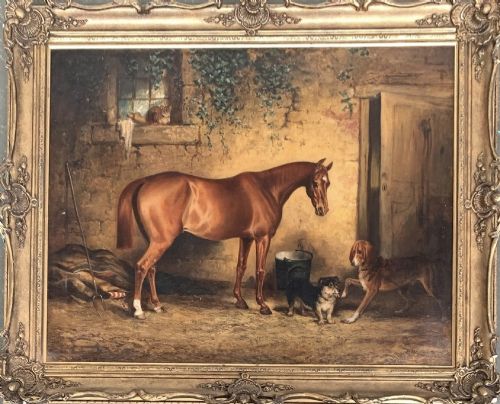
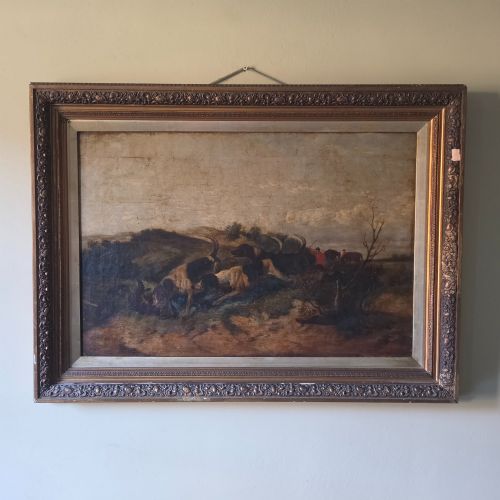
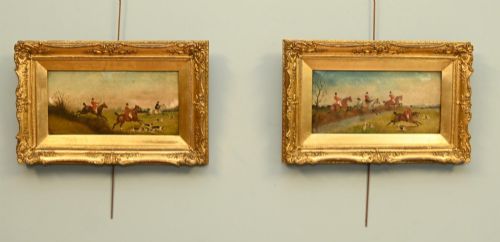
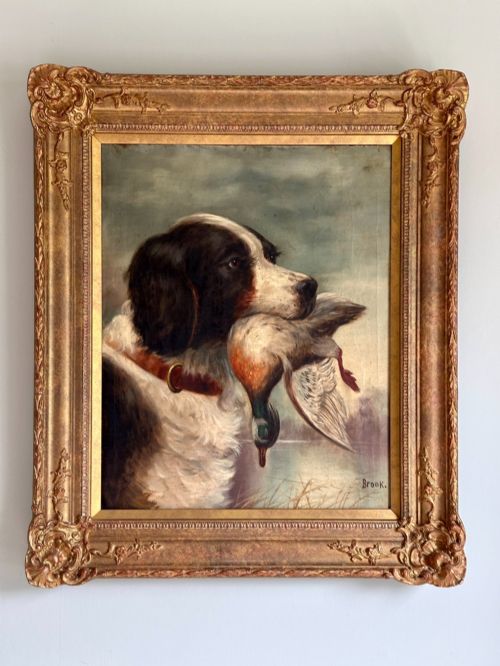
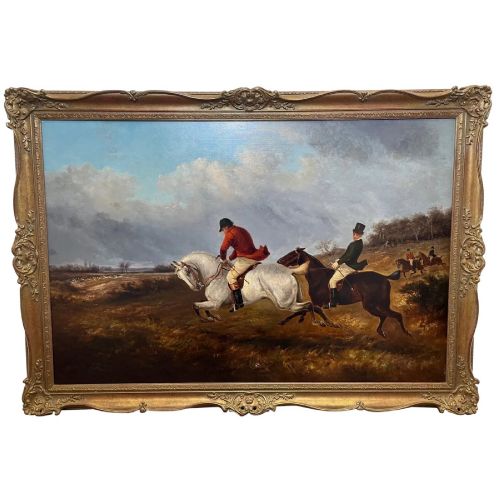
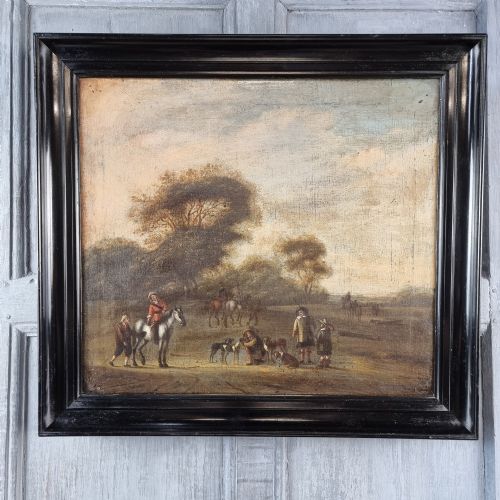
A vintage hunting painting captures the traditional subjects of British sporting life, centring on foxhounds, hunters on horseback, and canine portraits in pastoral landscapes. The buyer encounters works originating from the Victorian and Edwardian eras through to the mid-twentieth century, executed largely in oil paint or watercolour.
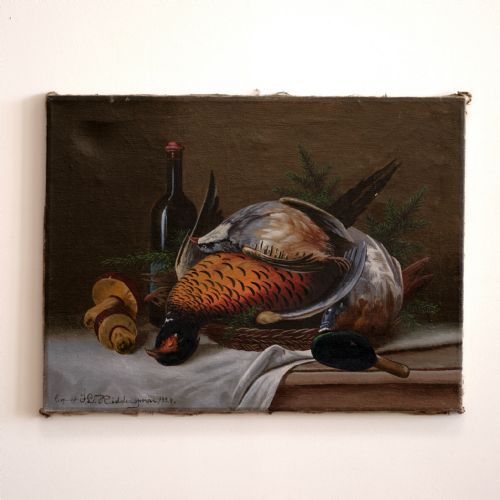
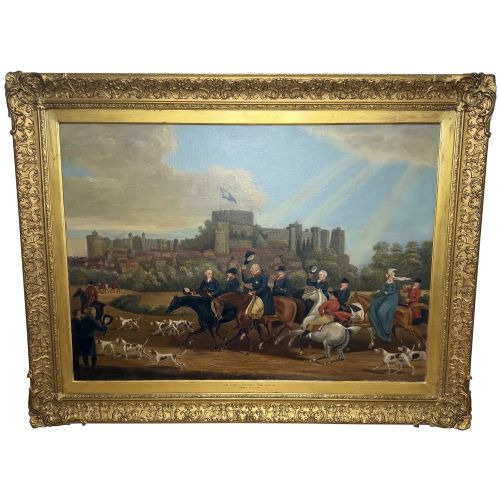
Most examples on this page document equestrian scenes, hound packs in full cry, and gun dogs with game, framed within wood or glass settings. These pieces reflect the sporting traditions of their period, spanning folk art expressions to accomplished academic brushwork.
Materials and construction
These works rely primarily on oil paint applied to woven canvas or wood panels, alongside watercolours rendered on paper. Pigments capture the tonal contrasts of horses, hounds, and open countryside under varied daylight.
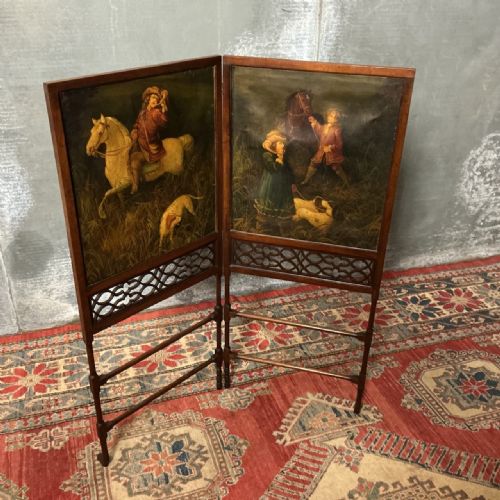
Framing often involves traditional wood mouldings, sometimes paired with glass protection for watercolour pieces. Hand-painted decorative objects like blown glass vases also utilise enamelled mineral pigments to depict sporting motifs.
Listings include oil on canvas, watercolour, painted wood, and hand-blown glass across the nineteenth and twentieth centuries.
Assessing quality
Quality rests upon the artist's command of animal anatomy, movement, and spatial depth within the landscape. Stronger examples convey the tension of a hunt or the alert posture of a gundog with confident, fluid brushwork rather than rigid outlines.
The distinction between standard decorative works and master output lies in the rendering of light on horse coats and the convincing integration of hounds and riders into a unified pastoral setting.
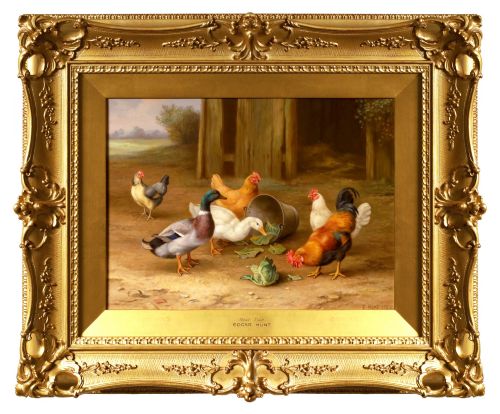
Henry Barraud·Thomas Smythe·Edgar Hunt·John Frederick Herring Senior·Arthur Wardle·George Wright·Basil Nightingale·Philip Henry Rideout·Henri Joseph Pauwels·John Sanderson Wells·Michael Lyne·Henri Schouten
The Vintage Hunting Painting Glossary
- Oil on canvas
- Pigments bound in drying oil applied to a stretched fabric support. This medium allows for rich blending and textured impasto work.
- Watercolour
- Pigments suspended in a water-based, translucent solution applied to paper. It demands precise brushwork as errors cannot easily be painted over.
- Sporting art
- Depictions of hunting, shooting, fishing, and equine subjects. This genre flourished in Britain throughout the eighteenth, nineteenth, and twentieth centuries.
- Folk art
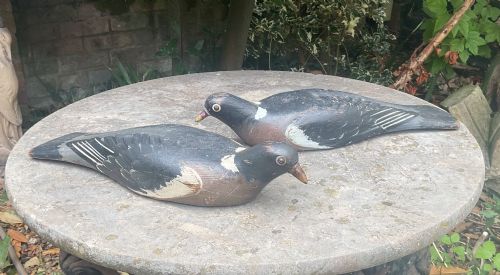
- Utilitarian or decorative objects made by self-taught or provincial makers. These pieces prioritise direct visual impact over academic proportion.
Vintage Hunting Painting: Frequently Asked Questions
What periods do these paintings come from?
The selection spans the nineteenth century, the Victorian and Edwardian periods, and runs through the early and mid-twentieth century.
Most items date from the era when equestrian and field sports held a central place in rural British life.
How do I care for an oil painting?
Keep the canvas away from direct sunlight and damp conditions to prevent paint cracking and mould growth.
Dust the surface gently with a soft, dry brush and avoid chemical cleaning agents.
Are watercolours framed differently?
Watercolour works on paper require glass protection and acid-free mounts to shield the pigments from atmospheric moisture and fading.
Oil paintings on canvas are left open to the air within their wood frames.
How do I distinguish an oil painting from a watercolour?
Oil paint sits on the canvas with visible texture and a semi-matte or glossy sheen, showing depth in the layered pigments.
Watercolour is flat to the paper surface, translucent, and bounded by the white of the paper underneath.