




Vintage Hunting Hound Sculpture
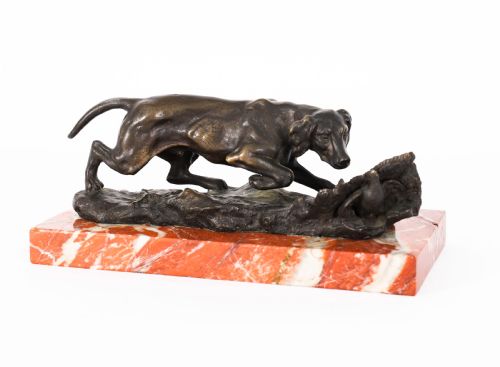
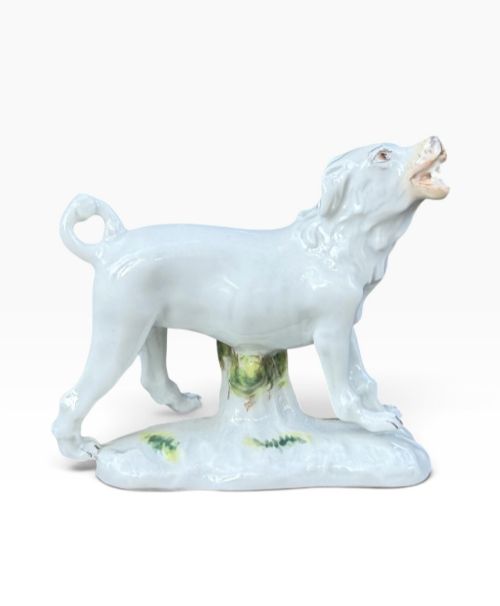
These vintage hunting hound sculpture pieces capture the muscular tension and alert grace of sporting dogs in bronze, marble, porcelain, and spelter.
Vintage Hunting Hound Sculpture
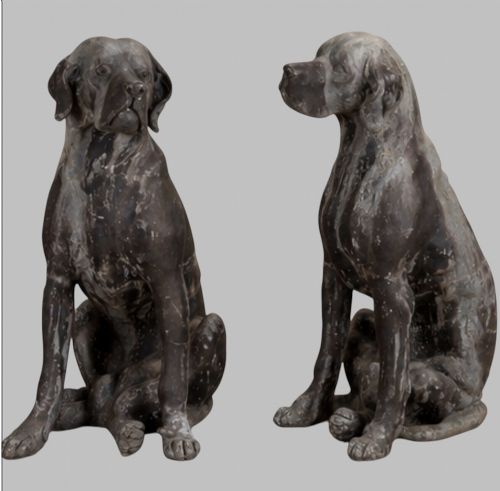
A vintage hunting hound sculpture represents the enduring appeal of sporting dogs across the nineteenth and twentieth centuries, spanning periods from Victorian and Edwardian eras to Art Nouveau and Art Deco. Buyers seeking a vintage hunting hound sculpture encounter diverse forms ranging from French animalier desk bronzes and Parian ware groups to life-size English cast lead garden statues and German porcelain figures.
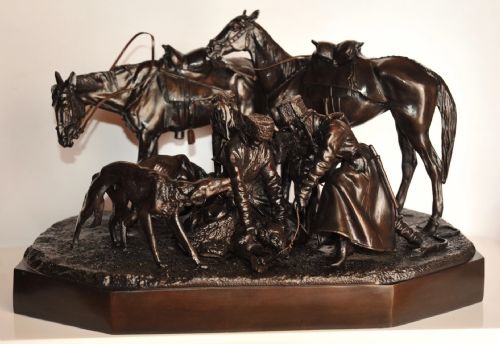
The selection on this page includes realistic models of resting hounds, active hunting dogs with game, and monumental pairs designed for firesides or estates. French animalier works alongside Austrian factory pieces and British cast lead figures, showing how different makers interpreted the subject.
How they were made
Metal sculptures utilise the lost-wax casting method for bronze or standard foundry casting for spelter and cast lead, capturing fine anatomical details like taut sinews and textured fur. Many bronze examples are mounted onto shaped marble bases to provide weight and stability.
Ceramic and porcelain works involve skilled moulding, hand-painting, and glazing, often incorporating parian ware for a smooth, marble-like biscuit finish. These pieces rely on precise kiln firing to achieve their characteristic surface tones and details.
Several hounds share their sculptural space with unexpected companions, including birds, game, and even small boys.
What varies in quality
In porcelain and ceramic pieces, fine hand-painting and crisp mould definition set apart high-grade factory output from simpler decorative items. The weight and choice of secondary materials, such as genuine marble bases versus substitute stones, also indicate the original tier of manufacture.
Carl Kauba·Antoine Louis Barye·Christophe Fratin·Nikolai Lieberich
The Vintage Hunting Hound Sculpture Glossary
- Animalier
- A nineteenth-century artistic movement focused on the realistic depiction of animals, particularly predators and sporting dogs. Practitioners often produced small-scale bronzes.
- Parian ware
- A fine-grained, unglazed porcelain resembling white marble, developed in the nineteenth century for sculptural figures. It yields a smooth, matte surface suitable for classical and animal subjects.
- Spelter
- An alloy of zinc and other metals utilised as a cheaper alternative to bronze for decorative sculptures. It is often painted or electroplated to simulate bronze finishes.
- Patina
- The surface coloration and sheen developed on metal through age or chemical treatment. A well-preserved patina enhances the depth and visual texture of bronze sculptures.
- Lost-wax casting
- A traditional foundry method where a wax model is melted out and replaced with molten metal. This technique allows for intricate, undercut details.
Vintage Hunting Hound Sculpture: Frequently Asked Questions
Where were these sculptures displayed?
These sculptures typically stood on library desks, mantelpieces, or as fireside ornaments in country houses and town residences. Larger lead versions were placed outdoors in gardens or on estate grounds.
Smaller porcelain and bronze pieces were intended for interior display cabinets and tabletops where guests could inspect their craftsmanship close up.
How do I identify bronze from spelter?
Bronze is heavier, colder to the touch, and possesses a resonant ring when tapped gently, whereas spelter is lighter and softer. Spelter also shows a dull grey metal beneath any worn surface finish.
Examining the underside often reveals the distinct casting texture or mounting bolts characteristic of each metal type.
What is animalier art?
Animalier art refers to the nineteenth-century European school of sculpture dedicated to accurate and dynamic portrayals of animals in naturalistic poses. Artists focused heavily on studying live subjects in menageries and fields.
This movement produced many of the most sought-after hound and sporting dog bronzes from French and international foundries.
How should I clean a bronze hound?
Bronze sculptures require only gentle dusting with a soft, dry brush to remove accumulated particles. Avoid chemical cleaners or polishing agents that strip the historic patina.
Applying a very thin coat of microcrystalline wax periodically helps protect the metal surface from atmospheric moisture.