
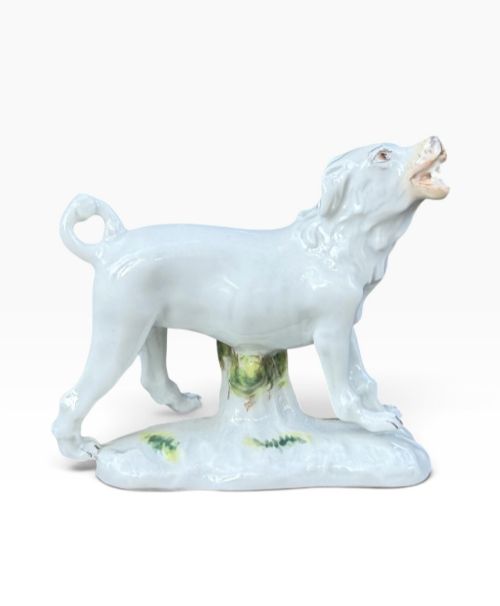


Antique Porcelain Hunting Figure
An antique porcelain hunting figure captures sporting life in clay, offering a glimpse into historic fields and stately homes.
Antique Porcelain Hunting Figure
When you search for an antique porcelain hunting figure, you encounter sculptural ceramics depicting dogs, handlers, and mythological deities linked to the chase. These objects span periods from the Georgian era through to the Edwardian decades, capturing subjects like greyhounds, gundogs, and setters alongside human companions.
The pieces on this page appear primarily as figurines, sculptures, and decorative ornaments. They range from early Derby and Minton models to later Staffordshire and Royal Dux productions, reflecting evolving tastes in domestic display.
How they were made
Makers utilised fine ceramic bodies, including porcelain, earthenware, and blanc de chine, shaped into detailed sculptural forms. Potters applied lead glaze and enamel paint to surface details, often finishing the works with subtle gilding.
Techniques varied from early patch period potting to later factory moulding. Artisans painted enamel colours by hand onto the biscuit or glazed ceramic before firing.
What varies in quality
Quality rests in the sharpness of the modeller's hand and the precision of the enamel painting. Finer examples display crisp anatomical rendering in the animals and expressive modelling in human figures.
The application of glaze and gilding also marks the difference between standard production pieces and superior works. Early factory examples exhibit a depth in ceramic texture and pigment that later industrial output often lacks.
Thomas Parr·Royal Capodimonte Factory·Royal Dux
The Antique Porcelain Hunting Figure Glossary
- Blanc de chine
- A white porcelain body originating in China and later emulated by European factories. This unglazed or clear-glazed ceramic shows sculptural detail cleanly.
- Enamel paint
- Vitreous pigments applied over the glaze and fired at a lower temperature. This technique allows for bright, detailed coloration on ceramic figures.
- Parian
- A fine-grained unglazed porcelain resembling marble, developed in the nineteenth century. Sculptures cast in this material imitate classical carved stone.
- Patch mark
- An unglazed spot on the underside of early porcelain caused by kiln furniture supports. This technical sign helps date eighteenth-century figures.
- Lead glaze
- A glossy coating containing lead oxide applied to earthenware bodies. It produces a smooth, reflective surface that enhances underlying colours.
Antique Porcelain Hunting Figure: Frequently Asked Questions
What is an antique hunting figure?
An antique hunting figure is a ceramic sculpture depicting animals like greyhounds, setters, and gundogs, often accompanied by human hunters or mythological figures.
These pieces reflect the cultural importance of field sports in historical households, serving as mantelpiece ornaments and decorative displays.
How do I date a porcelain figure?
Dating relies on identifying factory marks, stylistic traits of periods like the Georgian or Edwardian eras, and manufacturing techniques such as glaze types.
Early pieces often show distinct potting methods and base marks that separate them from twentieth-century factory output.
Where were these figures made?
These figures were produced across major European ceramic centres, including English potteries in Staffordshire and Derby, as well as continental factories.
Each region utilised local clay traditions and painting styles that distinguish their sculptural output.
How should I display them?
Display these delicate ceramic sculptures in stable environments away from direct sunlight and heavy foot traffic to protect their enamel and glaze.
Enclosed cabinets or secure mantel shelves offer safe settings for viewing the intricate details of the modelling.