




Vintage Horse Watercolour
Vintage horse watercolour paintings capture equestrian life, coaching scenes, and rural work through expressive washes of pigment on paper.
Vintage Horse Watercolour
When you search for vintage horse watercolour, you encounter original works spanning the nineteenth century through the mid-twentieth century, recording hunting, racing, and agricultural working horses.
The most common examples on this page are British sporting and pastoral watercolours from the Edwardian and Victorian eras, alongside mid-century pieces executed in gouache and ink.
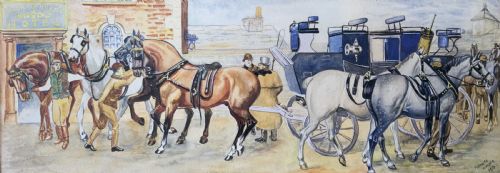
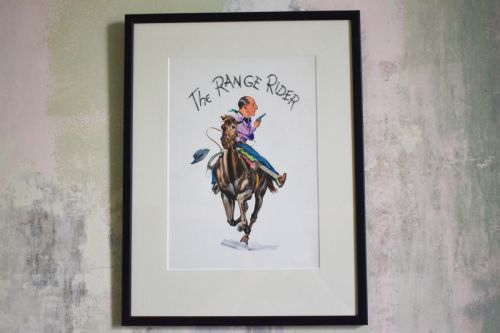
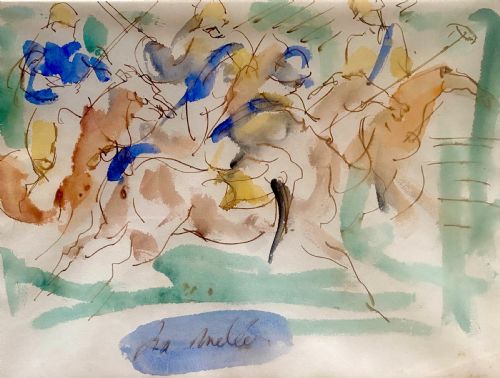
These framed artworks portray coach and horses scenes, polo matches, horse fairs, and logging carts, reflecting the central role of horses in past daily life and leisure.
Materials and techniques
Artists painted primarily with watercolour pigment and ink on paper, occasionally combining gouache to build opaque highlights and denser textures on the sheet.
Many surviving examples retain their period wooden frames and protective glass, which preserve the delicate water-soluble pigments from atmospheric damage.
Several watercolours preserve the exact moment a grumpy cart horse refused to budge on a rainy London street.
Quality variations
The distinction between standard works and masterpieces lies in the sureness of the brushwork and the artist's ability to render the anatomy and kinetic energy of equine subjects convincingly.
Condition also dictates standing, with pristine pigment retention and minimal foxing on the paper surface elevating the desirability of a painting.
Albert Ludovici Jnr·Herman S Melville·John Rattenbury Skeaping·William Manners·James William Booth·Charles James Lauder·Basil Nightingale·John Augustus Atkinson·George Hamilton Constantine·Charles Clifford Turner·John Sanderson Wells·Charles Johnson Payne Snaffles·William J Hodgson·Henry Charles Fox·Walter Duncan·Johan Noah Bemmel·Frank Saltfleet·William Kay Blacklock·Alfred George Stevens·Frank Dadd·Fred Lawson
The Vintage Horse Watercolour Glossary
- Watercolour pigment
- Finely ground colour particles suspended in a water-soluble binder, applied in translucent washes to paper.
- Gouache
- An opaque water-based medium containing pigment and white filler, used to add solid highlights to watercolour paintings.
- Foxing
- Brown spots and discolouration caused by chemical reactions in ageing paper, frequently encountered in antique works.
- Sporting art
- A genre of painting dedicated to equestrian subjects, hunting, racing, and rural field sports.
Vintage Horse Watercolour: Frequently Asked Questions
How should I frame and hang a vintage horse watercolour?
Protect these works from direct sunlight to prevent fading of the delicate water-based pigments. Use acid-free mounts and framing to safeguard the paper over time.
Keep them away from damp environments like kitchens or unheated rooms where moisture can cause foxing and mould growth on the paper.
How do I identify the period of an equestrian watercolour?
Examine the framing style, paper type, and artist signatures, comparing them against known exhibition records and active working dates. Clothing styles and harness designs depicted in the scenes also offer strong chronological clues.
Victorian and Edwardian works often feature detailed narrative framing and traditional pastoral compositions, whereas mid-century pieces display looser modernist brushwork.
What is the difference between watercolour and gouache?
Watercolour relies on translucent washes that allow the white of the paper to shine through as light, creating luminous atmospheric effects.
Gouache includes chalk or white pigment mixed into the paint, producing an opaque finish that lets artists paint light tones directly over darker washes.
Why are some horse paintings signed by pseudonyms?
Many sporting artists, such as Charles Johnson Payne who worked under the moniker Snaffles, adopted nicknames or shorthand signatures for their published prints and commercial illustrations.
These pseudonyms became famous brands in their own right among collectors of equestrian and military art.