



Vintage Hanging Sign
A vintage hanging sign projects street-level history into a room, offering functional trade iconography and bold typography.
Vintage Hanging Sign
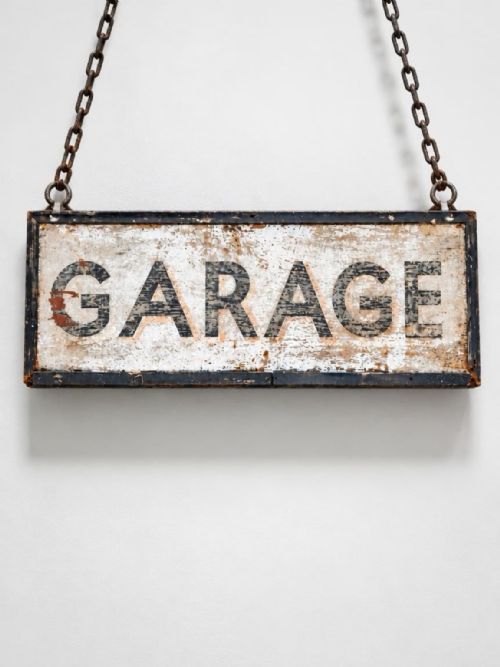
When searching for a vintage hanging sign, buyers encounter robust markers of commerce and street furniture originating from the nineteenth and twentieth centuries. These pieces function primarily as trade signs, wall signage, and architectural salvage designed to command attention from passing foot and carriage traffic.
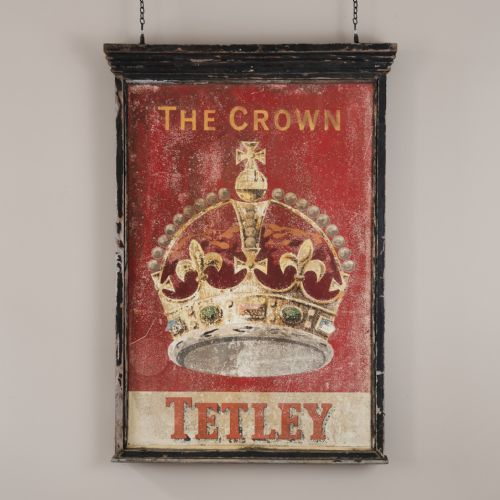
The versions most commonly met on this page span the Edwardian and Victorian eras through to the 1960s, heavily weighted toward early twentieth-century examples. Forms range from double-sided pub signs and chemist symbols to shaped pocket watches and armorial plaques.
Origins stretch across British traditional, French industrial, and folk art traditions, bringing distinct local commercial aesthetics into domestic or retail interiors. Many pieces retain their original iron brackets or mounting hardware intended for exterior projection.
Materials and construction
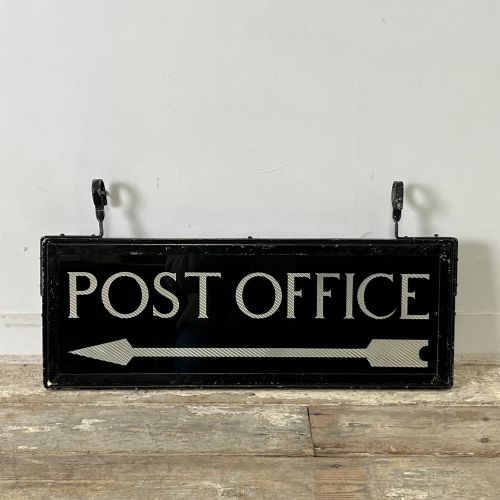
Construction relies heavily on durable exterior materials capable of withstanding the elements, predominantly wood, sheet metal, cast iron, and wrought iron. Artisans painted directly onto timber boards or sheet metal backgrounds, sometimes incorporating glass elements for directional utility.
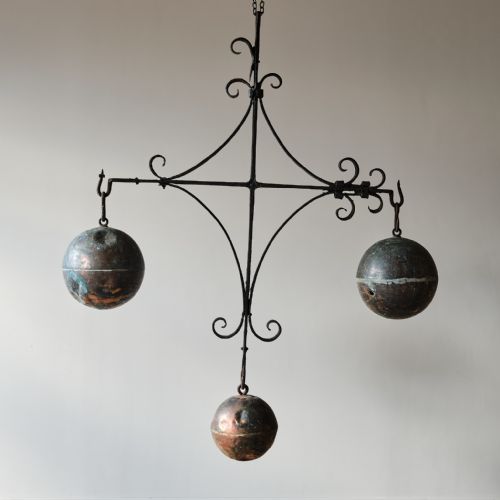
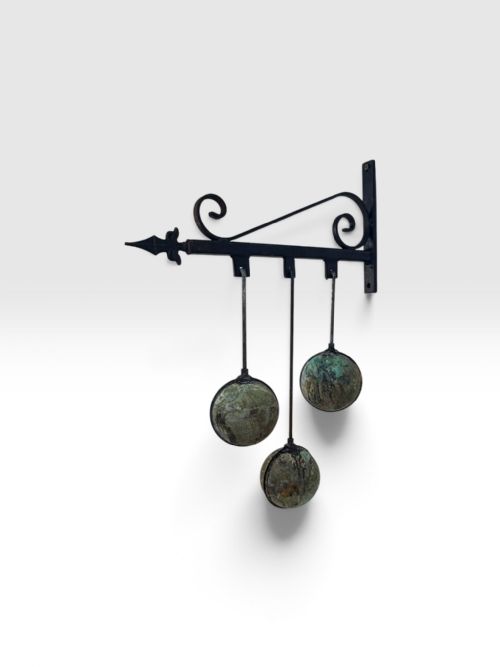
Specialist trades utilised brass and copper for three-dimensional symbols such as pawnbrokers' motifs or precision timepiece shapes. Brackets and arms were forged from heavy iron to support the swing and weight of double-sided panels hanging outdoors.
Vintage Hanging Sign Retail Price Guide 2026
Typical asking prices for vintage hanging sign among the pieces listed under this phrase on Sellingantiques today, from the lower quarter to the upper quarter. They describe what is for sale here now, not the wider market.
A nineteenth-century pawnbroker's trade sign swings with the quiet promise of unredeemed gold.
Assessing quality and character
Quality rests in the crispness of the original hand-lettering and the artistic skill required to model sculptural trade objects like pocket watches or pestles and mortars. Pieces retaining their authentic painted surfaces show genuine weathering rather than manufactured distress.
The integrity of the mounting hardware often dictates the desirability of a piece, with forged iron brackets matching the age of the sign carrying greater authenticity. Maker attribution or surviving regional provenance elevates simple utility markers into compelling folk art.
Josef Herzog·Aitchison
The Vintage Hanging Sign Glossary
- Trade sign
- A functional exterior marker designed to advertise a specific merchant, profession, or establishment to the street. These objects take both flat painted forms and three-dimensional sculptural shapes.
- Architectural salvage
- Building components and exterior fixtures rescued from structures slated for demolition or renovation. This category includes the iron brackets and armorial plaques associated with hanging signage.
- Double-sided
- A configuration intended for perpendicular mounting to a wall so pedestrians approaching from either direction could read the trade information. These panels often swing on original iron hinges.
Vintage Hanging Sign: Frequently Asked Questions
How were hanging signs mounted?
These signs hung perpendicularly from exterior walls using heavy iron brackets and mounting arms designed to catch the eye of passing street traffic.
The mechanics allowed the panels to swing freely in the wind while supporting the substantial weight of wood and metal construction.
What trades used hanging signs?
Common commercial users included pawnbrokers, chemists, publicans, and post offices who relied on clear visual symbols to identify their services to a largely literate populace.
Sculptural representations like pocket watches, pestles and mortars, or galloping horses instantly communicated the business within.
How do I date an iron bracket?
Dating relies on observing forge marks, the weight of the wrought iron, and the simplicity or elaboration of the scrollwork.
Nineteenth-century examples typically show heavier hand-forged characteristics compared to later twentieth-century mass-produced steel fittings.
Can these signs be hung outdoors today?
While originally built for exterior use, surviving vintage pieces often feature weathered paint and aged metal that react sensitively to modern moisture.
Many collectors now display them indoors or within sheltered porch areas to preserve their remaining historic surface finish.