
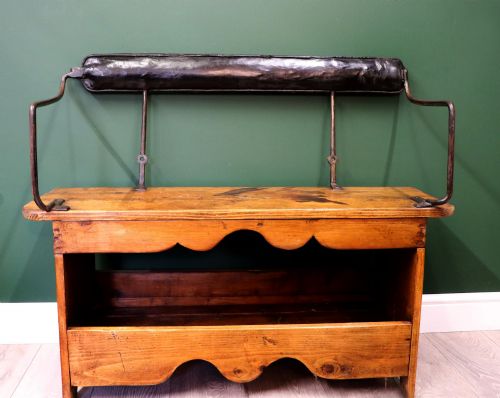
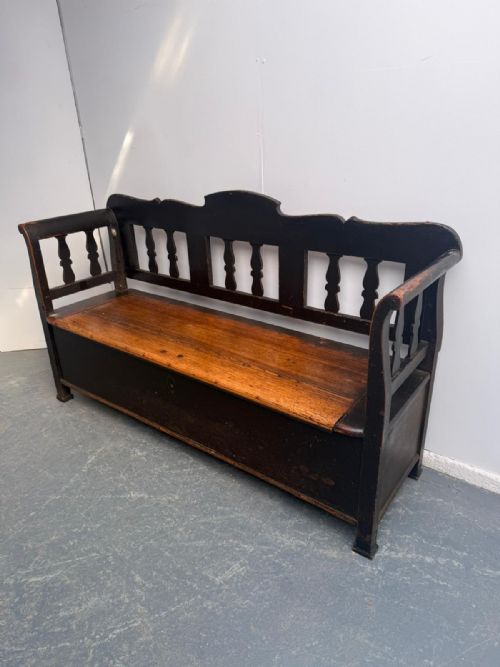
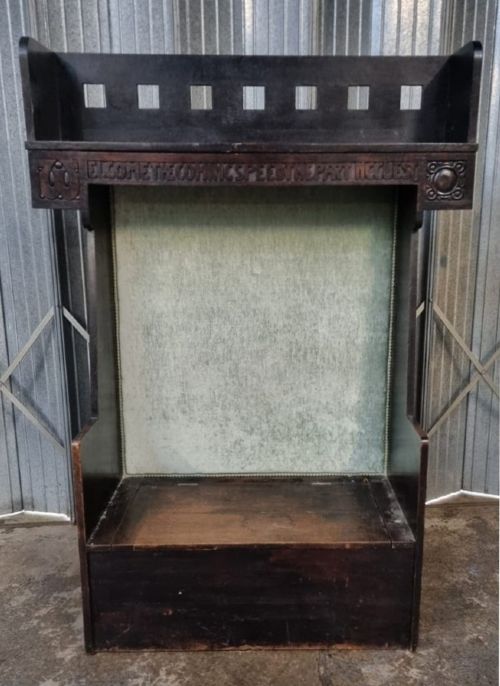

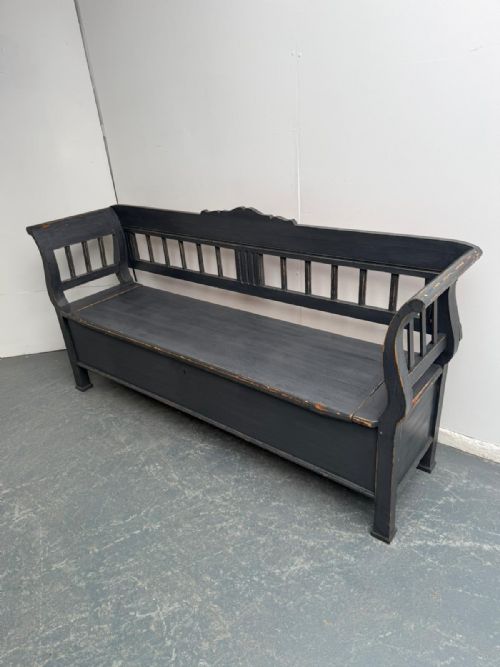

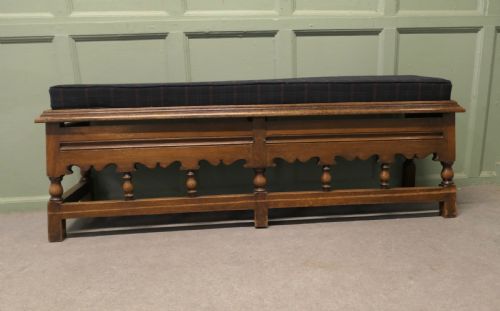
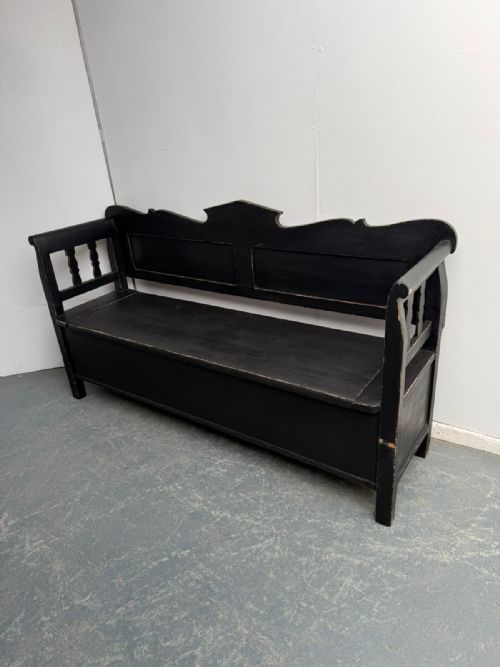


Vintage Hallway Storage Seat
A vintage hallway storage seat organises the entrance with period character, offering a practical place to sit while concealing boots and everyday clutter.
Vintage Hallway Storage Seat
A vintage hallway storage seat combines seating with concealed compartments, appearing across periods from the Georgian era through to the mid-twentieth century. These items serve the practical demands of an entrance hall, providing a place to pause and store items out of sight.
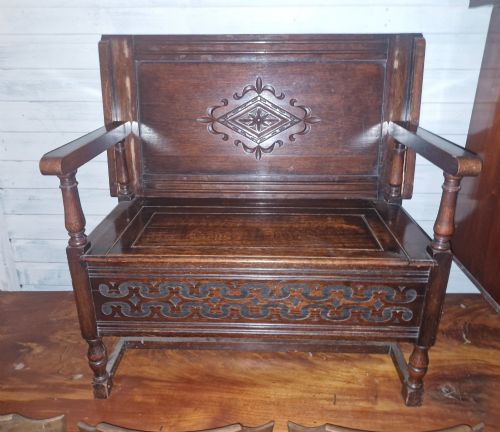
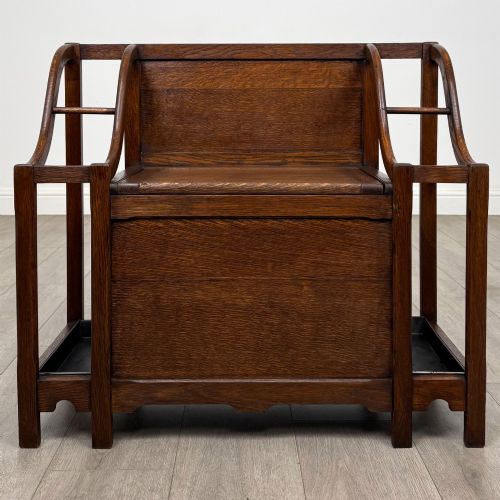
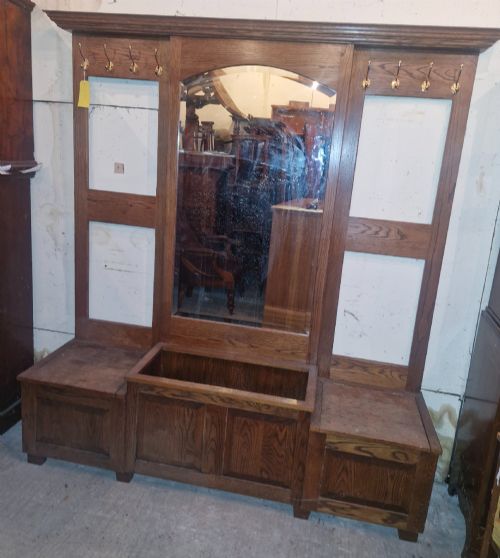
The most common examples encountered here are constructed from oak or pine, often taking the form of settles, monks benches, or hall stands with lift-up lids. Pieces range from simple country pine benches to carved oak designs reflecting revival styles.
How they were made
Construction relies heavily on solid timber, with oak and pine forming the structural core of the majority of pieces alongside occasional mahogany and walnut. Joinery techniques vary from simple pegged construction in country examples to more formal cabinet-making methods in Edwardian variations.
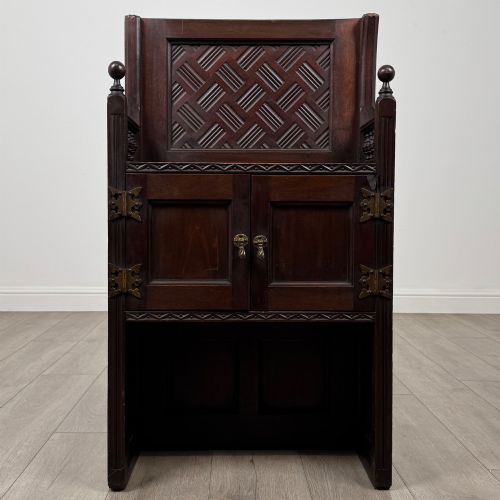
Surface treatments range from traditional wax finishes that highlight the grain of the wood to painted applications in black, grey, or blue. Decorative detailing often includes carved panels, spindle backs, and applied metal or brass hardware.
The selection includes regional European country furniture alongside standard British revival styles from the nineteenth and twentieth centuries.
What varies in quality
Quality rests in the integrity of the timber selection and the execution of the joinery rather than mere age. Pieces built from dense, well-seasoned oak or select pine maintain structural stability across decades of daily domestic use.
Refinement in carving, the smoothness of mechanical elements like fold-over tops or lift-up lids, and the preservation of original painted or waxed surfaces distinguish standard utility items from finer examples.
Shapland & Petter·Liberty
The Vintage Hallway Storage Seat Glossary
- Settle
- A wooden bench with high back, solid arms, and a box compartment beneath the seat for storage. This traditional form kept draughts at bay in older hallways.
- Monks bench
- A versatile convertible item featuring a hinged back that folds down to form a table top over a storage base. This dual-purpose design suited smaller entrance spaces.
- Jacobean Revival
- A nineteenth and twentieth-century style reproducing seventeenth-century motifs such as geometric panel turns and heavy carved ornamentation. Pieces in this style often utilise dark oak.
- Arts and Crafts
- A movement prioritising visible construction, honest materials, and hand-craftsmanship over mass production. Items from this tradition display restrained carved detail and solid proportions.
Vintage Hallway Storage Seat: Frequently Asked Questions
What is a monks bench?
A monks bench is a dual-purpose item where the hinged wooden back folds flat over the arms to create a table surface. Beneath the seat lies a concealed box for storing items.
This form proved useful in compact entrance spaces where a separate table and chair would crowd the floor.
How do I identify the period?
Dating relies on timber choice, construction methods, and stylistic cues such as hardware and decorative carving. Edwardian and later pieces often incorporate lighter oak or mahogany with machine-cut components.
Earlier examples from the Victorian or Georgian periods typically display hand-planed surfaces, pegged joinery, or traditional painted finishes on pine.
Where were these placed?
These seats were positioned directly inside front entrances, boot rooms, and narrow corridors to manage outdoor wear. They provided an immediate spot to remove footwear and deposit accessories.
Many incorporated coat hooks, umbrella stands, or mirror panels to function as a complete hallway station.
How do I care for the wood?
Routine maintenance involves dusting with a soft cloth and applying a traditional beeswax polish periodically to nourish dry timber. Avoid placing wooden furniture near direct heat sources or in damp conditions to prevent warping.
Waxed pine and oak surfaces respond well to gentle cleaning that preserves their patina over time.