





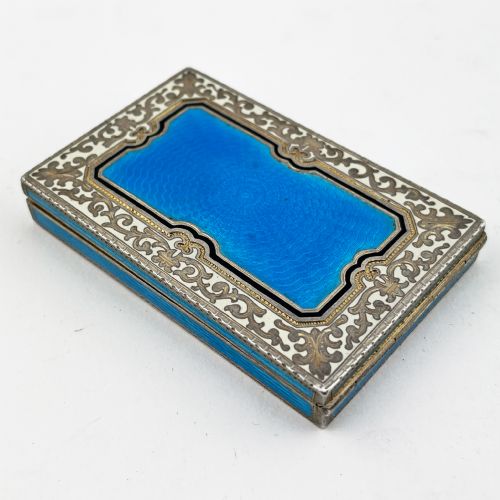

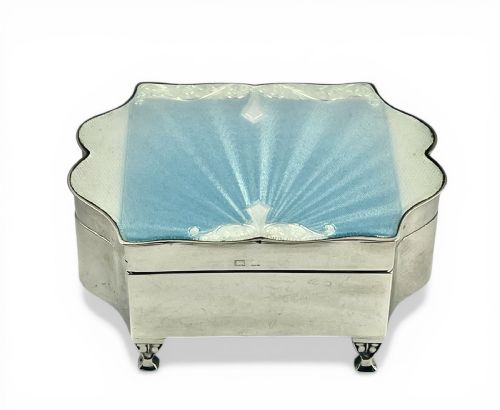

Vintage Guilloche Box
A vintage guilloche box combines precision machine engraving with translucent enamel to hold powder, pills, and trinkets.
Vintage Guilloche Box
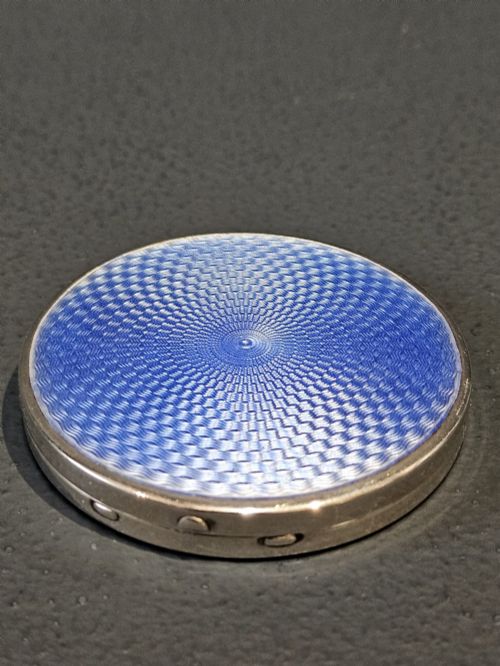
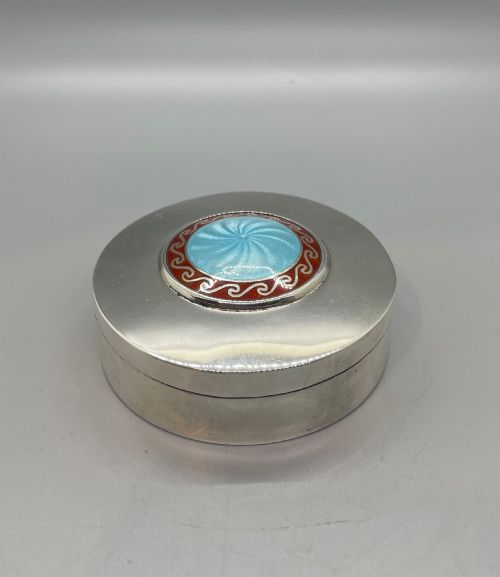
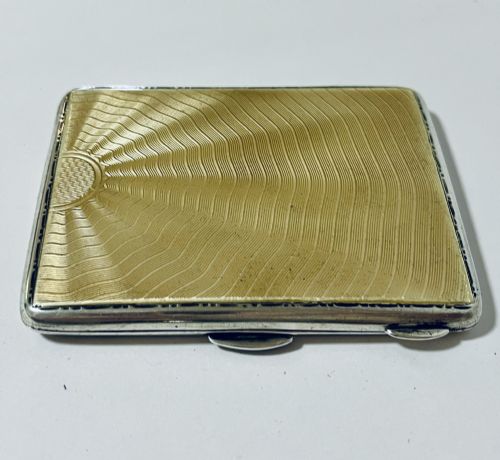
A vintage guilloche box is a small lidded container designed for vanity and dressing table use, frequently encountered in forms such as powder compacts, pill boxes, trinket jars, and cigarette cases. These pieces span from the 19th century through the Edwardian era, the 1920s and 1930s Art Deco period, and into mid-century modern design.
The objects on this page originate from British, continental European, and international makers, showcasing styles ranging from Victorian and Rococo Revival to clean geometric Art Deco lines. Collectors most frequently meet sterling silver and glass vessels featuring coloured vitreous enamel lids.
Beyond lidded boxes, the selection encompasses related vanity accessories such as dressing table jars, compacts, and pocket watch stands that share the signature engraved enamel technique.
Materials and construction
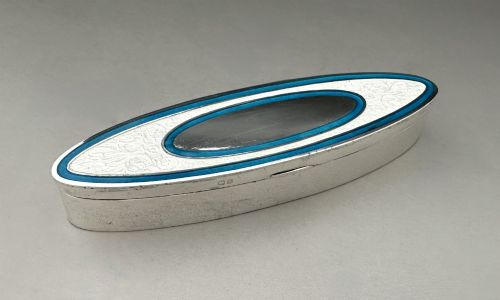
Craftsmen built the foundations of these items using sterling silver, silver-gilt, gilt metal, and cut glass, often lining the interiors with velvet or suede. The defining characteristic involves machine-turning a geometric pattern into a metal disc using a rose engine lathe before applying coloured vitreous enamel over the engraved design.
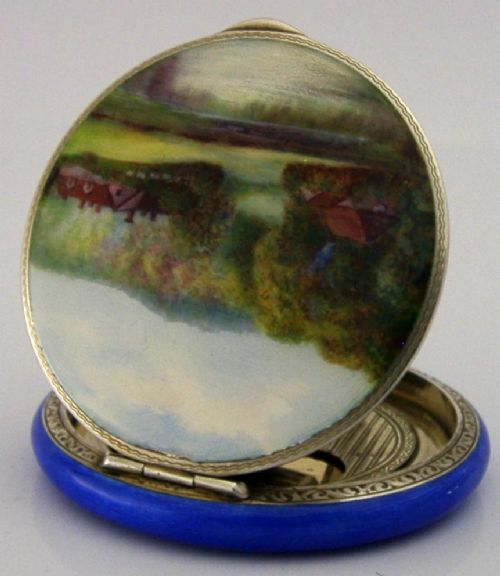
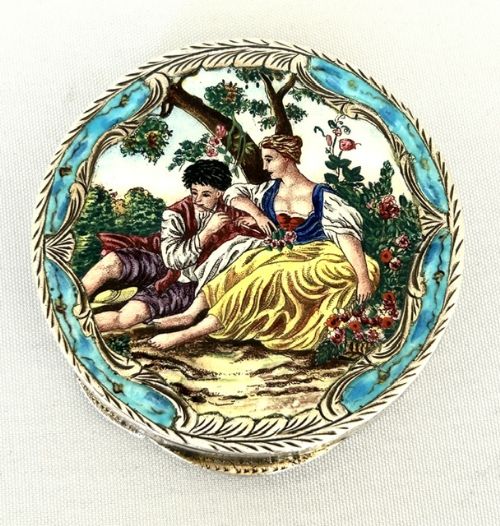
The translucent enamel allows the underlying mechanical engraving to show through in repeating waves, sunbursts, or concentric circles. Additional decorative elements include hand-painted miniature scenes, applied metal mounts, and contrasting bi-colour enamel work.
Vintage Guilloche Box Retail Price Guide 2026
Typical asking prices for vintage guilloche box among the pieces listed under this phrase on Sellingantiques today, from the lower quarter to the upper quarter. They describe what is for sale here now, not the wider market.
Listings feature items spanning the 19th century, Edwardian era, 1920s, 1930s, and mid-century modern period.
Distinguishing quality
Quality rests in the crispness of the engine-turned engraving beneath the glaze and the clarity of the vitreous enamel itself. Superior examples maintain a smooth, uniform surface without cloudiness or chipping in the glass-like coating.
The weight and gauge of the sterling silver mounting, the precision of the hinge and lid closure, and the inclusion of recognised maker marks elevate certain pieces above standard production.
Henry Clifford Davis·Henry Matthews·Goldsmith's and Silversmith's Co.·Cartier·Evans·Houbigant·Hermes
The Vintage Guilloche Box Glossary
- Guilloche Enamel
- A decorative technique where metal is engraved with a precise mechanical pattern and coated with translucent enamel. This lets the underlying geometric design show through the glossy surface.
- Vitreous Enamel
- A material made by fusing powdered glass to a metal substrate at high temperature. The resulting glossy layer provides durable colour for silver boxes and compacts.
- Sterling Silver
- An alloy consisting of silver and other metals, predominantly copper, standard for high-quality British and continental vanity items. It provides a sturdy structural body for delicate enamel lids.
- Engine Turned
- A method of decorating metal surfaces using a specialised lathe to cut precise, repetitive geometric patterns. It forms the essential base texture for guilloche work.
- Silver-Gilt
- Silver that has been coated with a thin layer of gold on its surface. This finish adds a warm golden tone to the interior or exterior of dressing table accessories.
Vintage Guilloche Box: Frequently Asked Questions
What is a guilloche box used for?
These containers served practical functions on dressing tables and inside handbags for holding loose face powder, rouge, pills, or cigarettes. They were luxury accessories for personal grooming.
Today, owners utilise them to store small keepsakes, jewellery, or modern medications while displaying them on vanity surfaces.
How do I date a silver enamel box?
Dating relies heavily on British hallmarks stamped onto the silver mounts, which indicate specific assay offices and year letters. Stylistic clues such as geometric Art Deco motifs or Edwardian flourishes also narrow down the era.
Examining the construction methods, materials like cut glass or gilt metal, and associated maker marks provides further chronological context.
Are these boxes made of solid silver?
Many items feature sterling silver or continental silver bodies, often paired with glass bases or gilt metal internal fittings. Hallmarks stamped into the metal confirm the specific silver standard used.
Some variations incorporate non-silver base metals or gilt frames alongside the decorated enamel lids.
How should I clean my antique enamel box?
Maintenance requires gentle cleaning with a soft, dry cloth to remove dust from the glass and enamel surfaces. Harsh silver dips and abrasive polishes must be kept away from the enamel to avoid scratching.
Silver mounts can be polished carefully with a specialist cloth while avoiding contact with the decorated lid.