




Vintage Green Leather Armchairs
Vintage green leather armchairs bring together rich hide upholstery and sturdy timber frames from the nineteenth and early twentieth centuries.
Vintage Green Leather Armchairs
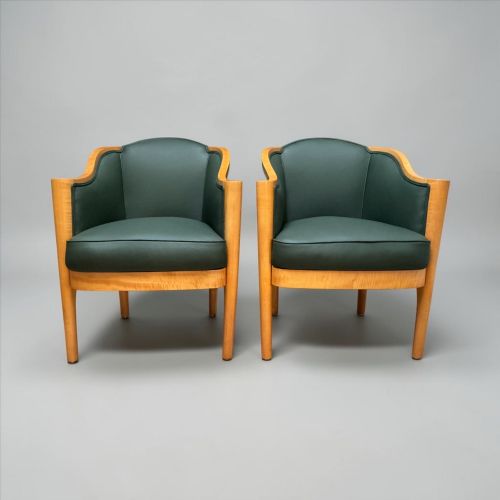
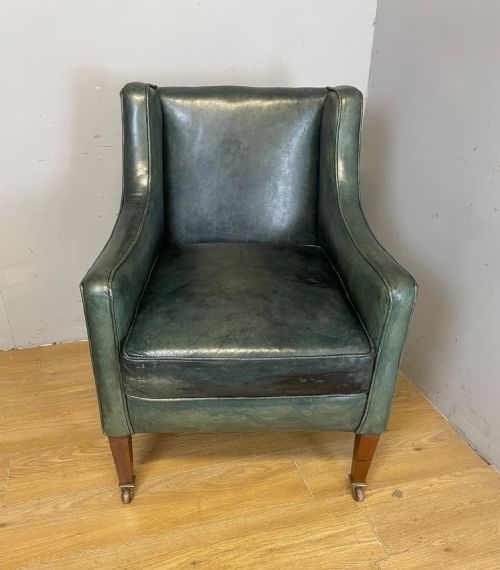
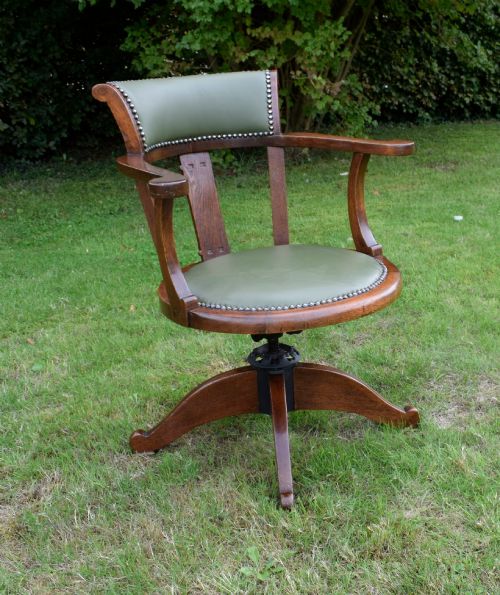
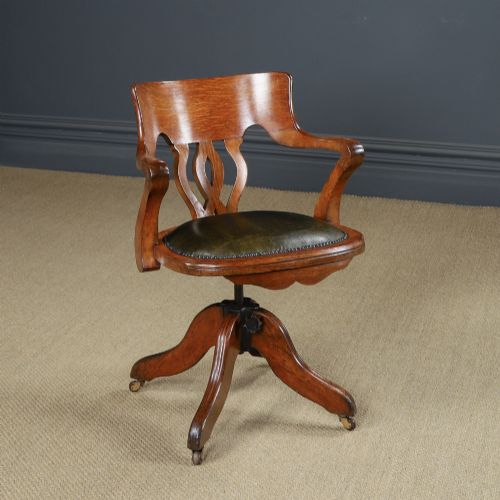
Vintage green leather armchairs encompass a wide variety of seating forms designed for studies, libraries, and parlours. When searching for vintage green leather armchairs, buyers encounter diverse iterations ranging from revolving office desk chairs to deep-buttoned Chesterfield armchairs and library seating.
The selections span distinct periods including the Victorian, Edwardian, and Regency eras, alongside revival styles such as Georgian and Chippendale. Common structural configurations include swivel mechanisms, wing backs, scroll arms, and open mahogany or oak frames.
Materials and construction methods
Frames are constructed predominantly from hardwoods such as mahogany, oak, walnut, and rosewood, providing robust structural foundations. Brass fittings often appear on castors, swivel mechanisms, and decorative studwork securing the upholstery.
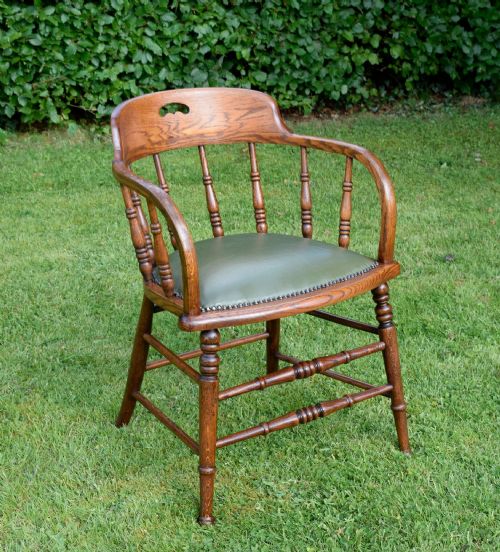
The primary upholstery material is leather, frequently paired with traditional stuffing and button-back detailing. Secondary support elements sometimes incorporate cane panels or turned wooden spindles.
Listings feature oak, mahogany, walnut, and rosewood frames paired with traditional leather upholstery across the Victorian and Edwardian periods.
Factors determining quality
Quality rests in the integrity of the timber framing and the depth of character in the leather hide. Substantial mahogany or oak frames with traditional joinery command greater regard than lighter utility builds.
The refinement of hand-carved details, such as scroll arms or claw and ball feet, distinguishes workshop output from mass production. Well-executed buttoning and durable springing systems indicate careful original craftsmanship.
Howard and Sons
The Vintage Green Leather Armchairs Glossary
- Bergère
- An enclosed upholstered armchair with wooden frames where the sides are frequently filled with cane work. This French-inspired form provides a lighter visual profile for library spaces.
- Chesterfield
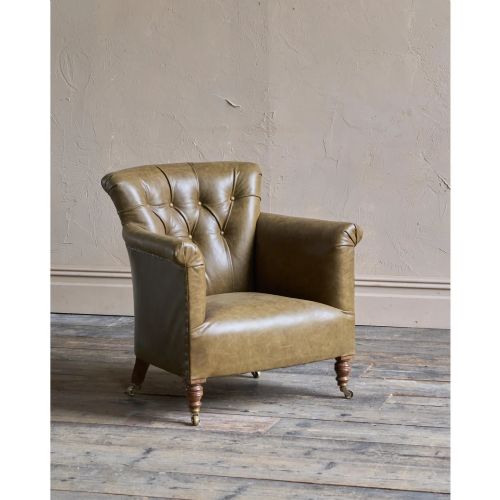
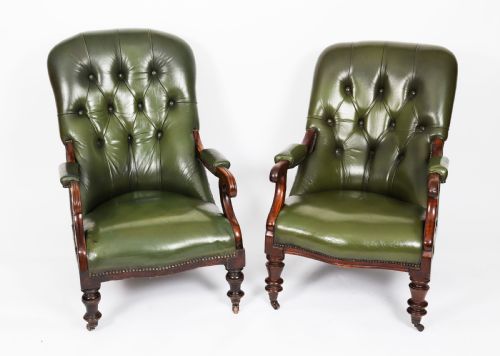
- A deep-buttoned upholstered seating style traditionally featuring arms and back of the same height. This form offers formal support and padded comfort.
- Gainsborough
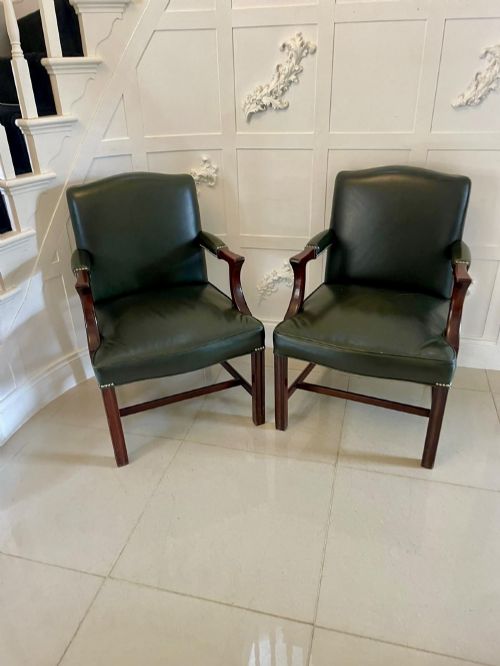
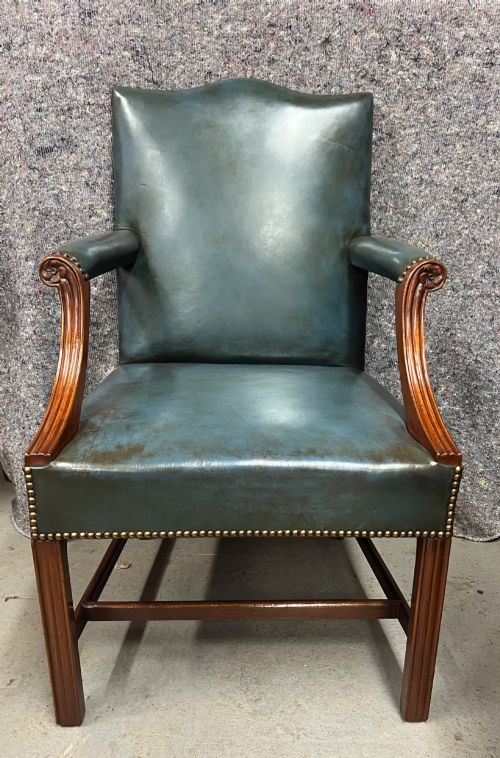
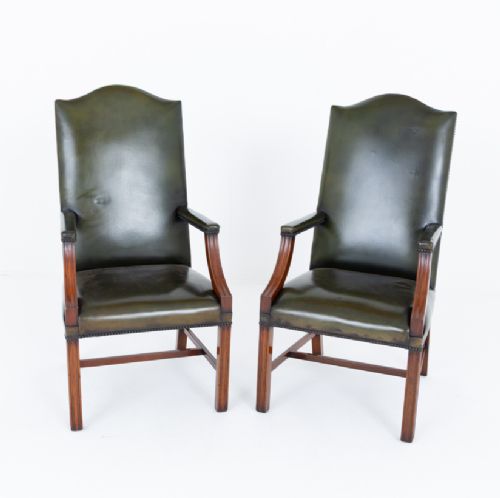
- A wide seat armchair with an upholstered back and arms, standing on short legs with open wooden arm supports. This style typically serves at a partners desk or in a library.
- Carver chair
- An armchair designed with solid wooden armrests, often used at the head of a dining table or as a desk auxiliary. The form matches simpler side chairs in a set.
- Revolving chair
- A desk chair featuring a central swivel spindle mounted on a four or five-legged base, sometimes fitted with castors. This mechanical adaptation aids movement in office environments.
Vintage Green Leather Armchairs: Frequently Asked Questions
Where were these armchairs originally used?
These seating forms served primarily in domestic studies, gentlemen's clubs, and grand libraries. They provided formal comfort for reading, writing, and administrative tasks.
Many examples were also placed in offices, boardrooms, and country house drawing rooms. Their sturdy construction suited daily professional use.
How do I distinguish Victorian from Edwardian styles?
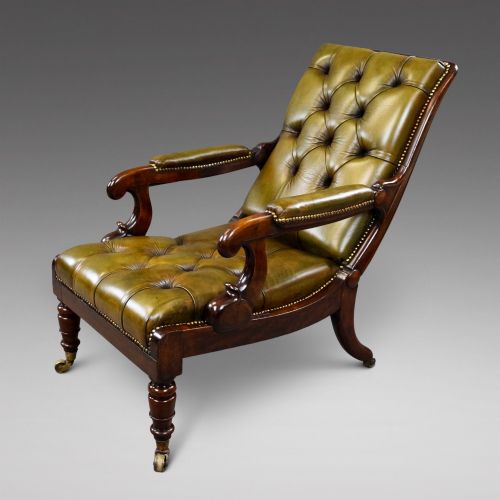
Victorian examples often display heavier timber frames, dark mahogany tones, and deep buttoning with ornate carving. Scroll arms and substantial proportions characterise this mid to late nineteenth-century output.
Edwardian pieces generally exhibit a lighter aesthetic using oak or walnut. The lines become cleaner, reflecting a transition towards simpler domestic interiors.
How should I care for vintage leather upholstery?
Maintain the hide by keeping chairs away from direct sunlight and heat sources that dry the material. Regular dusting prevents particle buildup in the creases.
Apply specialist leather conditioners periodically to preserve suppleness. Avoid harsh chemical cleaners that strip the original surface colour.
Are swivel desk chairs sturdy enough for daily use?
Original revolving mechanisms from the nineteenth and early twentieth centuries are engineered from iron and hardwood. When properly maintained, they withstand regular movement.
Test the central spindle and castor bases for stability. The heavy timber frames provide a secure structural base.