




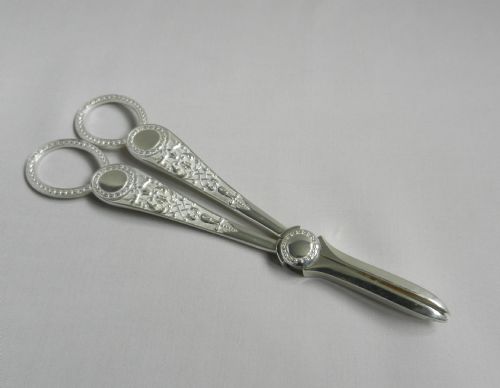

Vintage Grape Shears
Vintage grape shears are specialised dining implements designed for severing fruit clusters cleanly at the table, offering both mechanical precision and period elegance.
Vintage Grape Shears
Vintage grape shears are specialised serving cutlery created to snip individual clusters of fruit without bruising the skin or crushing the stem. When searching for vintage grape shears, buyers encounter forms ranging from plain nineteenth-century designs to ornately engraved Victorian iterations.
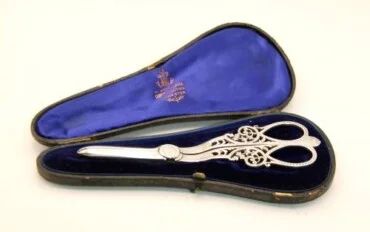
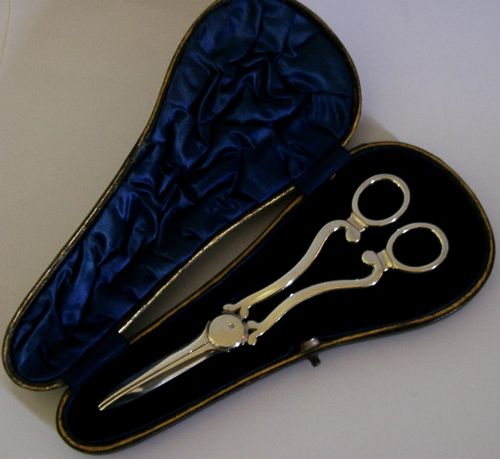
The material selection spans sterling silver, silver plate, and occasional parcel-gilt finishes, frequently housed within fitted cases lined in velvet, silk, or leatherette. Pieces originate across distinct periods including the William IV, Victorian, Edwardian, and mid-twentieth-century eras.
Examples appear in both cast and fabricated constructions, sometimes accompanied by matching fruit sets from the Victorian period. Buyers most frequently meet nineteenth-century sterling silver scissors alongside later twentieth-century barware variants.
How they were made
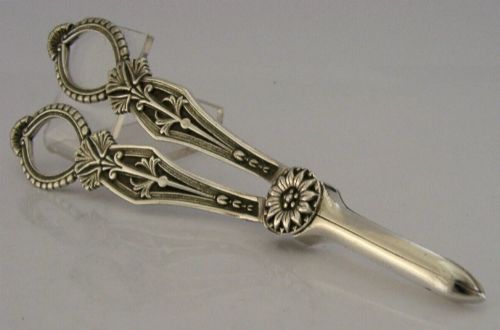
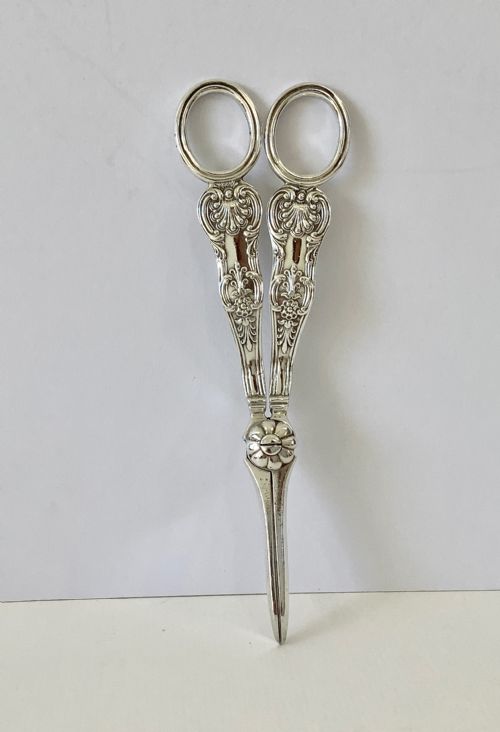
Makers utilised sterling silver and silver plate as the primary structural and aesthetic metals for these implements. Techniques involved casting heavy silver components, hand engraving intricate surface patterns, and applying silver gilt finishes for decorative contrast.
Fitted presentation boxes employ protective outer coverings of leather or leatherette paired with internal linings of silk, satin, or velvet to cradle the scissors securely. Metalworking methods ensured the pivot and long handles possessed sufficient leverage to cut thick stems cleanly.
Vintage Grape Shears Retail Price Guide 2026
Typical asking prices for vintage grape shears among the pieces listed under this phrase on Sellingantiques today, from the lower quarter to the upper quarter. They describe what is for sale here now, not the wider market.
Some nineteenth-century makers evidently believed grapes tasted better when severed exclusively with heavy Gothic-engraved precious metal.
What varies in quality
Quality differentiates by the heaviness of the silver gauge and the depth of the cast or engraved decoration across the handles. Superior examples display crisp botanical motifs and robust hinges that maintain exact blade alignment during use.
The presence of an original fitted case lined in silk or velvet elevates a piece, particularly when the internal contours match the exact silhouette of the scissors.
Charles Reily And George Storer·Paul Storr·C J Vander
The Vintage Grape Shears Glossary
- Sterling silver
- A silver alloy containing 92.5 percent pure silver by mass, frequently utilised in the manufacture of nineteenth-century grape scissors.
- Silver plate
- A layer of silver applied to a base metal core, providing the appearance of solid silver at a different weight and cost.
- Silver gilt
- Silver that has been coated with a thin layer of gold on its surface, creating a two-tone decorative effect visible on select Victorian examples.
- Leatherette
- A simulated leather material employed for the durable exterior covering of fitted presentation cases.
Vintage Grape Shears: Frequently Asked Questions
What are grape shears used for?
Grape shears are designed specifically for cutting small bunches of grapes from a larger cluster at the dining table. This prevents bruising the fruit by hand and maintains proper etiquette during formal serving.
The implements feature short, sharp blades combined with longer handles to reach neatly between tightly packed fruit. They remain practical dining tools as well as collectible silver items.
How do I date antique grape shears?
Dating relies heavily on hallmarks stamped into the silver metal, which indicate the assay office, year of manufacture, and maker. Stylistic clues such as Gothic Revival detailing or Victorian engraving also help place the piece within a specific era.
The presence of a fitted velvet or silk-lined case often points towards the Victorian or Edwardian periods when presentation sets were commonly retailed. Comparing the weight and casting style to known nineteenth-century pieces narrows the timeframe further.
How should I store them?
Store grape shears in a dry environment, ideally within a fitted velvet or silk-lined case to protect the metal from excessive tarnishing and scratching. Avoid exposure to rubber or damp materials that accelerate silver oxidation.
Periodic gentle cleaning with a specialist silver cloth maintains the surface finish without removing delicate engraving. Keeping the scissors closed prevents accidental blade damage while in storage.