


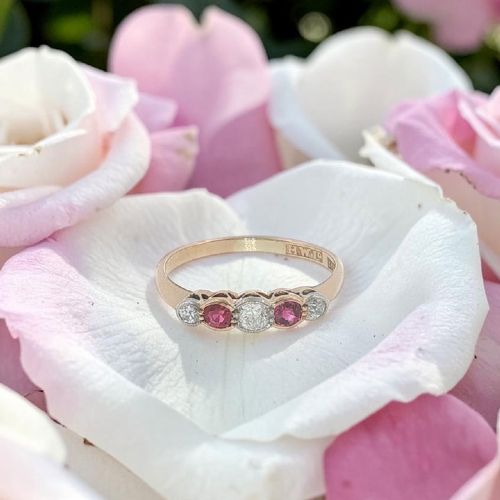
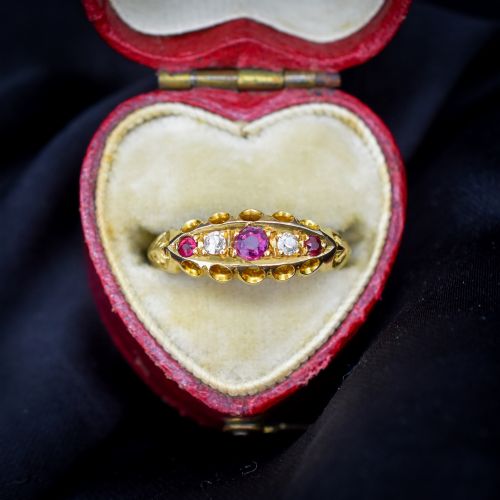
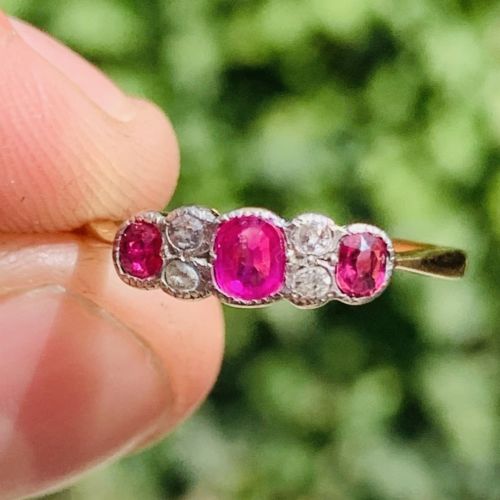
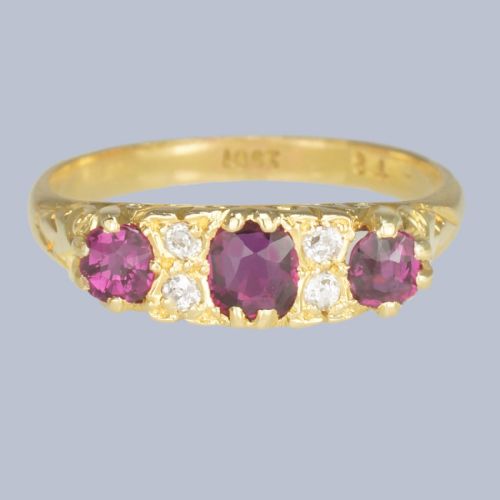

Vintage Gold Ruby Ring
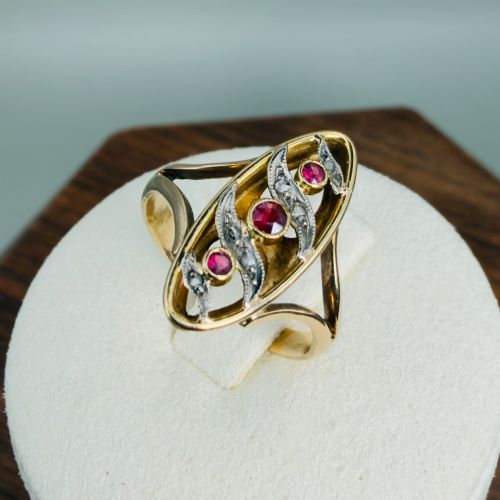
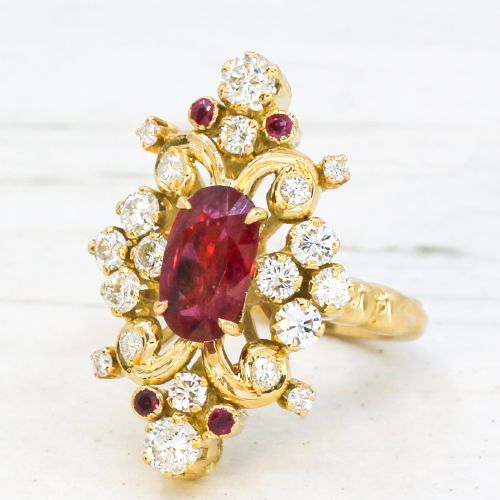
A vintage gold ruby ring brings together rich red corundum and warm precious metal in designs spanning from Victorian clusters to mid-century cocktail styles.
Vintage Gold Ruby Ring
Origins stretch from domestic British assay offices in towns like Chester and Birmingham to continental workshops, capturing more than a century of changing taste. Natural unheated rubies from Burma sit alongside classic cut stones in settings shaped by the prevailing aesthetics of their respective decades.
How they were made
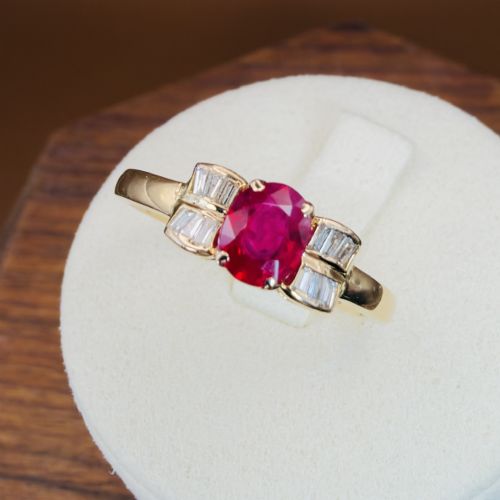
Goldsmiths constructed these rings primarily using 18ct and 9ct gold, often combining yellow gold bands with white gold or platinum claw and bezel settings to enhance the brilliance of accompanying old-cut and baguette diamonds. Stones were secured by hand, utilising claw settings, flush gypsy mountings, and intricate millegrain edges that defined Edwardian and Art Deco craftsmanship.
Gemstone selection dictated the architecture of each mount, with rubies shaped as oval, round, or marquise cuts and surrounded by concentric halos of diamonds, pearls, or subsidiary gems. Workshops employed techniques such as channel setting, open-backed collets to let light through the ruby table, and delicate pierced galleries that lightened the heavy precious metal frames.
Flexible chain mail rings offer a delightful tactile surprise, wrapping soft gold mesh securely around the wearer's pinky finger.
What varies in quality
Quality rests in the natural saturation and origin of the ruby, the precision of the stone cutting, and the integrity of the surrounding metalwork. Top-tier examples display vibrant, evenly distributed red hues without unwanted zoning, often accompanied by independent gemmological reports confirming unheated status from sources like Burma.
The standard of hand-setting and the conservation of original claw work or millegrain detailing separate exceptional items from standard production pieces. Heavier gauge 18ct gold shanks that retain their original thickness and hallmarks demonstrate superior longevity compared to thinner or later resized bands.
Kutchinsky·Cropp and Farr
The Vintage Gold Ruby Ring Glossary
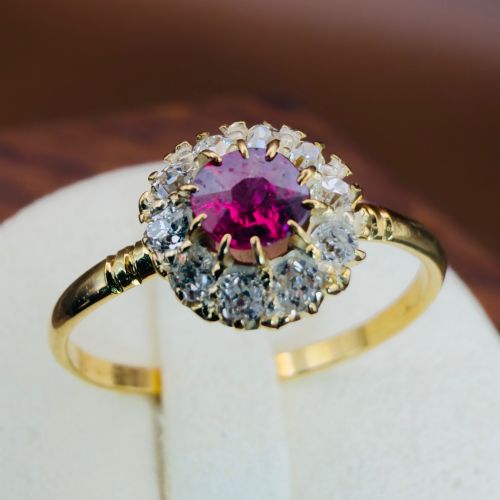
- Cluster ring
- A central gemstone surrounded by a geometric arrangement of smaller stones, typically diamonds or pearls. This design maximises the visual presence of the piece on the hand.
- Old-cut diamond
- A hand-faceted diamond cut before modern automated standards, featuring a smaller table, higher crown, and open culet. These stones exhibit a softer, candlelit sparkle under low light.
- Navette
- A boat-shaped or marquise ring setting that tapers to points at either end. The elongated silhouette flatters the finger and allows for intricate multi-stone layouts.
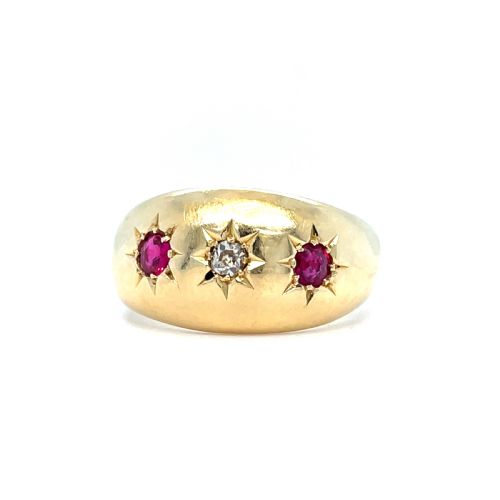
- Gypsy ring
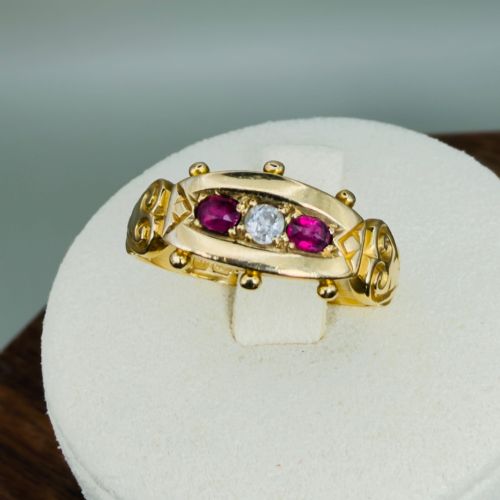
- A band style where gemstones are flush-set directly into the thick gold body of the ring. This secure mounting was immensely popular in the late nineteenth century.
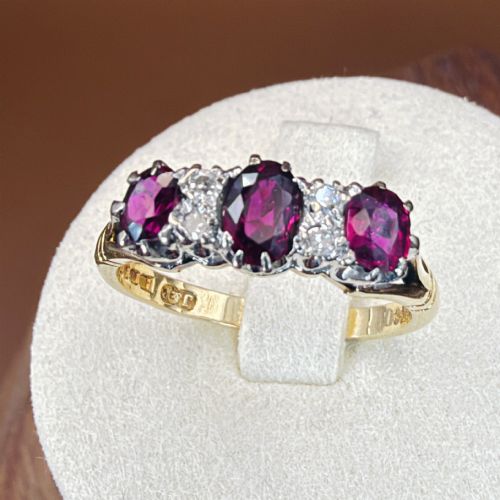
- Trilogy ring
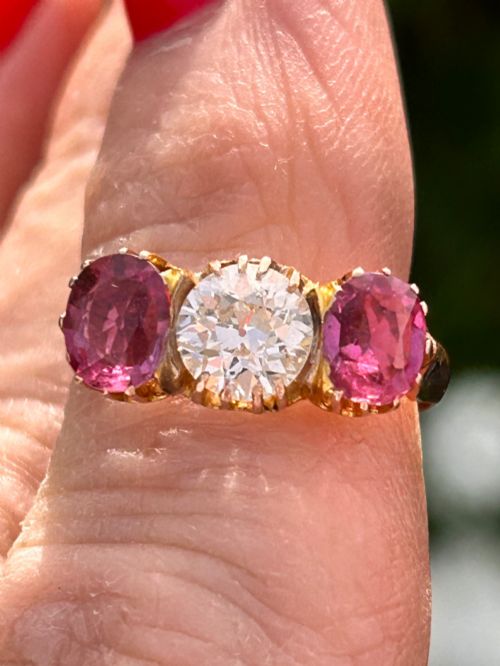
- A three-stone ring representing the past, present, and future, frequently utilising graduating rubies and diamonds. The stones are mounted in a straight row or a gentle twist.
Vintage Gold Ruby Ring: Frequently Asked Questions
How do I care for a vintage ruby ring?
Rubies are durable gemstones rating nine on the Mohs hardness scale, making them suitable for regular wear when paired with sturdy gold settings. Clean them gently using warm soapy water and a soft brush, avoiding harsh ultrasonic cleaners that might damage surrounding pearls or antique foil backs.
Store your ring in an individual fabric-lined compartment away from harder jewels to prevent scratching the gold band and adjacent diamonds. Have a trusted jeweller inspect the claw settings periodically to ensure the central ruby and accent stones remain firmly secured.
Were these rings worn daily in the past?
Many of these pieces, particularly nineteenth-century five-stone bands and gypsy settings, were designed for continuous everyday wear. Sturdy 18ct gold construction allowed Victorian and Edwardian owners to keep their treasured rings on during daily activities.
Delicate Edwardian lace-work mounts and intricate Art Deco navettes were often treated with greater care, reserved for special occasions or evening social events. Examining the thickness of the shank provides a clear indication of how heavily a particular ring was worn over the decades.
How can I tell the period of a gold ruby ring?
Stylistic clues such as floral starbursts, geometric millegrain framing, or heavy bombe profiles offer the first hints regarding a ring's age. Victorian pieces often lean towards heavy yellow gold bands and gypsy settings, whereas Art Deco examples favor white gold and platinum symmetry.
Assay office marks, maker's stamps, and date letters stamped inside the band provide definitive dating evidence. British hallmarks recorded on these pieces point directly to specific towns and operational years.
What is an unheated Burma ruby?
An unheated Burma ruby is a natural gemstone originating from Myanmar that has not undergone thermal enhancement to improve its natural colour and clarity. Such stones are prized by collectors for their unaltered geological state and vivid saturation.
Gemmological certification is normally required to verify the geographic origin and absence of heat treatment. These natural gems sit at the pinnacle of rarity within vintage cluster and trilogy rings.