



Vintage Gold Pitchers
These vintage gold pitchers bring warmth and metallic richness to a room, ranging from grand porcelain ewers to delicate glass water jugs.
Vintage Gold Pitchers
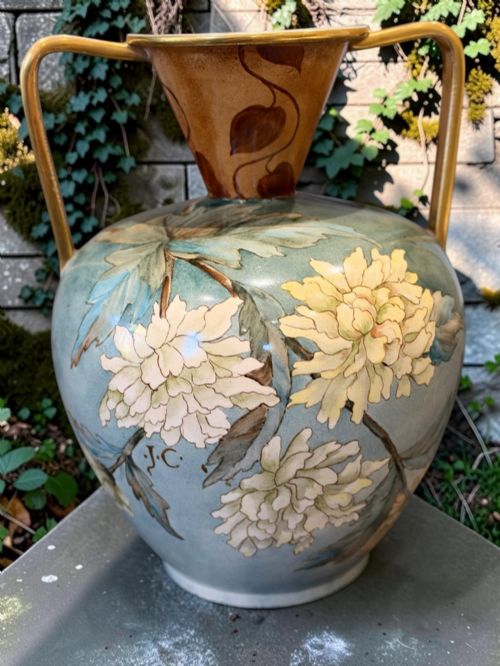
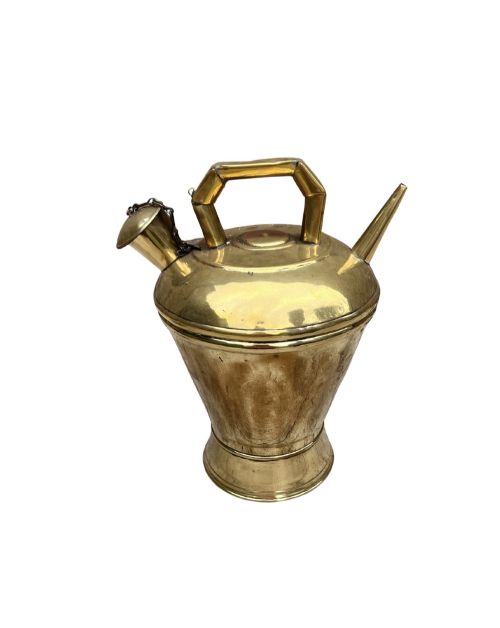
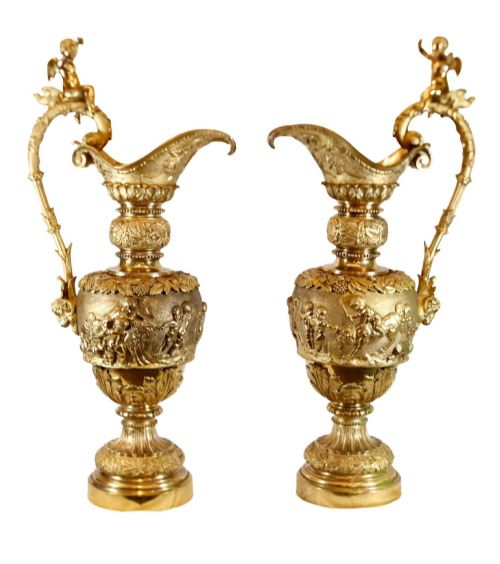
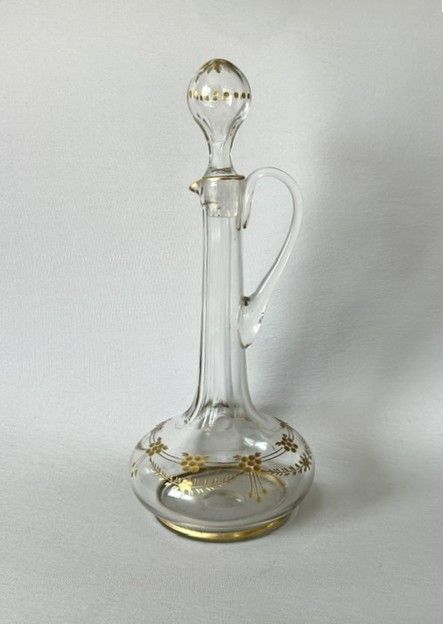
Vintage gold pitchers encompass a varied group of decorative vessels and serving pieces finished with gilding, gold leaf, or rich enamel. When exploring vintage gold pitchers, buyers encounter diverse forms including monumental French ewers, Bohemian wine jugs, and cream jugs decorated by prominent factories.
The selection ranges across several periods, stretching from the eighteenth century and the Victorian and Edwardian eras through to mid-century European designs. While some examples function as practical cream jugs or water pitchers, others serve purely decorative roles as ornamental ewers and painted vases.
How they were made
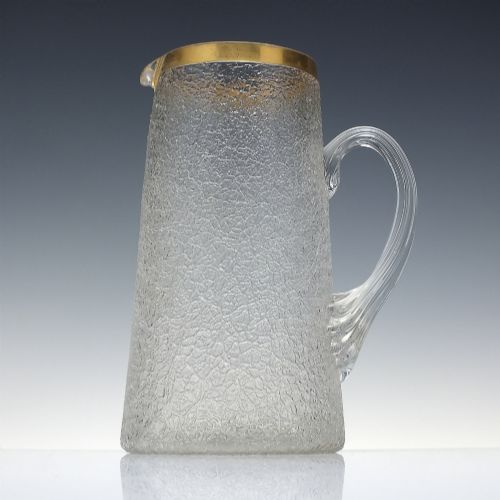
Makers utilised fine porcelain, overshot glass, and cut glass as the foundation for these vessels, applying gilding and gold leaf to accent rims, handles, and surfaces. Artisans frequently combined hand-painted botanical or fruit motifs with rich metallic highlights.
Techniques varied from blown glass with gilded rims to elaborate porcelain moulding seen in Victorian and Edwardian ewers. Hand-painted details, particularly on factory-produced porcelain, required skilled brushwork and careful firing.
Vintage Gold Pitchers Retail Price Guide 2026
Typical asking prices for vintage gold pitchers among the pieces listed under this phrase on Sellingantiques today, from the lower quarter to the upper quarter. They describe what is for sale here now, not the wider market.
Listings feature items from the eighteenth century to the mid-twentieth century, constructed from porcelain, glass, and wood.
What varies in quality
Quality rests in the crispness of the moulding, the precision of the hand-painting, and the preservation of the gilding across the surface. Pieces bearing signatures from established artists or renowned factories demonstrate superior execution compared to simpler commercial wares.
The weight and clarity of the glass or the refinement of the porcelain body also distinguish finer examples. Balance in the handle and spout proportion marks the work of skilled makers.
Royal Worcester·Emma Fordyce MacRae·Arthur Dudley·AVEM
The Vintage Gold Pitchers Glossary
- Gilding
- The application of gold leaf or gold powder to the surface of porcelain, glass, or metal. This technique enhances decorative vessels with a brilliant metallic sheen.
- Ewer
- A large jug with a wide spout and handle, traditionally used for holding water or wine. Many Victorian and decorative examples serve purely ornamental functions.
- Overshot glass
- A type of glass covered in fine, thread-like trails of glass that create a textured surface. These pieces often feature contrasting gilded rims.
- Cream jug
- A small pitcher designed for serving milk or cream at the table. In fine ceramics, these often match sugar bowls and feature hand-painted fruit or floral studies.
- Bohemian glass
- Glassware produced in the regions of Bohemia, known for rich colour and intricate cutting. Gilded accents frequently complement the cut glass designs.
Vintage Gold Pitchers: Frequently Asked Questions
How do I clean a gilded pitcher?
Clean these pieces gently using a soft, dry cloth to remove dust. Avoid harsh chemical cleaners or abrasive scrubbing that might wear away the delicate gold leaf or gilding.
Immersing antique glass or porcelain in water for extended periods can also damage older finishes. Take care around hand-painted areas to preserve the integrity of the decoration.
Are these pitchers waterproof?
Many ceramic and glass pitchers were originally made to hold liquids such as water, wine, or cream. However, older gilded surfaces benefit from careful handling rather than heavy daily use.
For decorative ewers and painted porcelain, using them primarily for display ensures the antique materials and gold highlights remain protected from moisture damage.
How do I date a Victorian ewer?
Victorian ewers often display distinctive stylistic cues such as robust forms, classical revival motifs, or elaborate handle designs. Examining the weight of the ceramic or glass helps determine the period.
Factory marks or artist signatures stamped on the base provide clearer chronological markers. Comparing the style of decoration to known production eras narrows down the date further.