
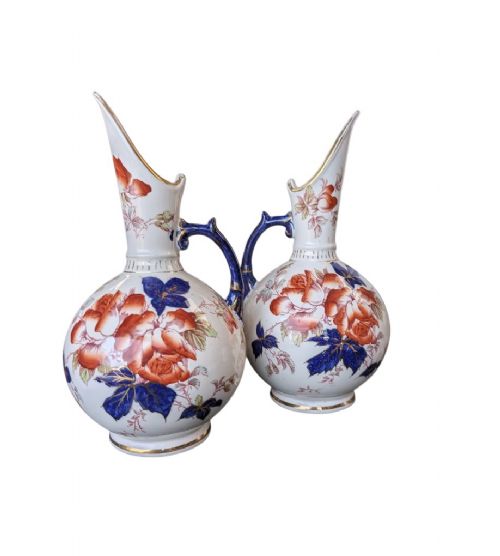


Pair Decorative Ewers
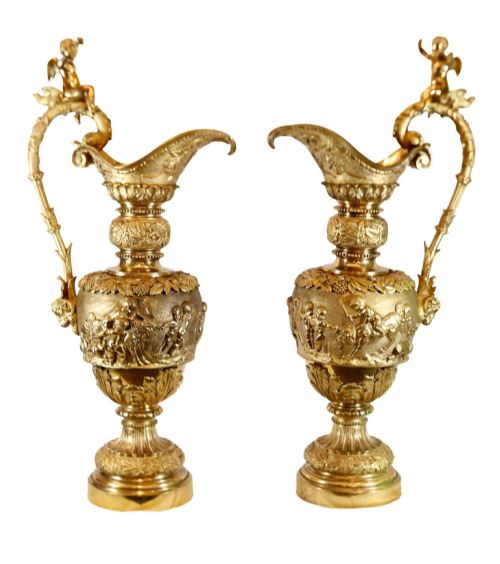
These pair decorative ewers bring classical form and heavy metalwork into a room, serving purely as display pieces rather than vessels for water.
Pair Decorative Ewers
When you search for pair decorative ewers, you encounter matching display vessels rooted in historical water jugs but made entirely for ornament.
Most examples date from the nineteenth century, spanning Victorian, Neoclassical and French Neoclassical styles.
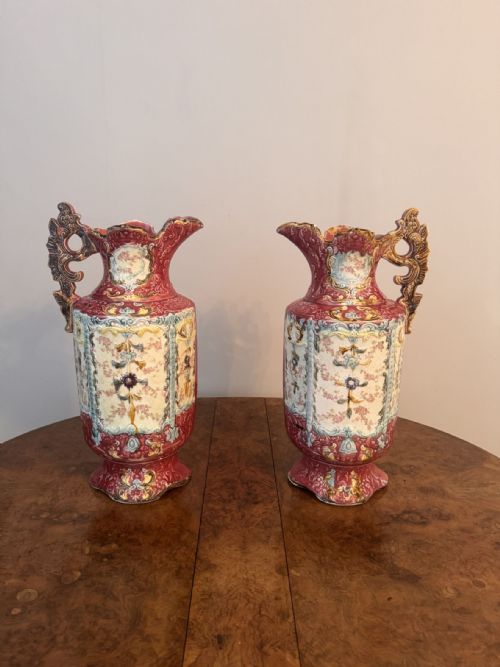
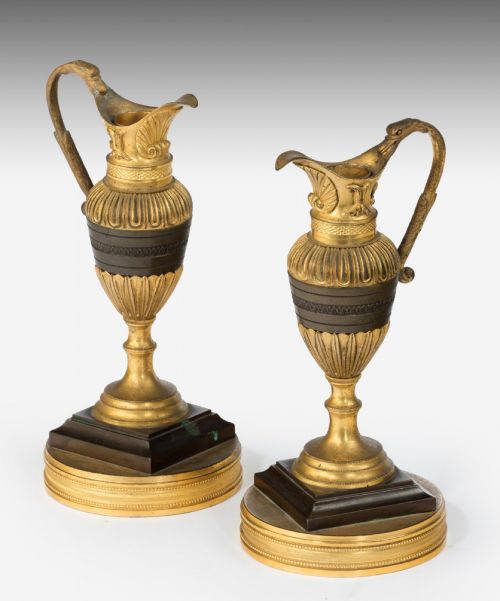
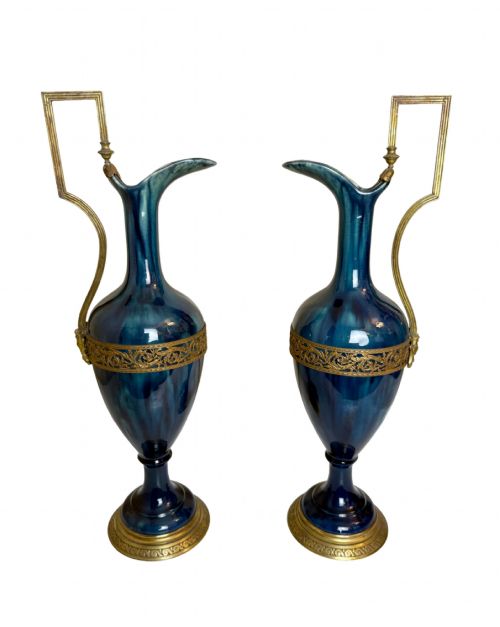
Makers shaped them in porcelain, bronze, ormolu, brass and earthenware, often placing them on mantelpieces or pedestals.
How they were made
Foundries cast bronze, brass and ormolu into complex shapes, applying gilding and chasing surface detail by hand.
Potters shaped porcelain and earthenware bodies, frequently adding hand-painted scenes, floral encrustations or enamelling before firing.
What varies in quality
Quality rests in the crispness of metal casting and the precision of hand-painted porcelain decoration.
Substantial weight in the bronze or brass mounts and fine articulation of handles and spouts separate standard production from superior examples.
Royal Worcester·Doulton Burslem·Minton·Royal Crown Derby·H F Fearncombe & Co
The Pair Decorative Ewers Glossary
- Ewer
- A large jug with a wide spout and scroll handle, historically used for washing but adopted in these pairs for purely decorative display. They sit on sideboards, tables and pedestals.
- Ormolu
- Gilded bronze popular in French and Victorian decorative metalwork. It provides a bright metallic finish that highlights cast details.
- Blush ivory
- A porcelain finish developed by potteries like Royal Worcester, showing soft cream and pink tones with gilt highlights. It defines late Victorian ornamental ceramics.
- Grand Tour
- Souvenirs and decorative objects brought back by travellers from continental Europe during the nineteenth century. These items often mimic classical bronze antiquities.
Pair Decorative Ewers: Frequently Asked Questions
Were pair decorative ewers used for water?
Despite their historical shape, these pieces served as decorative ornaments rather than practical jugs for washing or pouring liquids.
Their delicate materials and painted surfaces meant they remained on display on mantelpieces, pedestals and sideboards.
How do I identify nineteenth century ewers?
Look closely at the materials, cast metal quality and ceramic body to determine the period of manufacture.
Victorian and late nineteenth-century pieces often combine bronze, ormolu, porcelain and hand-painted details characteristic of the era.
Where should I display ewers in a room?
Because they were designed as ornamental pairs, placing them symmetrically creates balance on a mantelpiece, sideboard or console table.
Ensure they sit away from heavy foot traffic to protect delicate handles and protruding spouts from accidental knocks.