
Vintage Gold Albert Link
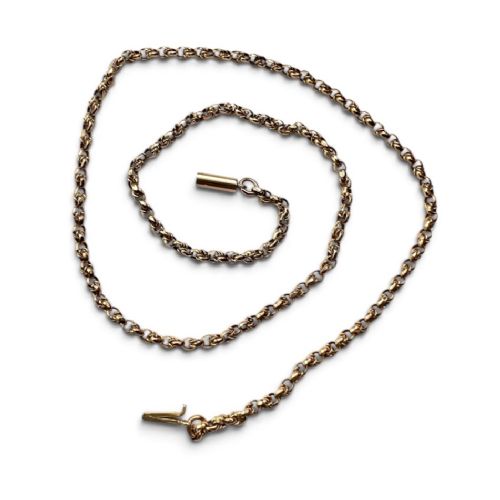
When you search for a vintage gold albert link, you are looking at substantial watch chains and bracelets adapted to modern neckwear and wristwear.
Vintage Gold Albert Link
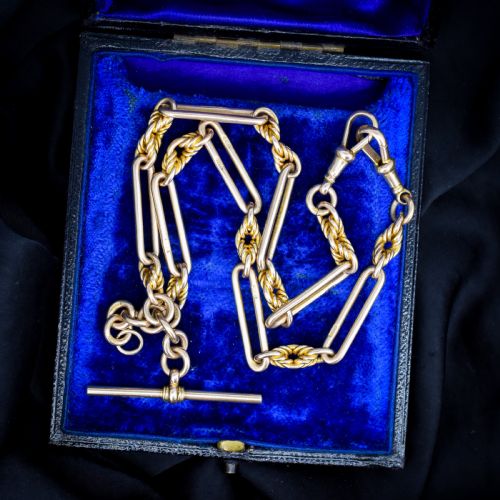
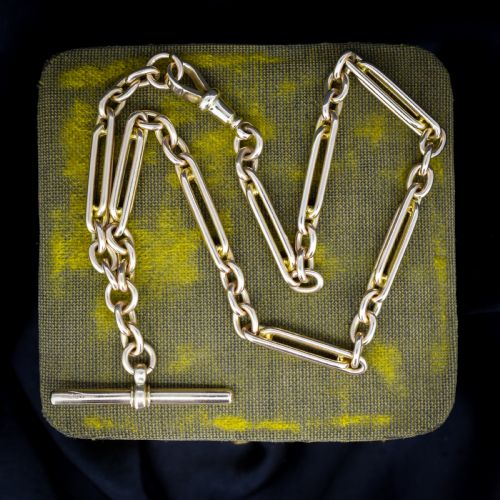
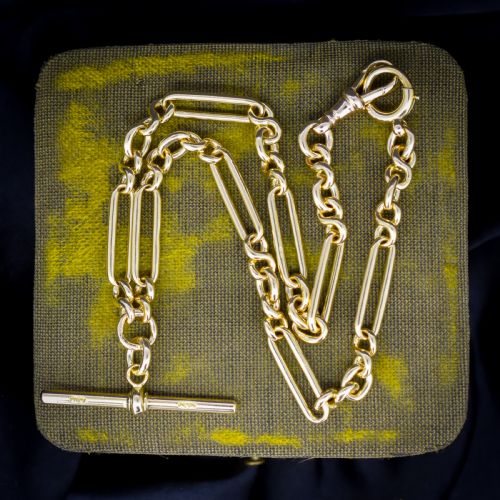
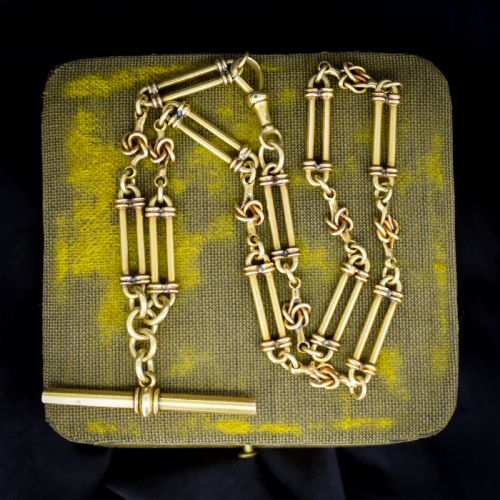
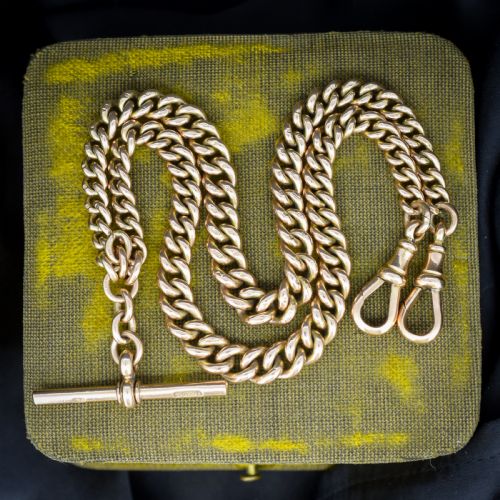
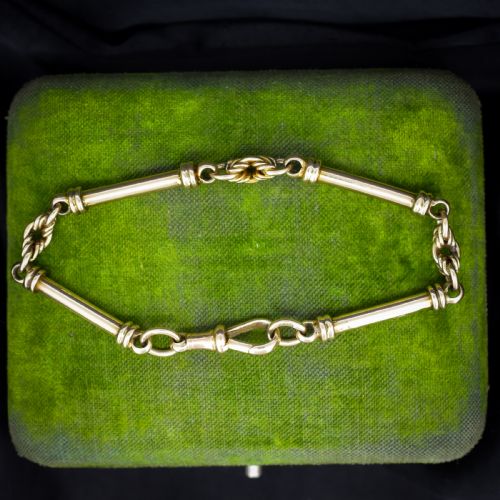
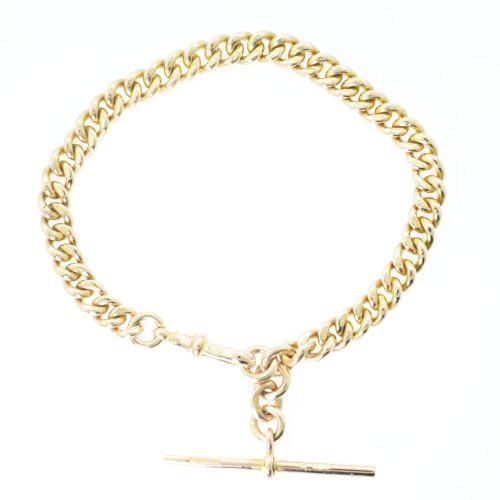
A vintage gold albert link sits at the intersection of practical Victorian timekeeping and modern jewellery, originating as a chain designed to secure a pocket watch to a waistcoat. These pieces appear on this page as pocket watch chains, watch albert chains, necklaces, and bracelets.
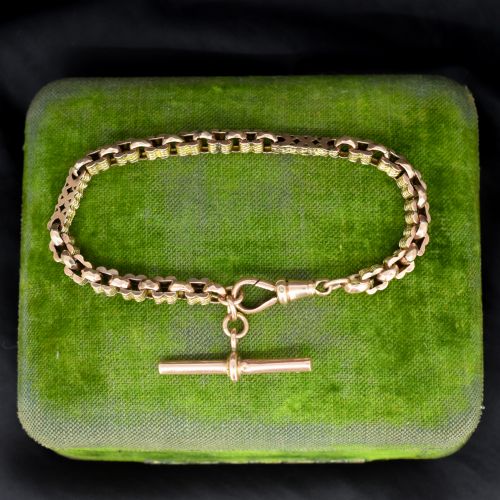
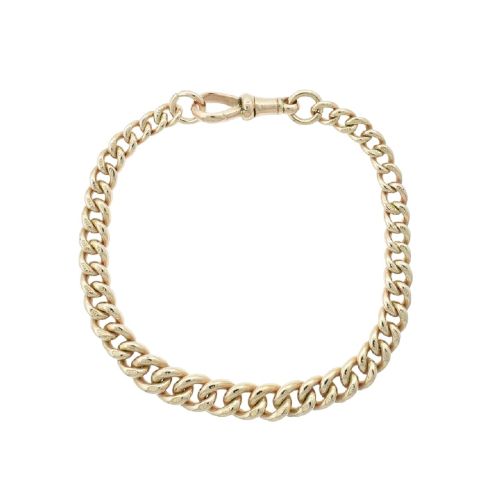
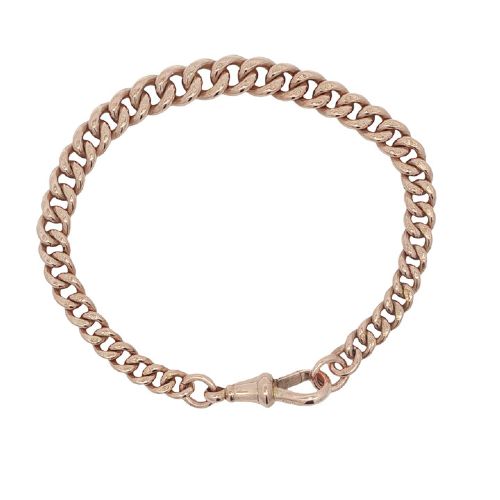
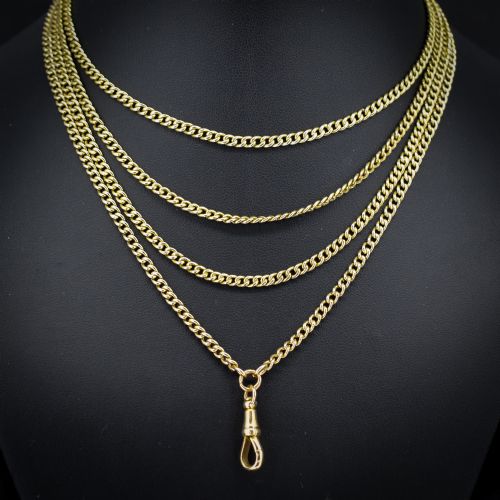
The versions you meet most frequently span the late Victorian, Edwardian, and 1920s periods, incorporating distinct regional hallmarks from British assay offices like Chester and Birmingham. Forms range from short bracelet lengths with dog clips and t-bars to longer necklaces worn draped around the neck.
Makers constructed these chains for daily utility, meaning many retain their original swivel fobs, dog clips, and t-bar fixtures. The surviving inventory reflects a tradition of durable gold work intended to display timepieces securely in everyday life.
How they were made
Goldsmiths fabricated these pieces primarily in 9ct gold, 15ct gold, and 18ct gold, alongside rolled gold variants that offered an accessible alternative to solid precious metal. Rose gold and yellow gold dominate the palette, often displaying individual hallmarks stamped onto every link for solid metal iterations.
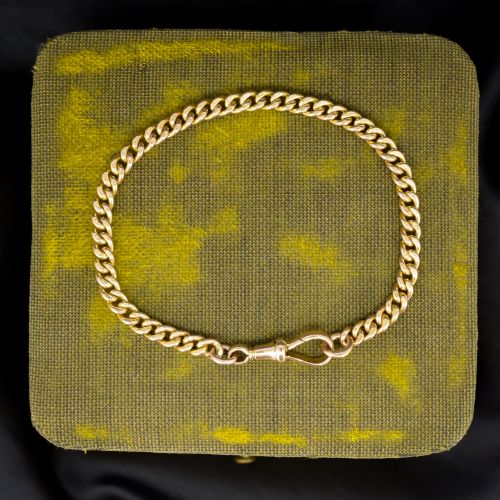
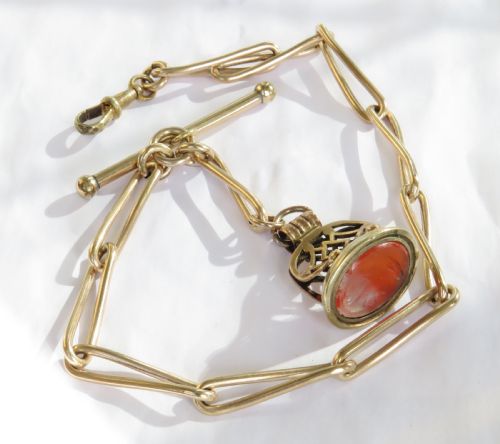
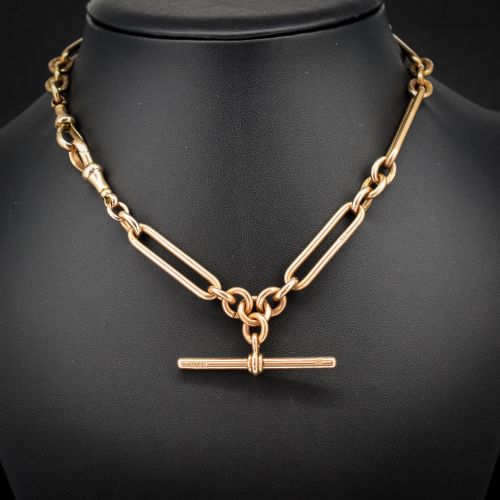
Construction relied on specific link geometries such as the trombone, curb, love knot, fetter, and tubular bar configurations. Artisans joined these units securely to withstand the physical demands of anchoring a pocket watch, finishing them with functional dog clips and swivel attachments.
Every link on certain Edwardian chains bears a miniature hallmark stamp, proving that even tiny metal ovals needed official accountability.
What varies in quality
Quality in these chains rests on the uniformity of the links, the crispness of the individual hallmarking across components, and the original gauge of the gold used. Substantial weight and consistent link graduation distinguish heavy-duty daily wear pieces from lighter ornamental variants.
The presence of original mechanical elements like functioning dog clips, swivels, and matching t-bars influences the integrity of the piece. Craftsmanship shows in the tightness of the wire-work and the smoothness of articulated joints within complex fancy link patterns.
The Vintage Gold Albert Link Glossary
- Albert chain
- A chain designed to secure a pocket watch to a waistcoat, featuring a t-bar at one end and a swivel or dog clip at the other.
- Dog clip
- A small spring-loaded snap hook used to attach pocket watches, fobs, or charms securely to the main chain.
- T-bar
- A short transverse bar attached to the centre of an albert chain, slipped through a buttonhole to anchor the watch.
- Trombone link
- An elongated rectangular link flanked by smaller circular or oval connecting links, typical of nineteenth-century watch chains.
- Rolled gold
- A composite material formed by bonding a sheet of gold to a base metal core under heat and pressure.
Vintage Gold Albert Link: Frequently Asked Questions
How do I wear an albert chain as a necklace?
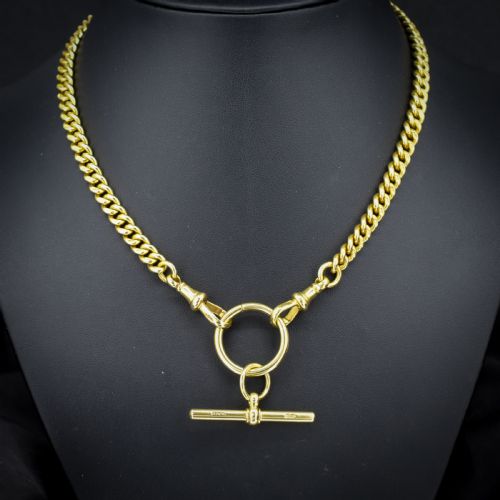
Many albert chains feature a length and weight well-suited to being fastened around the neck using the original dog clip and bolt ring. The t-bar and swivel fob are often left dangling as a decorative pendant feature at the front.
Shorter lengths sit close to the collarbone, while longer iterations allow for a draped fit similar to standard chains.
How can I date an antique gold watch chain?
Dating relies heavily on British hallmark stamps, which often appear on individual links, dog clips, and t-bars. Assay office marks and date letters point to specific years of manufacture, such as Chester or Birmingham hallmarks from the Victorian and Edwardian eras.
Stylistic shifts, such as the introduction of geometric Art Deco forms in the 1920s, also help narrow down the production period.
Are these chains solid gold?
The inventory includes both solid gold pieces - typically marked at 9ct, 15ct, or 18ct - and rolled gold alternatives. Solid gold pieces frequently feature stamps on every individual link, whereas rolled gold uses a base metal core clad in a layer of gold.
Weight often serves as a primary indicator of metal density alongside official hallmark stamps.