
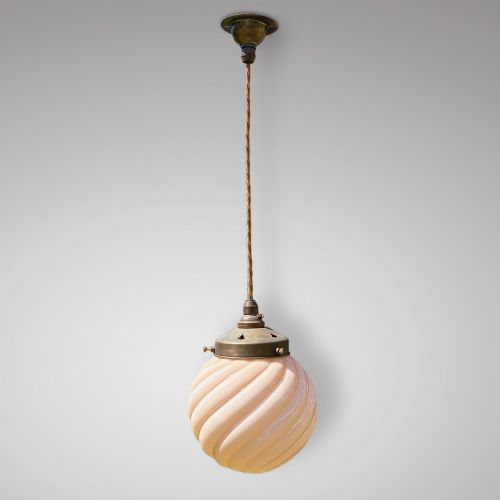


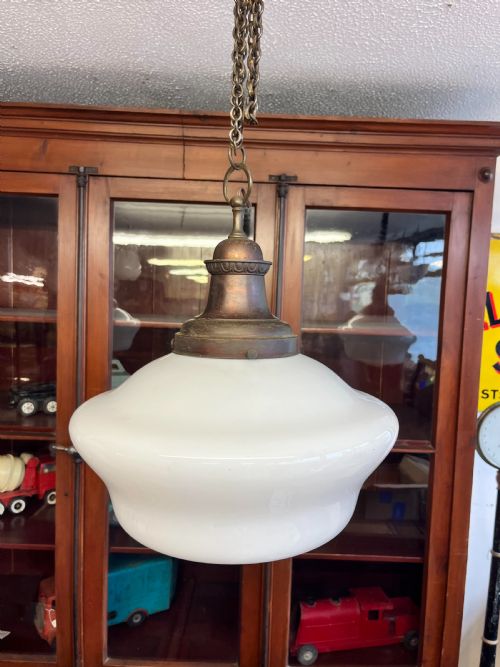


Vintage Globe Pendant Light
These vintage globe pendant light pieces bring period illumination to a room, spanning Edwardian designs to mid-century forms.
Vintage Globe Pendant Light
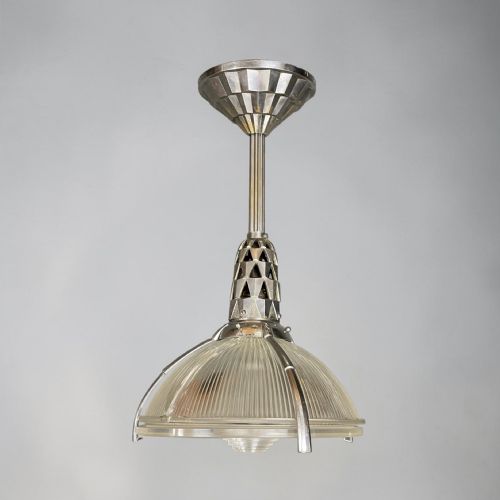
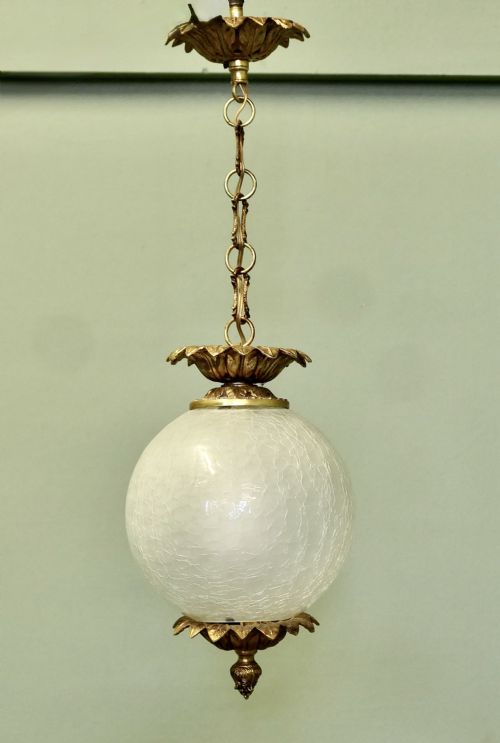
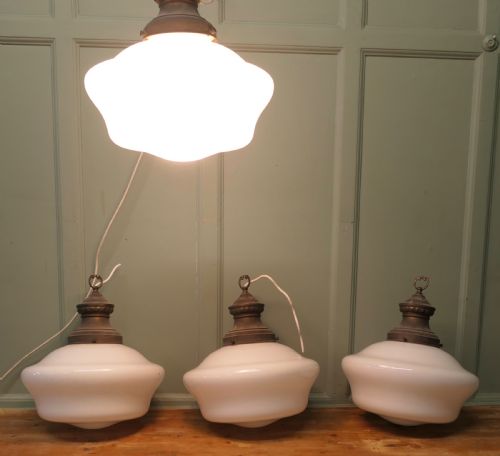
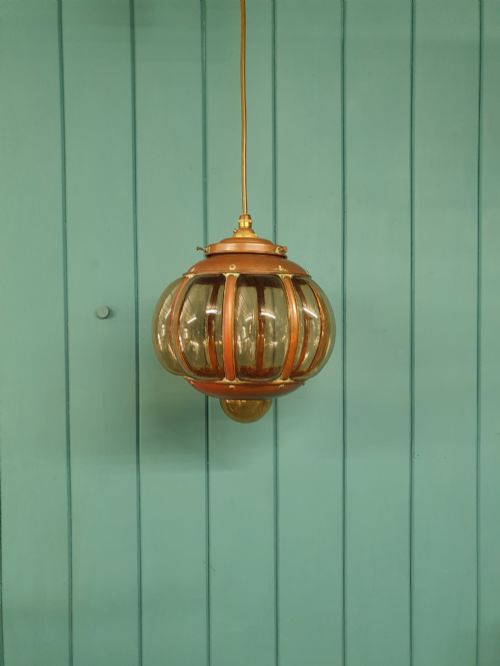
When you search for a vintage globe pendant light, you encounter spherical hanging fixtures that illuminate interiors with period character. The selection on this page ranges from early twentieth-century examples to pieces from the nineteen-thirties, taking forms such as ceiling lights, hallway pendants, and individual shades. Styles span Edwardian, Art Deco, Industrial, and Gothic Revival, reflecting the architectural preferences of their respective decades.
Makers and designers working in various European and English traditions produced these fixtures for domestic and institutional spaces. You find pieces featuring opaline glass, frosted glass, and crystal spheres suspended from metal fittings. These globes serve as both functional illumination and decorative centrepieces within a room, retaining the distinct aesthetic of the early twentieth century.
How they were made
Manufacturers shaped glass into spheres using blowing and moulding techniques, producing opaline, frosted, smoked, and prismatic surfaces that diffused light evenly. Workshops paired these glass globes with metalwork components cast or spun from brass, copper, chrome, nickel plated metal, and bronze.
Structural elements often incorporated chains, rods, or ceiling roses designed to support the weight of the glass safely while matching the chosen artistic style, whether the clean lines of Art Deco or the robust build of industrial fixtures.
Listings feature pieces from the nineteen-twenties and nineteen-thirties, alongside Edwardian designs utilising brass, opal glass, and chrome.
What varies in quality
The distinction between tiers rests upon the choice of materials and the sophistication of the glasswork. Pieces utilising heavy opaline glass, thick crystal, or specialist prismatic construction display superior light diffusion and tactile substance compared to simpler commercial versions.
Finishes on the metal components also dictate grade, with solid brass, bronze, and plated metal showing varied degrees of original craftsmanship. The integrity of the glass globe and the finesse of any etched or moulded detail determine the standing of an individual fixture.
Émile-Jacques Ruhlmann·Holophane
The Vintage Globe Pendant Light Glossary
- Opaline Glass
- A milky, translucent glass developed to soften glare while emitting a warm glow. It appears frequently in twentieth-century lighting fixtures.
- Prismatic Glass
- Glass formed with geometric ridges or prisms designed to refract and scatter light efficiently. Holophane patents popularised this technique in early lighting.
- Pendant Light
- A hanging fixture suspended from the ceiling by a cord, chain, or metal rod. These units focus illumination downwards into a space.
- Art Deco
- A design style spanning the nineteen-twenties and nineteen-thirties characterised by sleek geometric shapes and stylised motifs. It heavily influences many globe fixtures of this era.
- Edwardian
- Pertaining to the reign of King Edward VII, marking an era of ornate brass work and lantern forms. Pieces from this period often display traditional craftsmanship.
Vintage Globe Pendant Light: Frequently Asked Questions
What is a vintage globe pendant light?
A vintage globe pendant light is a ceiling-suspended illumination fixture featuring a rounded glass shade, typically produced during the early-to-mid twentieth century.
These fixtures utilise spheres of opaline, frosted, or clear glass to diffuse light within domestic or commercial interiors.
How were these pendant lights used?
Original installations placed these fixtures in hallways, chapels, pharmacies, and primary rooms to provide steady overhead illumination.
Their spherical shape allowed light to disperse evenly across the surrounding space while serving as a prominent architectural feature.
How do I live with a vintage pendant light?
Integrating these fixtures into modern spaces requires assessing ceiling heights and suspension lengths to ensure proper clearance and visual balance.
Wiring should be inspected by a qualified professional to meet current safety standards before permanent installation in a room.
How do I tell periods apart?
Differentiating eras relies on examining the materials and decorative details of both the glass shade and the metal suspension hardware. Edwardian examples often feature ornate brass and lantern shapes, whereas nineteen-thirties pieces lean towards streamlined Art Deco opaline forms.