

Vintage Glazed Hall Lantern
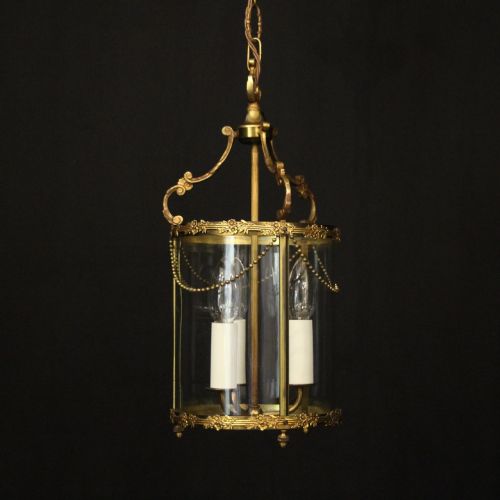
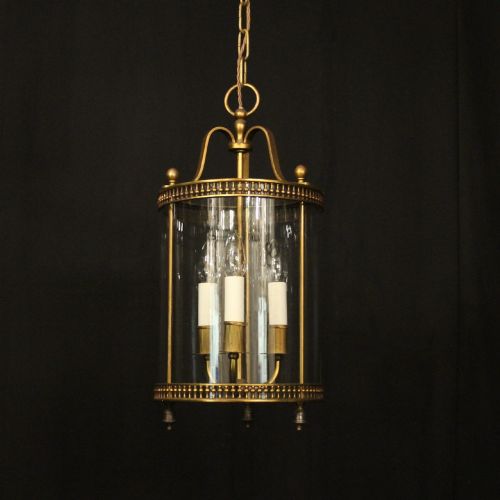
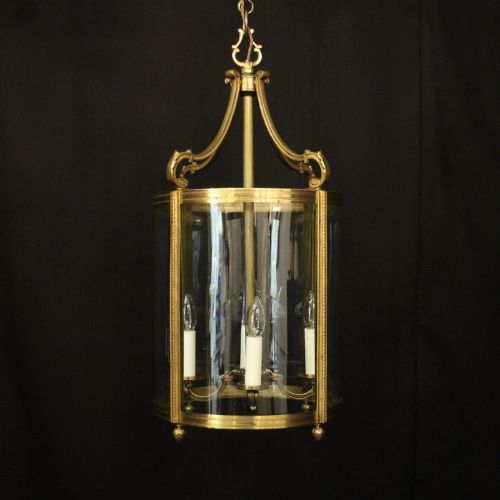
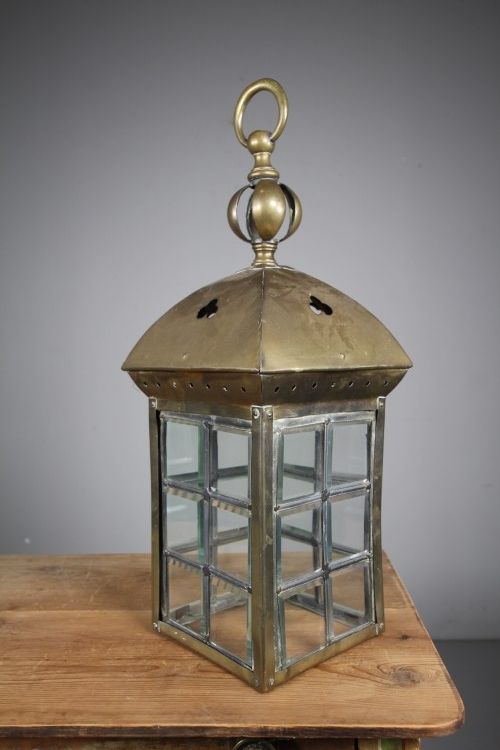
A vintage glazed hall lantern casts a welcoming amber glow through bevelled panes while anchoring an entryway with period weight.
Vintage Glazed Hall Lantern
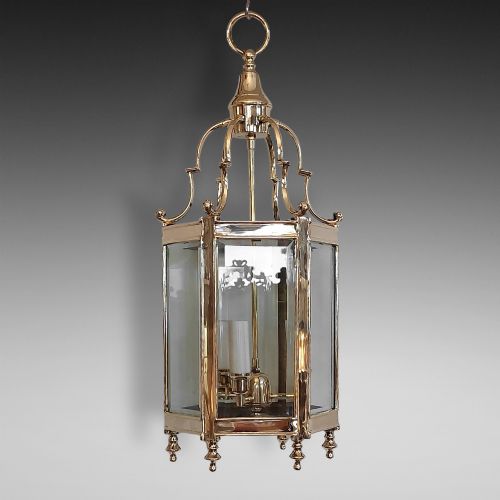
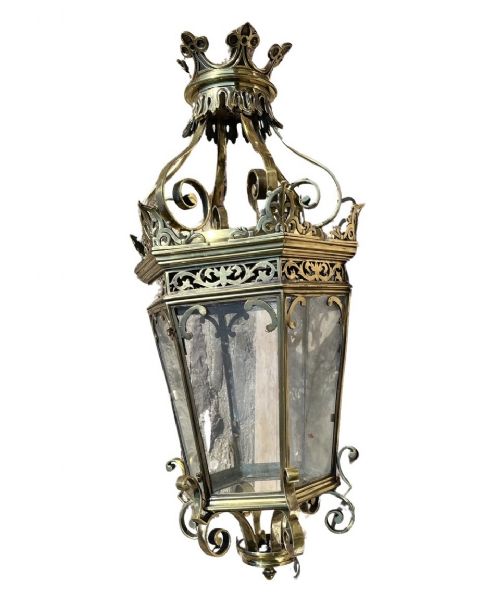
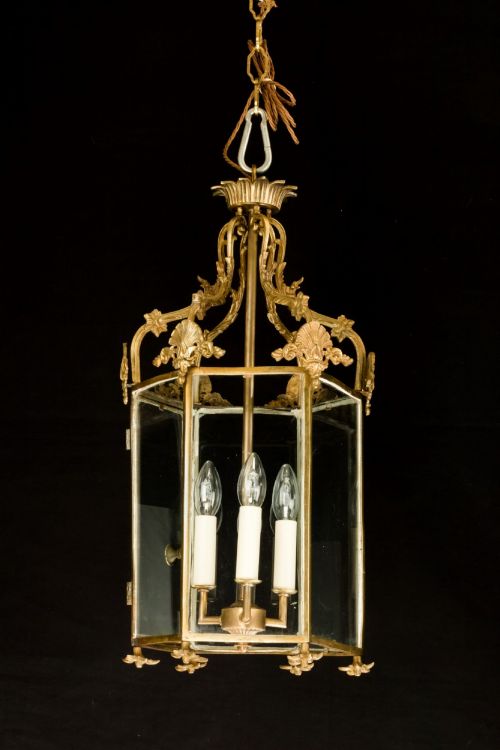
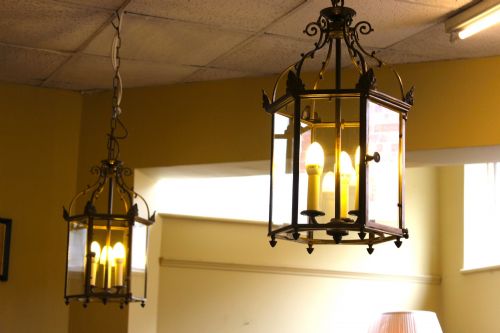
A vintage glazed hall lantern is primarily designed to hang in narrow corridors, entrance passages and stairwells where overhead illumination needs both presence and restraint. Buyers searching for a vintage glazed hall lantern encounter pieces spanning from the mid-nineteenth century through the interwar decades, reflecting the shifting architectural scales of town houses and country properties. The selection on this page relies heavily on early twentieth-century examples alongside Victorian and Edwardian antecedents, offering distinct shapes from simple hexagonal frames to expansive multi-light fixtures.
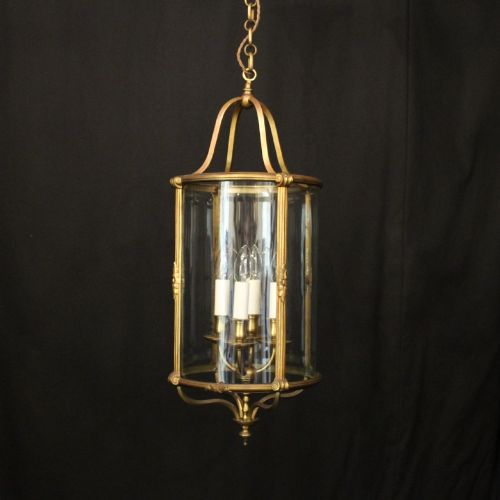
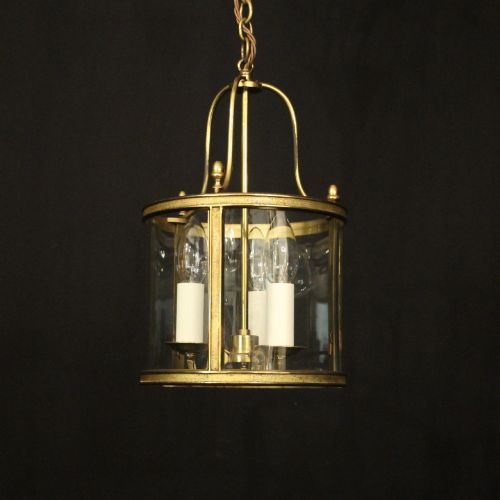
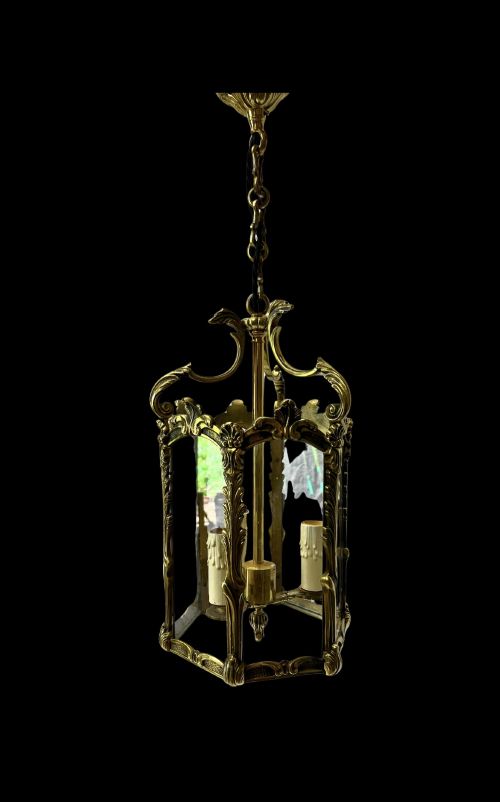
The dominant forms are ceiling-hung pendants and hanging lanterns, frequently housing two, three or four internal lights to wash surrounding walls in indirect illumination. French influences run deep through the listings, with chateau and neoclassical styles appearing alongside sturdier English domestic hall fittings and wrought iron pieces. These lanterns serve the same practical function today as they did a century ago, diffusing light through clear or bevelled glass panels while functioning as substantial decorative objects before they are even switched on.
Construction and materials
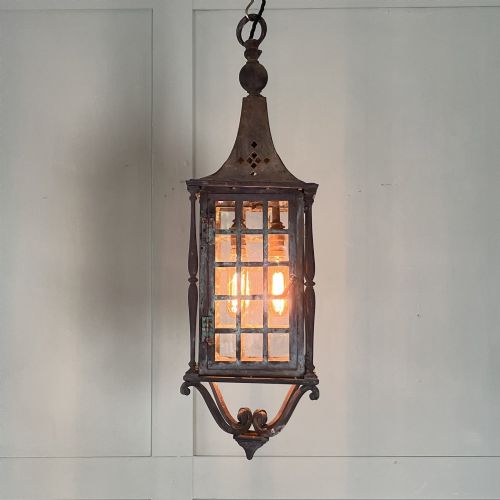
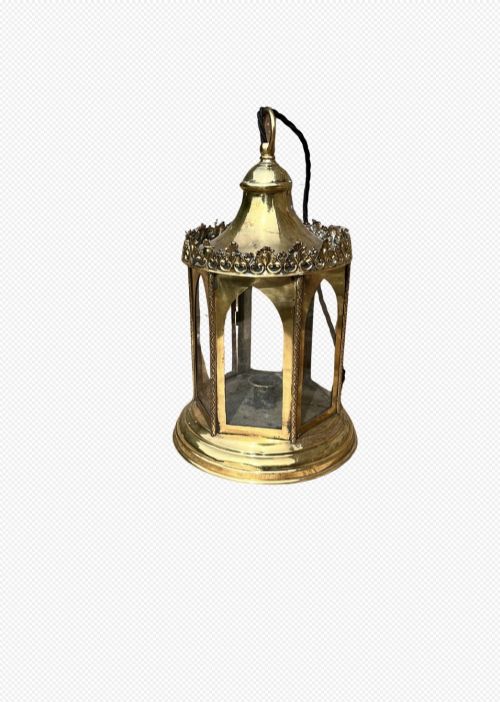
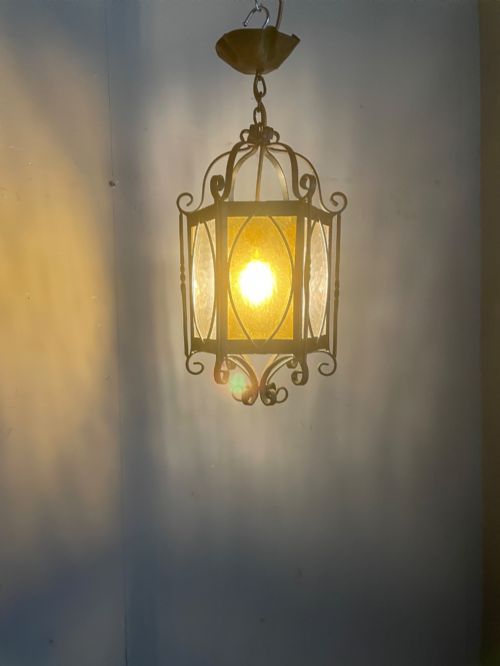
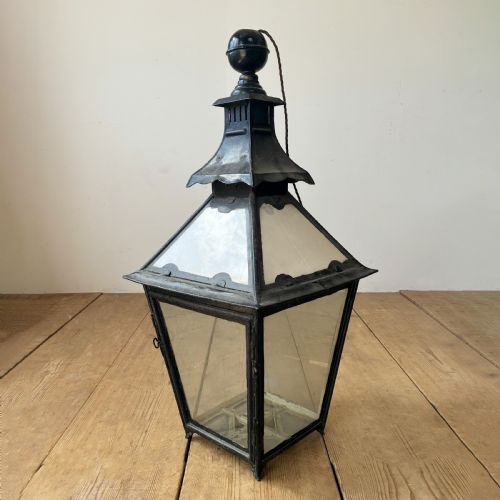
Makers built these lanterns using metal frameworks of brass, gilded bronze, copper, steel and wrought iron, engineered to support heavy glass panels securely. Brass and gilded bronze dominate the upper tiers of the selection, often shaped into intricate neoclassical mounts, delicate crestings or robust hexagonal frames that required skilled foundry work. Wrought iron and steel provide a more muscular alternative, hammering utility and decorative flourish into heavy porch lights and Arts and Crafts hall lanterns.
Glazing techniques define the visual character of the pieces, utilising flat, convex or bevelled glass panes held in place by traditional lead cames or metal glazing bars. Metalwork finishes range from bright gilt surfaces and polished brass to oxidised iron and weathered copper developed over decades of exposure in porches and entrance halls. The integration of doors and hinged panels allowed past owners to access interior burners or early electrical fittings without dismantling the entire hanging structure.
The listings on this page span several decades, featuring materials such as wrought iron, copper, steel, and heavy gilded bronze.
Evaluating quality and execution
The distinction between ordinary production and superior execution lies in the weight of the metal casting and the crispness of the applied ornament. Higher quality lanterns employ thick gauge brass or heavy gilded bronze, whereas simpler utility pieces rely on lighter stamped sheet metals and basic fixings. The proportion of the metal frame to the glass panels dictates the visual balance, with finer pieces exhibiting seamless mitres, robust suspension loops and meticulous hand-finishing.
Glass selection further separates the tiers of workmanship, distinguishing simple flat panes from thick bevelled or curved convex glass that distorts light with deliberate elegance. Original gilding, subtle chasing on bronze mounts and intact multi-light internal clusters indicate a higher original cost and superior workshop origin. When an item retains its heavy frame alongside specialised glass, it represents the upper echelon of period lighting manufacture.
The Vintage Glazed Hall Lantern Glossary
- Hexagonal lantern
- A hanging light fixture constructed with six vertical sides, commonly seen in both Edwardian brass examples and wrought iron pieces. This geometric form allows light to disperse evenly across narrow corridors.
- Bevelled glass
- Glass panes possessing an angled, polished border around the outer edge that refracts light into subtle prismatic colours. This treatment adds depth and formal decoration to the lantern body.
- Gilded bronze
- Bronze metal coated with a thin layer of gold leaf or applied gilt finish to create a rich, reflective surface. It was favoured by French makers for formal neoclassical and chateau-style hall fittings.
- Convex lantern
- A hanging light fixture featuring outward-curving glass panels that soften the internal bulb placement. The curved panes project a broader spread of illumination than flat-sided alternatives.
- Ceiling pendant
- A light fixture suspended from an overhead canopy by a chain, rod or cord rather than mounted flush to the surface. Hall lanterns use this drop to position illumination at the correct height in tall stairwells.
Vintage Glazed Hall Lantern: Frequently Asked Questions
How do I hang a heavy brass lantern?
Hanging a heavy brass or bronze lantern requires securing the suspension hook directly into a ceiling joist or substantial structural noggin rather than relying on plaster alone. The weight of these antique fixtures demands robust fixings and appropriate chain strength to ensure safe long-term suspension in a hallway.
Most pieces use a matching ceiling canopy to conceal the wiring connection while transferring the load to the primary hanging loop. Consulting a qualified electrician is essential to ensure the internal wiring safely accommodates modern lamp standards without compromising the historic metalwork.
Were these lanterns originally gas or electric?
Many examples from the nineteenth and early twentieth centuries began their lives configured for gas or oil before being converted to electricity during subsequent decades. Surviving interior clusters often reveal later wiring adaptations fitted neatly within original burners or drafted passages.
This evolutionary history means components inside the frame may show signs of past alterations while the exterior metalwork retains its original period patina. Such conversions are standard practice for lighting of this age and allow them to function safely in modern domestic settings.
How do I clean the glass panels?
Cleaning the glass panels of a vintage glazed hall lantern is best approached by removing loose dust with a soft brush before applying a mild glass cleaner directly to a cloth. Avoid spraying liquids straight onto fragile metal frames or aged gilt surfaces to prevent water spotting or damage to the finish.
Care must be taken around lead cames and delicate brass mouldings, wiping gently to preserve any patination that has accumulated over the decades. Routine maintenance keeps the bevelled and convex panes clear without stripping away the historical character of the metalwork.
Where should I place a hall lantern?
A vintage glazed hall lantern belongs in high-ceilinged entrance halls, landings or expansive vestibules where the fixture has adequate space to hang without obstructing movement. The vertical drop allows the lantern to act as a formal focal point upon entering the home.
Consider the scale of the doorway and the height of the ceiling when positioning the piece so the light distributes effectively across the floor and walls. Placing one in a period stairwell creates an immediate sense of architectural weight and traditional proportion.