




Vintage Glass Wine Cooler
These vintage glass wine cooler pieces combine heavy crystal vessels with silver plate and gilt bronze mounts, bringing practical elegance to any dining table.
Vintage Glass Wine Cooler
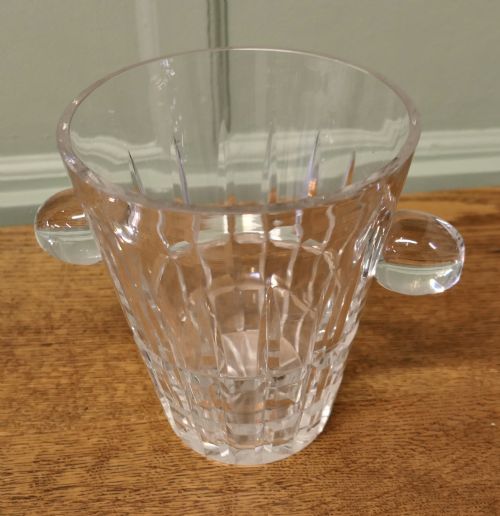
When you search for a vintage glass wine cooler, you are looking at substantial vessels designed to chill wine and champagne at the table. The listings here range from compact personal coolers to heavy champagne buckets spanning the nineteenth century through the mid twentieth century.
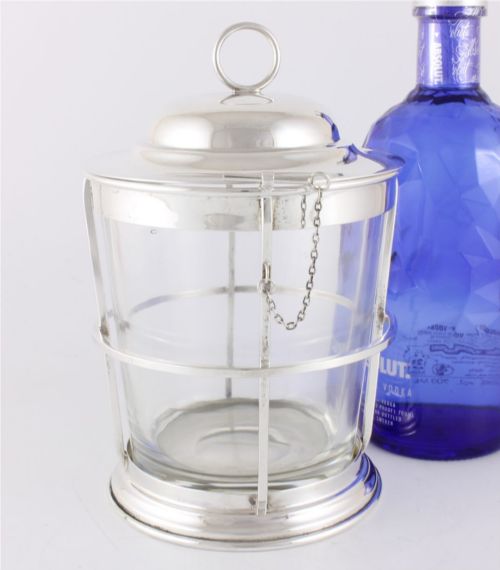
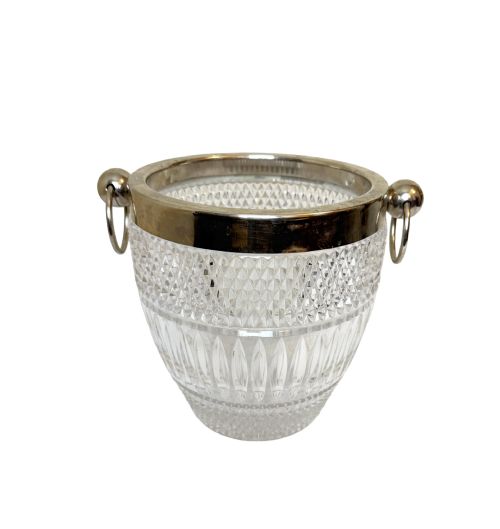
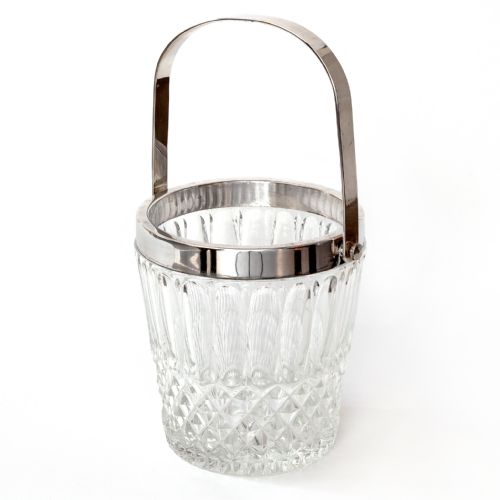
You are most likely to meet French and English examples on this page, taking forms such as cylindrical ice buckets, ship's lantern shapes, and footed vessels. These pieces frequently incorporate cut crystal bodies paired with silver plate, silverplate, or brass mounts.
The objects serve as both functional barware and decorative centrepieces, drawing on design idioms from the Regency and Edwardian eras through to Art Nouveau, Art Deco, and Mid-Century aesthetics.
How they were made
Makers shaped the heavy glass and lead crystal bodies through hand blowing and intricate hand cutting, producing deep geometric and floral facets that catch the light. This heavy glasswork provides the structural integrity required to hold ice and bottles securely.
Craftspeople combined these glass vessels with metalwork components, securing them with silver plate, silverplate, silver-plate, gilt bronze, or brass mounts, handles, and rims. Some specialised forms also integrated paired metal tongs or interior glass liners.
Listings feature items spanning the nineteenth century through the 1950s, utilising materials including cut crystal, silver plate, and brass.
What varies in quality
Quality in these pieces rests upon the weight and clarity of the crystal, alongside the crispness of the hand-cut facets. Heavier lead crystal bodies with deep, precise cutting represent the upper tier of production.
The execution of the metal mounts also defines the grade of an object. Substantial silver plate, gilt bronze, or brass mounts that fit the glass vessel precisely separate finer workshop output from standard commercial barware.
PH Vogel
The Vintage Glass Wine Cooler Glossary
- Cut crystal
- Glass containing lead oxide that is hand-cut with decorative facets. This material is heavier and more refractive than standard glass.
- Silver plate
- A thin layer of silver applied to a base metal such as copper or brass. It provides the appearance of solid silver for barware mounts.
- Gilt bronze
- Bronze decorated with a thin layer of gold applied to the surface. It appears on mounts of the nineteenth century and later.
- Art Deco
- A design style from the early decades of the twentieth century. It is characterised by geometric shapes and streamlined forms.
- Regency
- An English design period spanning the early nineteenth century. Pieces from this era often feature classical proportions and restrained ornament.
Vintage Glass Wine Cooler: Frequently Asked Questions
What is a vintage glass wine cooler?
These items are heavy glass or crystal vessels framed in metal mounts, created to hold ice and keep wine or champagne chilled at the table.
They function as both practical barware and decorative table accessories, drawing on manufacturing traditions from the nineteenth and twentieth centuries.
How do I clean a silver plated cooler?
Clean the glass body using warm soapy water and a soft cloth to avoid scratching the surface or damaging hand-cut facets.
For the silver plate mounts, apply a dedicated silver polish gently with a soft cloth, taking care to keep abrasive chemicals away from the glass.
Are these coolers safe for ice?
The heavy glass and lead crystal materials used in these pieces are structurally robust and suitable for holding ice cubes during service.
Ensure sudden temperature changes are avoided when adding ice to prevent thermal stress on older glass.
How do I identify Art Deco pieces?
Art Deco coolers typically feature sharp geometric facets, streamlined silhouettes, and clean metal mounts dating from the 1920s and 1930s.
They contrast with the flowing floral motifs of earlier Art Nouveau designs or the classical symmetry of Regency examples.