


Vintage Glass Wine Chalices
These vintage glass wine chalices are drinking vessels crafted across several eras, prized for their decorative bowls and substantial forms.
Vintage Glass Wine Chalices
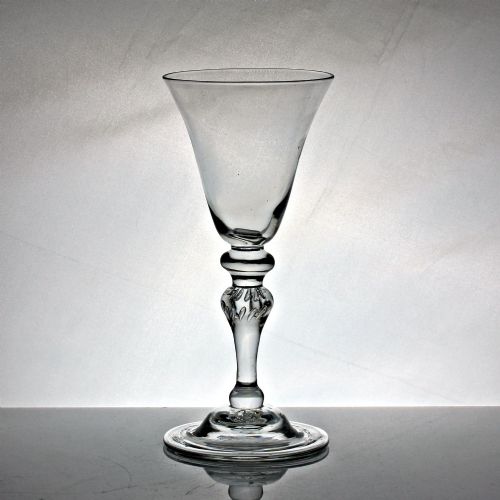
When you search for vintage glass wine chalices, you are looking at drinking vessels and goblets spanning the eighteenth century through the twentieth century. The selection includes rummers, roemers, and stemmed wine glasses originating from periods such as the Georgian and Victorian eras. These items serve as barware and tableware, featuring diverse decorative treatments from various historical workshops.
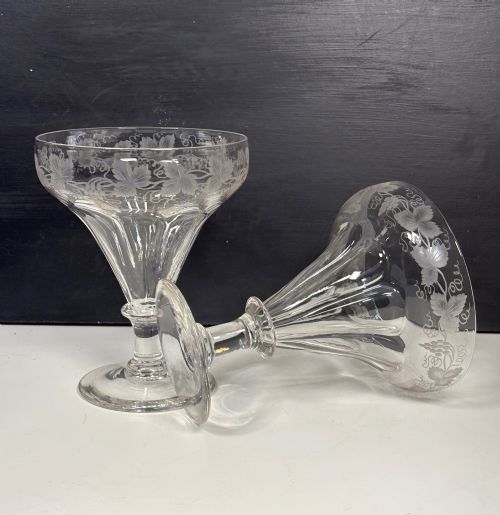
You are most likely to meet nineteenth-century Victorian cut and frosted goblets and Edwardian turquoise blue wine glass goblets on this page. Pieces from the eighteenth century appear alongside twentieth-century Art Deco and Jugendstil designs. The forms range from plain stem goblets and balustroid examples to large, wide-bowled drinking glasses.
How they were made
Makers utilised techniques such as hand-blowing, cutting, etching, and engraving to shape the glass. Coloured glass, clear glass, and lead crystal or lead glass form the primary material base for these vessels.
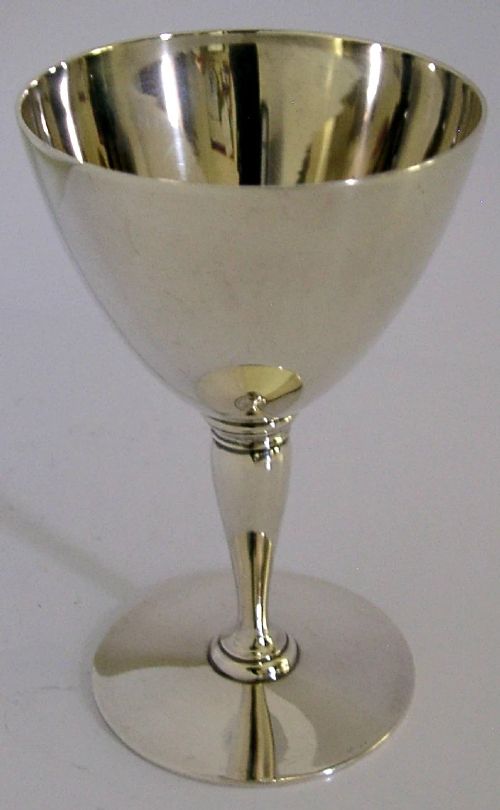
Additional ornamentation includes polychrome enamel decoration and sterling silver mounts. Nut-moulded techniques also appear on specific eighteenth-century pieces from the records.
Materials documented across the selection include lead crystal, sterling silver, and polychrome enamel.
What varies in quality
The standard of execution in the cutting and engraving distinguishes individual pieces within the range. Deeper wheel-engraving and crisper wheel-cutting demonstrate greater technical skill from the maker.
The purity and weight of the lead crystal or lead glass also affect the physical presence of the chalice. Additionally, the complexity of polychrome enamel work and the integration of sterling silver elements elevate the execution.
Tiffany and Co·Frits Hechert·Adelbert Niemeyer
The Vintage Glass Wine Chalices Glossary
- Balustroid
- A stem form resembling a baluster, common in eighteenth-century English drinking glasses. It provides a sturdy and tactile grip.
- Roemer
- A traditional large drinking vessel, often made of green glass and featuring a decorated prunt-studded stem. It originates from Germanic and continental European traditions.
- Rummer
- A large, wide-bowled drinking glass popular in the nineteenth century. These vessels typically sit on a short, sturdy stem.
- Jugendstil
- The continental European manifestation of Art Nouveau, prominent around the turn of the twentieth century. It embraces organic forms and flowing lines.
- Polychrome enamel
- A decorative glass-painting technique using multiple colours fused by heat. This method adds vibrant surface patterns to the vessel.
Vintage Glass Wine Chalices: Frequently Asked Questions
How are antique wine chalices different from standard wine glasses?
These chalices and goblets typically feature larger bowls and heavier stems than modern wine glasses. They were designed for communal passing or substantial toasts.
Many examples from the eighteenth and nineteenth centuries serve specific historical drinking traditions rather than modern wine-tasting protocols.
Can I use these vintage chalices for everyday dining?
Using these pieces daily requires careful handling due to their age and delicate materials like lead glass. Hand washing is essential to preserve surface engravings and enamelwork.
Many collectors prefer to display them as barware or use them exclusively for special occasions to prevent accidental damage.
How do I identify a Georgian glass goblet?
Georgian pieces often display characteristics such as balustroid stems, kick-up bases, or heavy lead glass composition. Tool marks and pontil scars on the underside indicate hand-blown production methods.
Stylistic cues from the mid-eighteenth century help separate these earlier vessels from later Victorian revivals.
What is the significance of coloured glass in these chalices?
Coloured glass, including turquoise blue and pale green variants, gained popularity during the Edwardian period and continental Jugendstil era. Makers used metallic oxides in the glass melt to achieve these rich hues.
These coloured vessels often feature enamel decoration or intricate cutting to contrast with the tinted body.