
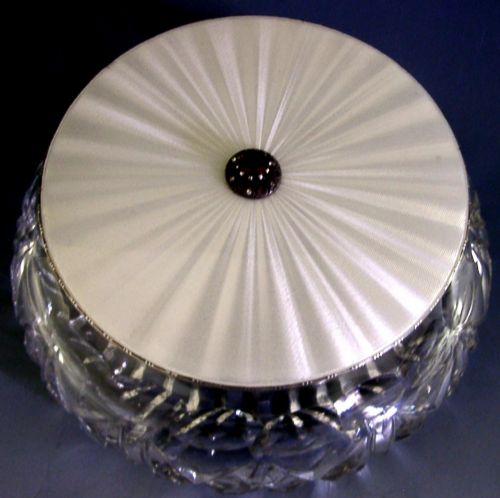


Vintage Glass Trinket Box
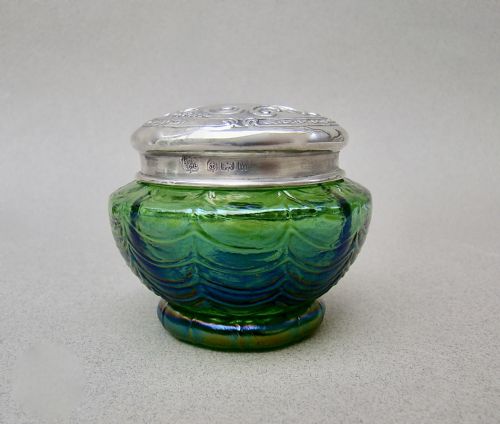
A vintage glass trinket box brings dressing table elegance to storage, combining tactile metals with polished crystal.
Vintage Glass Trinket Box
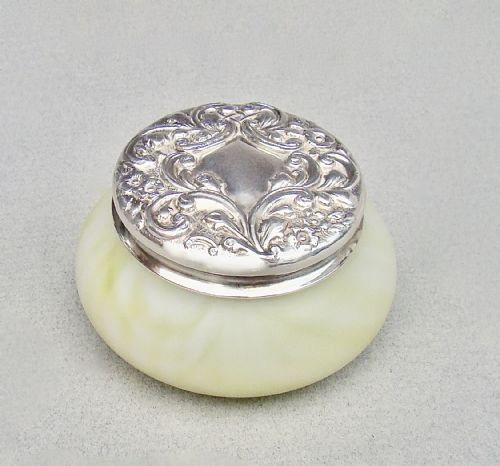
A vintage glass trinket box encompasses vanity jars, powder boxes and dressing table containers created across the late nineteenth and twentieth centuries. Buyers search for these pieces to house small valuables while displaying decorative craftsmanship on dressing tables.
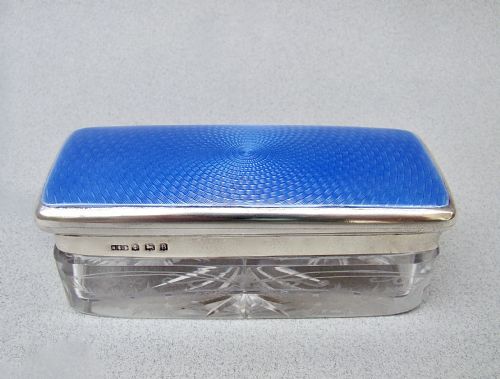
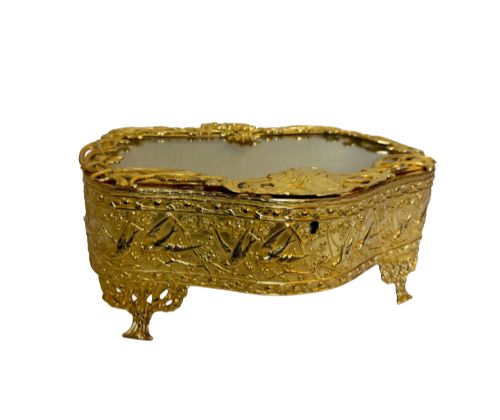
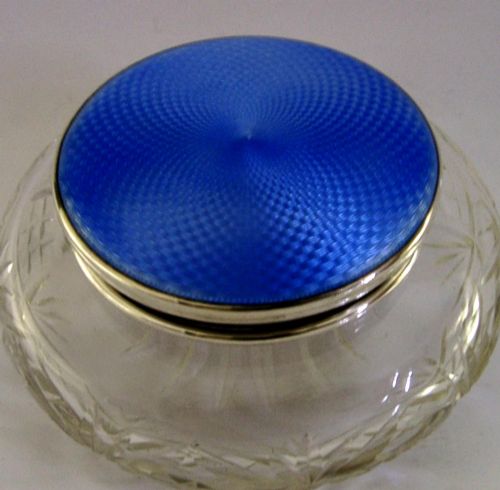
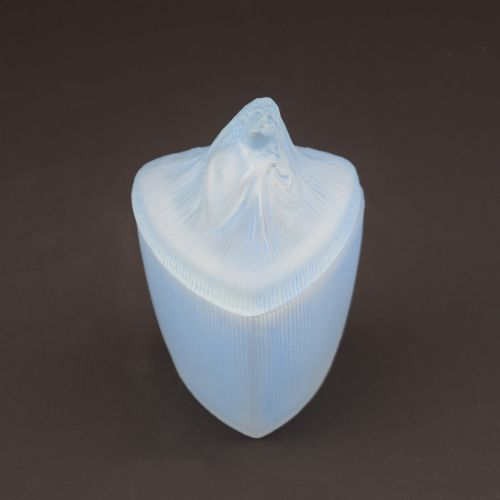
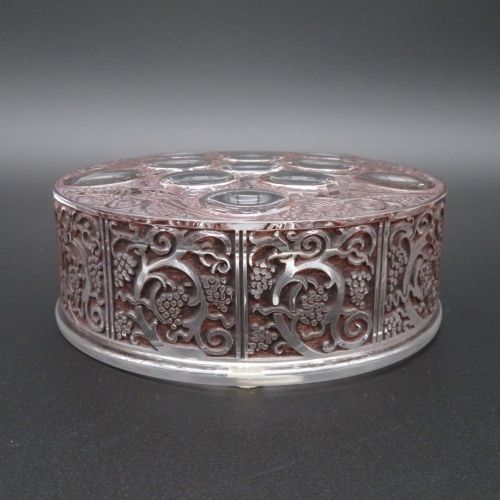
The selections span Edwardian cut crystal designs, Art Deco guilloche enamel pieces and French ormolu-mounted vessels. Most examples combine glass bodies with sterling silver or gilt metal mounts.
Common forms range from small heart-shaped jars to substantial crystal caskets and lidded powder bowls. Origins stretch from British silversmith workshops to continental European glasshouses.
Materials and construction
Makers utilised heavy cut glass and moulded crystal for the main bodies, frequently incorporating polished facets or frosted surface textures. Metal mounts in sterling silver, gilt bronze and ormolu were cast and fitted to secure hinged lids.
Surface decoration often relied on vibrant guilloche enamel in blue, pink or translucent shades applied over engine-turned silver. Some pieces integrated additional elements like tortoiseshell, mother of pearl or fabric linings.
The inventory includes specialised vanity items ranging from cigarette boxes and powder bowls to miniature carriage-shaped novelty caskets.
Judging execution and finish
Quality rests in the weight and clarity of the glass, where deep hand-cutting creates sharper light refraction than moulded alternatives. The precision of the metal mount hinges and the crispness of hallmark stamps distinguish finer workshop output.
Enamel condition and uniformity dictate value, with superior examples showing flawless coloured surfaces free of chipping or restoration. Mounts cast in solid ormolu or heavy sterling silver demonstrate greater durability than lighter plated brass.
A. J. Pepper & Co·Henry Clifford Davis·A. Bromet & Co·Rene Lalique·Posen
The Vintage Glass Trinket Box Glossary
- Guilloche enamel
- Decorative metalwork covered in translucent enamel over an engine-turned pattern. This technique creates repeating geometric waves that catch the light beneath coloured glass layers.
- Ormolu
- Finely ground high-carat gold applied to a bronze base using a mercury-gilding process. It provides a warm golden finish on nineteenth-century French mounts.
- Bijouterie table
- A glass-topped display table designed to showcase small valuable items and trinkets. These pieces elevate storage into furniture forms.
- Satin glass
- Glass treated with acid or mechanical means to produce a frosted, velvety surface texture. It gained popularity during the late Victorian and Edwardian periods.
- Sterling silver
- An alloy containing ninety-two point five percent silver by mass. British examples carry assay office marks indicating the year of manufacture.
Vintage Glass Trinket Box: Frequently Asked Questions
How do I date a silver mounted glass box?
British pieces typically feature hallmarks stamped into the silver mount, including a maker's mark, a lion passant for sterling standard, and a date letter corresponding to the assay office records.
Stylistic cues like Art Deco geometry or Edwardian floral motifs help narrow down the decade when hallmarks are absent or continental.
What is the difference between crystal and glass?
Crystal contains mineral additives like lead oxide that increase weight, density and refractive index. This composition allows for deeper, sharper facet cutting.
Standard glass remains lighter and lacks the high brilliance found in heavy crystal caskets.
Were these boxes only used for jewellery?
While many served as ring holders and jewellery storage, numerous pieces functioned as powder jars, cotton boxes or cigarette containers on dressing tables.
Specialised forms included dragee boxes for sweet confections and patch boxes for cosmetic beauty spots.
How should I clean antique glass and silver?
Glass bodies respond well to warm soapy water and a soft cloth, avoiding harsh abrasives that scratch delicate surfaces. Silver mounts require targeted polishing to prevent tarnish from touching the surrounding glass or enamel.
Enamelled sections demand extra care to avoid chemical damage from standard metal polishes.