


Vintage Glass Timepiece
A vintage glass timepiece brings together precision mechanics and transparency, offering a clear view of the inner workings that drives collectors to seek them out.
Vintage Glass Timepiece
When searching for a vintage glass timepiece, buyers encounter a distinct range of objects spanning the nineteenth and twentieth centuries, including four glass mantel clocks, skeleton clocks, and desk pieces. These items combine transparent enclosures with mechanical movements, often drawing upon Victorian and Art Deco design traditions.
The selection on this page relies heavily on French and English origins, with carriage clocks and glass mantel clocks appearing frequently alongside specialised creations. Victorian examples often showcase brass framing around glass panels, whereas later twentieth-century items incorporate modernist chrome and opalescent glass forms.
How they were made
Makers utilised heavy plate glass and brass to construct protective housings that exposed the mechanical movements within, such as in four glass mantel clocks and carriage clocks. Metal components in brass, chrome, and steel were cast and polished to support delicate gear trains and enamelled dials.
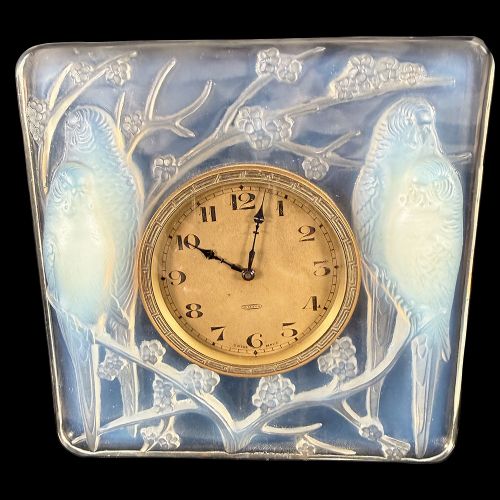
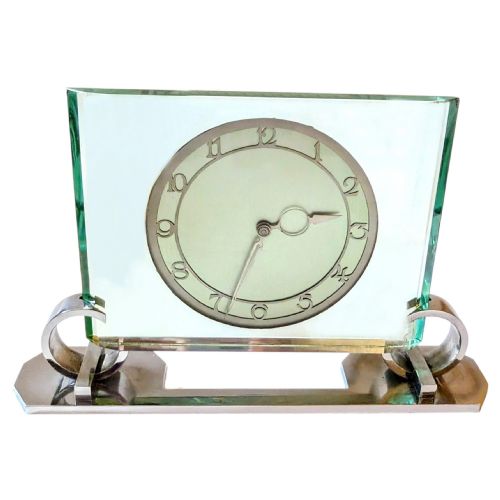
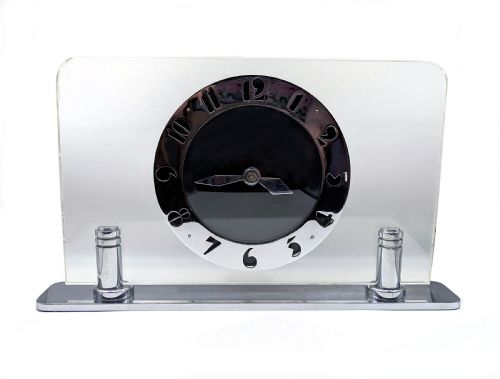
Art Deco examples introduced moulded opalescent and uranium glass, often integrating sculptural elements directly into the timepiece body. Movements were driven by traditional spring-wound mechanisms, eight-day strikes, or early electric systems like the Favre-Bulle designs.
Listings feature periods from the nineteenth century through the nineteen-fifties, employing glass, brass, chrome, and mahogany.
What varies in quality
The distinction between standard items and superior examples lies in the refinement of the movement and the weight of the materials used. Heavy bevelled glass panels fitted tightly into solid brass or chrome frames indicate higher standards of craftsmanship than lighter, mass-produced alternatives.
Superior execution is further demonstrated by the intricacy of the dial, the inclusion of complications such as repeat strikes or travel cases, and the crispness of signature engravings from established makers.
Mappin and Webb·Smiths Clockmakers·Richard Winter·Rene Lalique·Maurice and Marcel Moulin Favre Bulle·John Morley·Duverdrey and Bloquel·Drocourt·L Epee
The Vintage Glass Timepiece Glossary
- Carriage clock
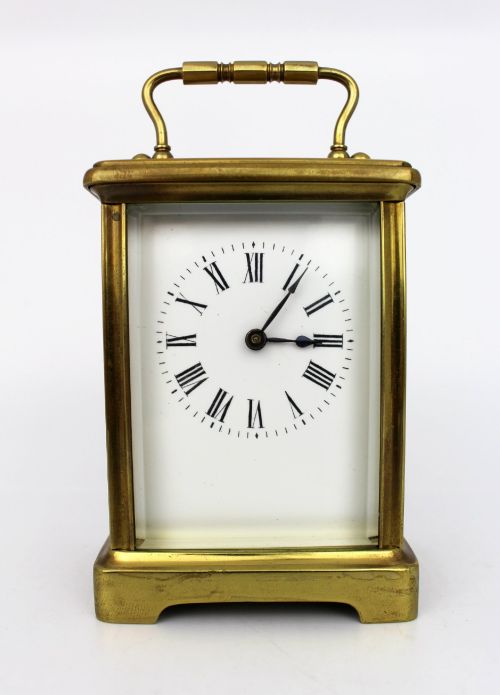
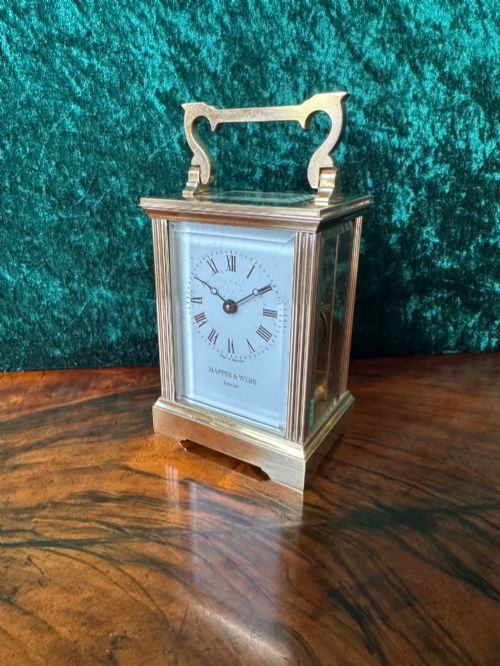
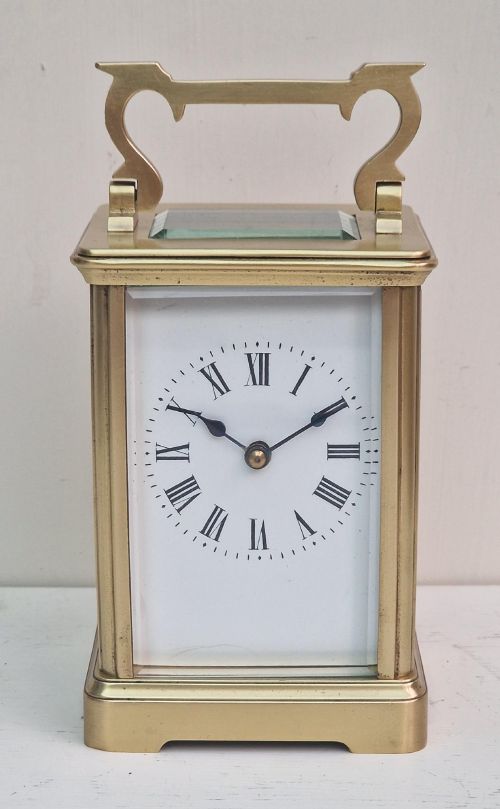
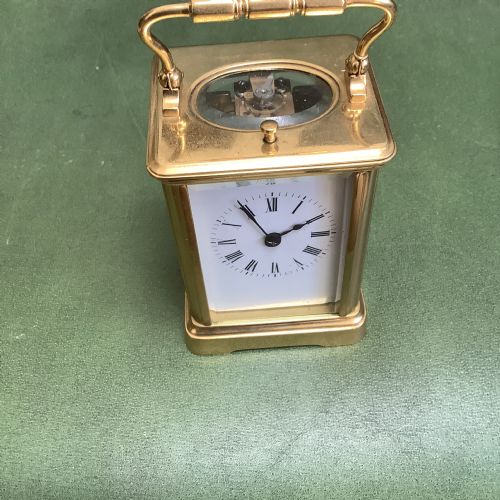
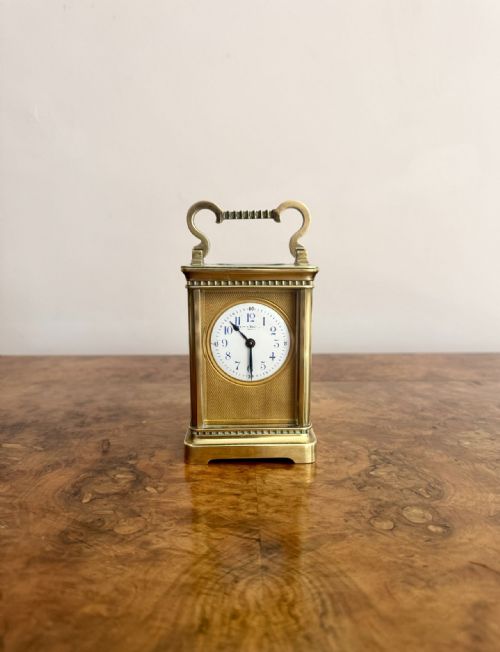
- A portable spring-driven timepiece originally designed for travel, typically housed in a brass case with glass panels. These clocks often feature a swinging handle on top.
- Four glass clock
- A mantel clock enclosed by glass panels on the front, back, and sides, allowing an unobstructed view of the movement and mercury or pendulum swing. They frequently date to the nineteenth century.
- Skeleton clock
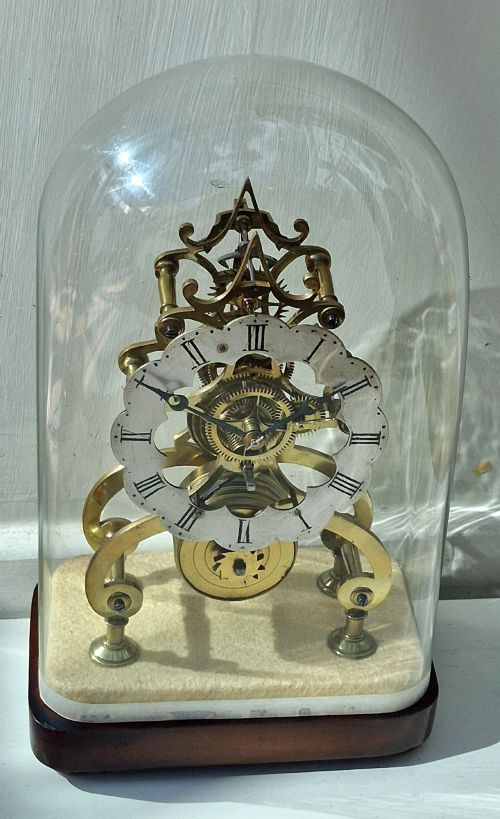
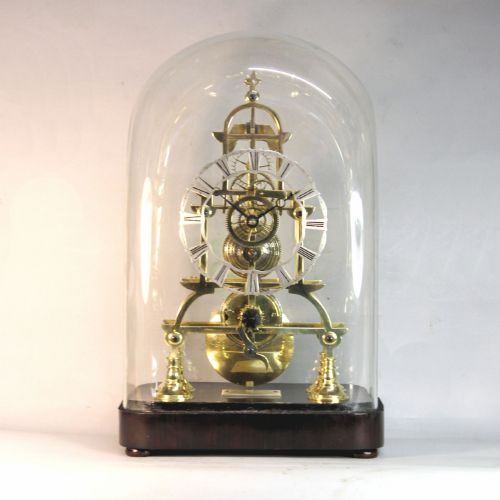
- A timepiece with an open framework that exposes the entire gear train and escapement, often protected by a glass dome. Victorian versions frequently displayed gothic architectural influences.
- Opalescent glass
- A milky, translucent glass that displays shifting tones of blue and orange when lit, prominent in Art Deco pieces. This material was utilised by makers like Lalique for sculptural clock bodies.
- Escapement
- The mechanical linkage that controls the release of power in a clock movement, translating the spring tension into regulated ticks. Different styles indicate the period and origin of the piece.
Vintage Glass Timepiece: Frequently Asked Questions
How do I wind a vintage glass timepiece?
Most mechanical pieces require a specific key inserted into the dial or back plate to tension the mainspring.
Care should be taken not to overwind the movement, stopping as soon as resistance is felt.
What is an eight-day movement?
An eight-day movement is a clock mechanism designed to run for slightly more than a week on a single winding.
This reduced the frequency of maintenance required for household or travel clocks.
How do I identify an Art Deco glass clock?
Art Deco pieces typically feature geometric lines, chrome plating, or moulded opalescent glass bodies dating from the nineteen-thirties.
They often replace traditional wooden or heavy brass cases with streamlined modernist aesthetics.
Were carriage clocks actually used for travel?
Carriage clocks originated to provide accurate time for travellers in horse-drawn carriages and later trains, protected by sturdy brass cases and leather travel boxes.
Many surviving examples retain their original fitted cases, indicating their intended portable function.