




Vintage Glass Salts
Vintage glass salts hold place settings together with small reservoirs of colour and cut detail that catch the dining room light.
Vintage Glass Salts
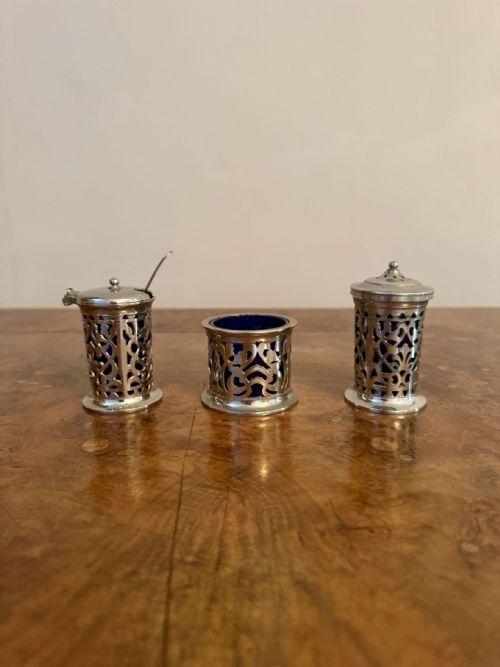
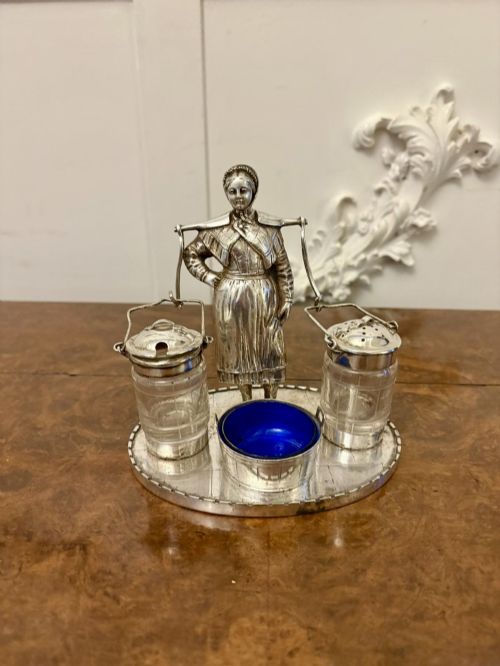
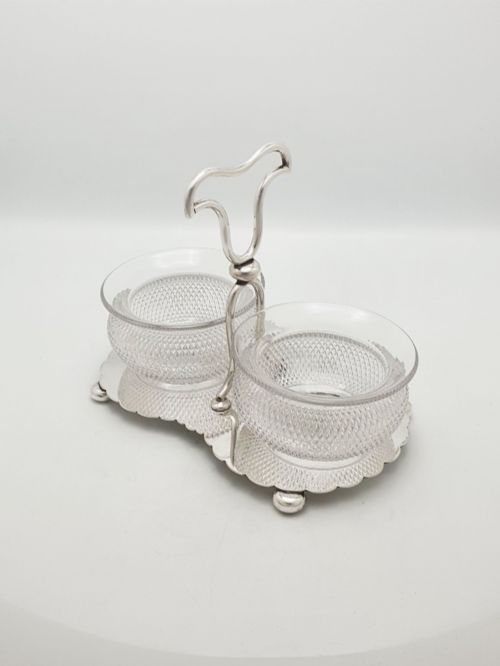
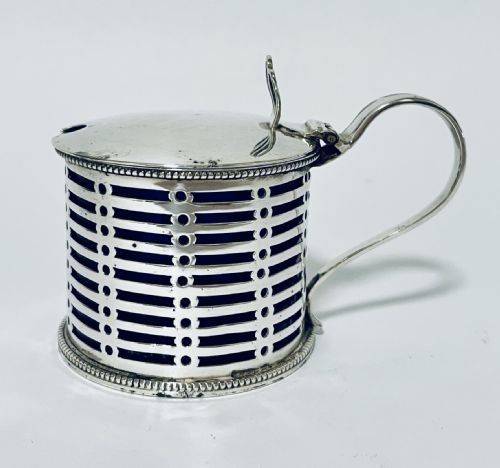
When searching for vintage glass salts, buyers encounter open vessels, cruet sets, and condiment stands designed to hold seasoning at the table. The most frequent examples span the Victorian, Edwardian, and Art Deco periods, appearing either as individual open dishes or fitted within silver plate and sterling silver frames.
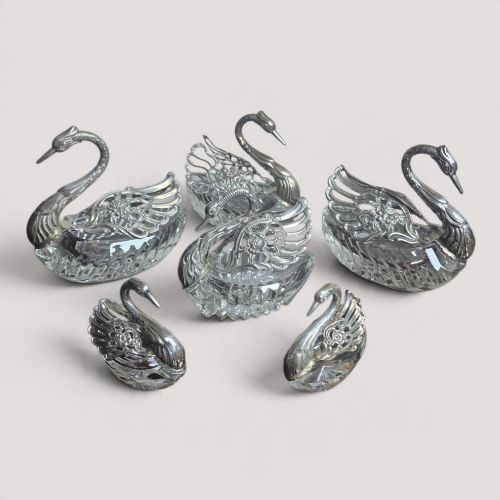
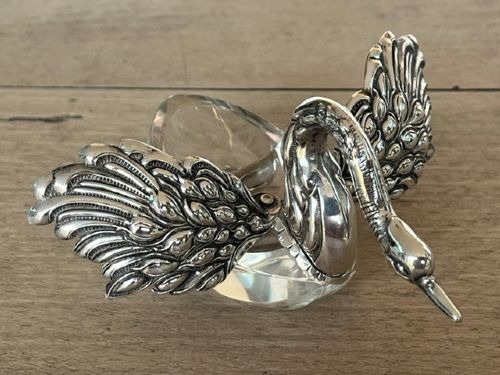
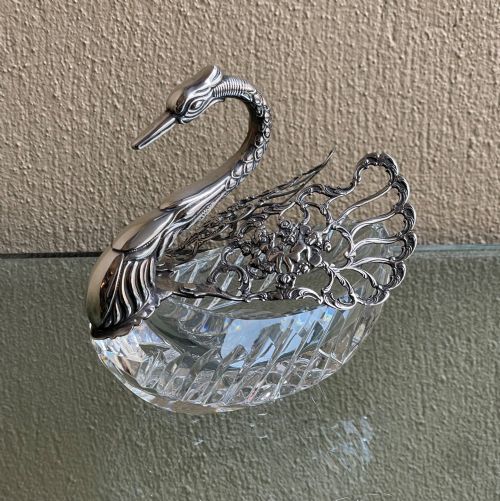
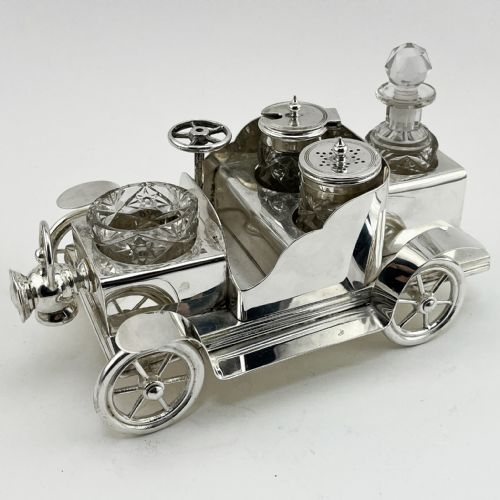
Forms range from simple circular table salts to moulded opaline shell dishes and figural novelty pieces like swans or car cruets. These items served a practical dining function before the advent of free-running salt, acting as decorative accents for salt, pepper, and mustard.
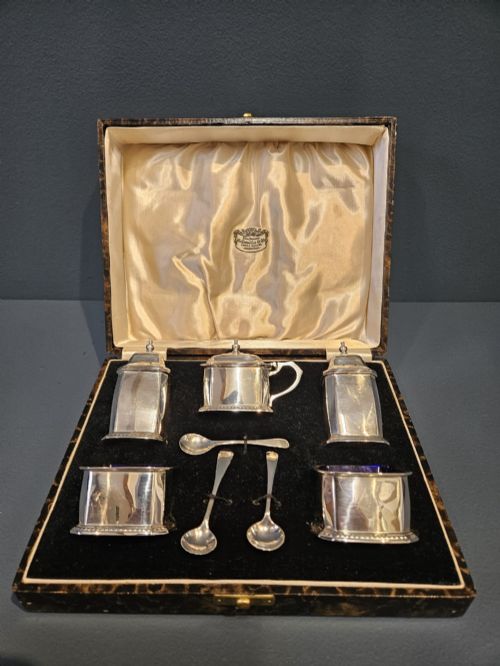
Origin points skew toward British workshops from the nineteenth and early twentieth centuries, alongside occasional French opaline items and Norwegian enamel work. They survive both as single items and matched pairs, frequently retaining their original fitted presentation cases.
How they were made
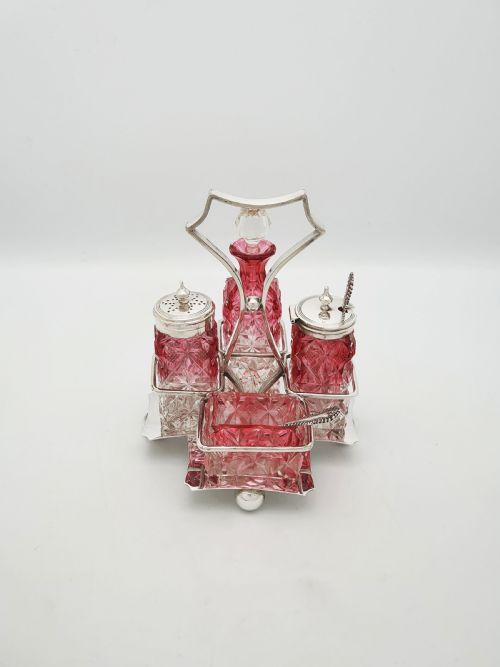
Makers combined heavy lead crystal, cut glass, cobalt glass, and opaline glass with structural mounts of sterling silver and silver plate. Glass bodies were hand cut, moulded, or flashed in colours such as cranberry and green, then paired with gilt edges or enamel decoration.
Metal components involved silver plating over a base metal or solid sterling silver hammered, cast, and hallmarked. Artisans constructed complex condiment frames and movable elements like swan wings or car chassis to hold the delicate glass bowls securely.
Vintage Glass Salts Retail Price Guide 2026
Typical asking prices for vintage glass salts among the pieces listed under this phrase on Sellingantiques today, from the lower quarter to the upper quarter. They describe what is for sale here now, not the wider market.
Listings feature Victorian, Edwardian, and Art Deco periods, using cut glass, crystal, opaline glass, and sterling silver.
What varies in quality
The distinction between standard domestic wares and superior pieces rests on the weight of the metal mount and the depth of the glass cutting. Heavier lead crystal with sharp, clean facets separates finer productions from simpler pressed glass vessels.
Cased sets with intact gilding, unblemished silver plating, and fully functional mechanical parts such as hinged lids or movable wings command greater attention. The presence of clear hallmarks on the silver elements provides a reliable indicator of origin and standard.
Goldsmith & Silversmith's·Josiah Williams & Co·Walker & Hall·S. Morden & Co
The Vintage Glass Salts Glossary
- Cruet set
- A matched collection of bottles or jars for condiments, usually held together in a metal stand with a central handle.
- Open salt
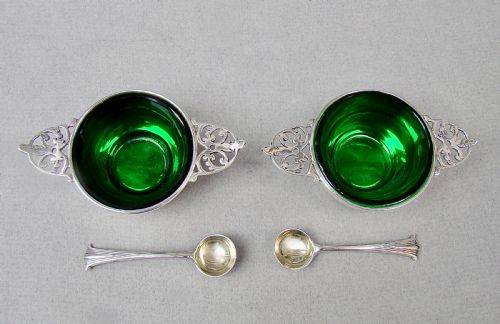
- A small open bowl placed at the dining table into which diners dipped pinches of salt using a tiny spoon or fingers.
- Opaline glass
- An opaque or translucent glass developed in various pale colours, frequently used for nineteenth-century decorative tableware.
- Silver plate
- A base metal foundation coated with a thin layer of silver, common in Victorian and Edwardian dining accessories.
- Lead crystal
- Glass containing lead oxide, known for higher refractive index and greater weight than standard soda-lime glass.
Vintage Glass Salts: Frequently Asked Questions
How were vintage glass salts used?
Dinners used these open vessels to hold coarse salt before free-flowing table salt became common. Guests took small pinches using fingers or dedicated miniature spoons.
They sat beside individual plates or formed part of larger condiment stands shared across the dining table.
How do I identify Edwardian glass salts?
Edwardian pieces often combine lighter silver plate mounts with delicate cut glass or cranberry flashed bowls. Design motifs reflect refined traditional styles typical of the early twentieth century.
Looking for maker marks and registration numbers helps confirm the production decade around nineteen hundred.
Can I use these for daily dining?
Most vintage salts function well for holding condiments or small dry items during meals. Gentle hand washing preserves the delicate glass surfaces and silver plating.
Avoid harsh abrasives or dishwashers to protect older metal finishes and coloured glass treatments.
What is a cruet set?
A cruet set is a framed stand holding multiple glass bottles or open salt dishes together. These stands often feature a central carry handle for passing around the table.
Sets range from simple pairs to elaborate multi-bottle arrangements with mustard pots and pepper shakers.