







Vintage Glass Rummer
A vintage glass rummer is a substantial drinking vessel meant for serious toasts, bringing weight and clarity to the table.
Vintage Glass Rummer
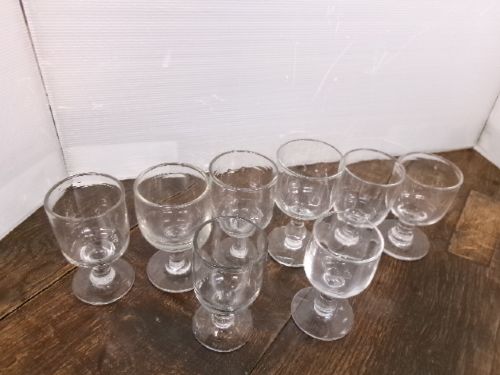
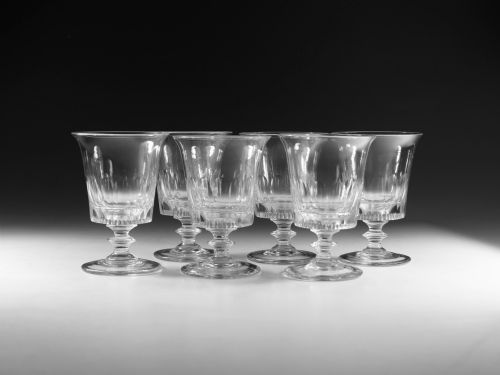
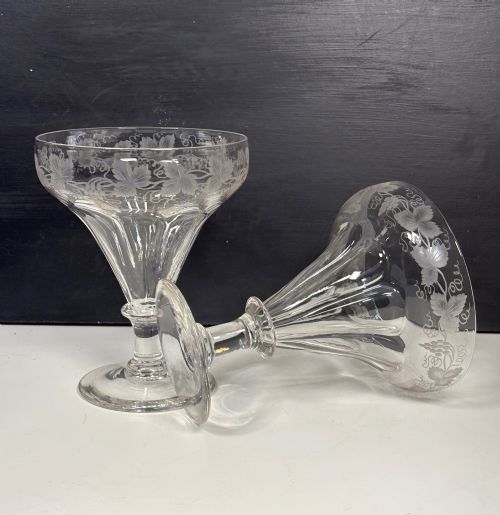
A vintage glass rummer is a sturdy, wide-bowled drinking vessel designed for ale, wine, or spirits during the Georgian and Victorian eras. These pieces sit firmly on heavy feet, often featuring cut or engraved decoration around the bowl.
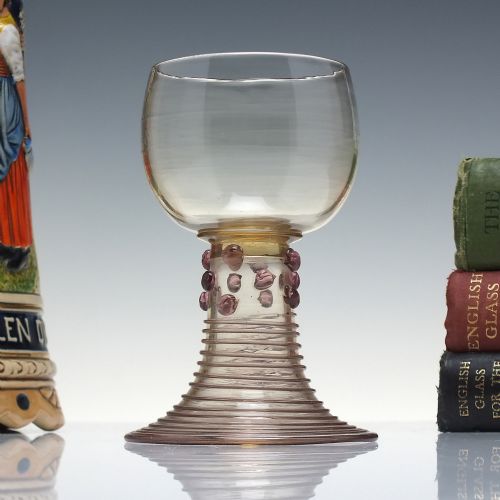
The versions most commonly met on this page date from the late eighteenth century through the mid-nineteenth century, showing English Anglo-Irish influences alongside continental Roemers.
Makers produced these drinking glasses in sets as well as pairs and single large presentation pieces, spanning everything from plain lead crystal to vibrant green and turquoise export glass.
How they were made
Craftsmen shaped these vessels using lead glass, lead crystal, and flint glass, which provided the heavy weight and high refractive index needed for deep cutting and polishing.
Artisans applied surface decoration through wheel engraving to depict motifs like hops and barley, architectural scenes, or heraldic emblems.
Some European examples incorporate polychrome enamel decoration fired directly onto the bowl, while others rely on hand-blown techniques that leave subtle tool marks in the material.
Vintage Glass Rummer Retail Price Guide 2026
Typical asking prices for vintage glass rummer among the pieces listed under this phrase on Sellingantiques today, from the lower quarter to the upper quarter. They describe what is for sale here now, not the wider market.
Listings feature lead crystal, hand-blown glass, and enamelled finishes across Georgian, Victorian, and Edwardian periods.
What varies in quality
The distinction between ordinary and exceptional quality rests on the clarity of the metal and the crispness of the wheel-cut facets. Deep, sharp cutting catches the light directly, whereas soft or blurred facets indicate hurried work.
Proportion dictates visual success, with the relationship between bowl depth, stem thickness, and foot width separating standard production from master craftsmanship. Heavy crystal and balanced baluster stems elevate a piece above simpler utilitarian forms.
Frits Hechert
The Vintage Glass Rummer Glossary
- Rummer
- A large, heavy drinking glass popular in Britain during the eighteenth and nineteenth centuries for ale, wine, and punch. They typically feature a thick stem and a wide, bucket-shaped bowl.
- Roemer
- A continental European drinking glass, usually green or amber, with a large spherical bowl resting on a cylindrical stem decorated with applied prunts. These often display elaborate enamel work.
- Flint glass
- An early British term for heavy, high-clarity glass containing lead oxide. It allowed for deep wheel engraving and brilliant light refraction.
- Prunt
- A small, applied lump of molten glass fused to the stem of a roemer for a secure grip. They are frequently pinched into raspberry shapes.
- Baluster stem
- A thick, turned stem shape resembling a architectural baluster. Found on heavier drinking vessels to provide structural stability.
Vintage Glass Rummer: Frequently Asked Questions
What were glass rummers used for?
These vessels served for drinking ale, cider, wine, or punch during communal gatherings and formal meals. Their generous size made them suitable for large toasts.
People also used them as everyday table glass in prosperous households, relying on their heavy weight to prevent tipping.
How do I date an old rummer?
Dating relies on examining the pontil mark on the base, the composition of the glass, and the cutting style. Georgian examples often show rough pontil scars and simpler lead metal.
Victorian and later pieces introduce heavier pressing, more uniform lead crystal, and distinct nineteenth-century decorative motifs.
Are these glasses safe to use?
Most antique glass handles normal beverage use safely, provided you wash them entirely by hand in warm water. Avoid sudden temperature changes to prevent thermal shock.
Lead crystal can leach small amounts of lead if acidic liquids sit in the vessel for extended periods, so avoid storing drinks overnight.
What is the difference between a rummer and a roemer?
A rummer is typically British, featuring a bucket bowl on a short stem and heavy foot, often cut with geometric patterns. They are usually clear lead glass.
Conversely, a roemer is continental European, distinguished by its green or amber bowl and a hollow stem covered in applied glass prunts.