


Vintage Glass Instrument Case
A vintage glass instrument case houses scientific precision in clear panels of glass and fitted wood, protecting delicate mechanisms while putting them on full display.
Vintage Glass Instrument Case
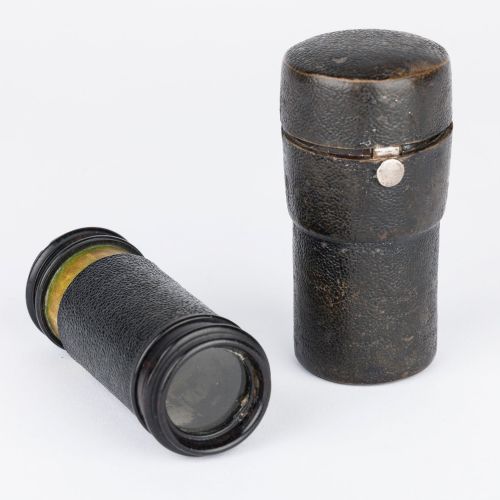
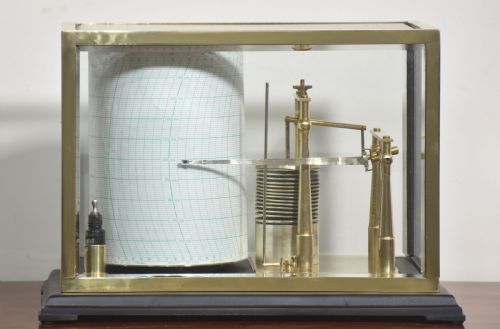
A vintage glass instrument case protects and displays scientific and navigational apparatus such as barographs, barometers, and medical sets. These pieces range from eighteenth-century pocket spyglasses and Regency medical cupping sets to Edwardian five-glass barographs and Victorian opticians' lens kits.
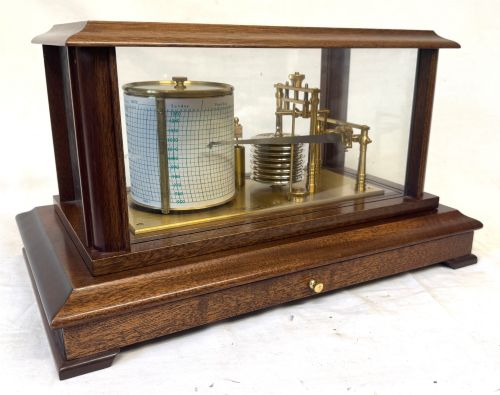
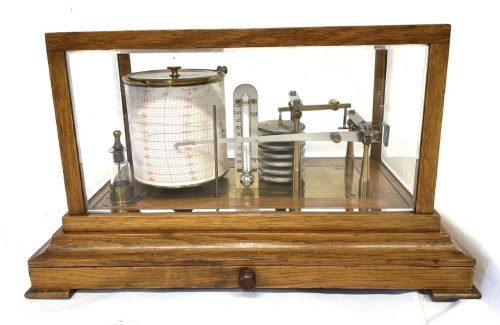
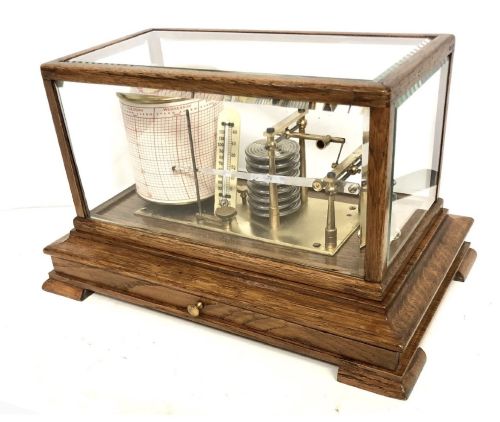
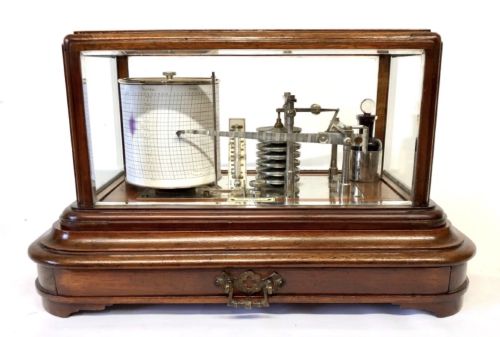
The most common examples found here are wooden desk or wall enclosures fitted with bevelled glass panels, particularly oak and mahogany barograph cases housing recording drums and thermometers. Makers housed barometers, thermometers, and compasses within these glazed structures to allow continuous observation without exposing fragile mechanics to dust and damage.
Origins stretch across the nineteenth and twentieth centuries, featuring British scientific instrument makers alongside maritime and domestic examples. Pieces span Victorian, Edwardian, and later twentieth-century periods, reflecting the heavy utilitarian demands of laboratories, ships, and homes of the era.
How they were made
Craftsmen built these housings primarily from dense hardwoods like oak, mahogany, and walnut, constructing tight frames to hold thick glass panels. Brass hinges, locks, and corner brackets reinforced the wooden structures, while interior mounts held delicate metal mechanisms securely in place.
The glass panels themselves included bevelled edges and five-glass configurations designed to maximise light intake for barographs and scientific instruments. Leather linings, paper paperwork compartments, and fitted drawers beneath the main chamber completed the assembly of these functional scientific cabinets.
Some travel cases include tiny velvet-lined wells once used to cradle delicate optician test lenses during bumpy carriage rides.
What varies in quality
The standard of a case rests in the weight of the timber and the clarity of the glass, particularly where bevelled edges and multi-panel joints meet. Superior examples exhibit precise joinery, original brass hardware, and intact paper charts or maker signatures that confirm the integrity of the ensemble.
Execution of the metal components inside the enclosure distinguishes finer workshop production from standard utilitarian output. Cases retaining matching keys, operational chart drawers, and original signed brass instrument plates represent the upper tier of surviving items.
Russell Norwich·Gaupp & Co·Short & Mason·John Millikin·Ross London·J Hughes London·Cox of Plymouth Dock·Negretti & Zambra·Francis West·Depree and Young Ltd·John Lilley & Son·CW Dixey London
The Vintage Glass Instrument Case Glossary
- Barograph
- A recording barometer that graphs barometric pressure over time onto a revolving paper chart. It sits inside a protective wooden and glass case.
- Bevelled glass
- Glass panes featuring an angled edge ground down around the perimeter. This catches the light and adds structural elegance to instrument enclosures.
- Five-glass case
- An instrument enclosure featuring a top glass panel and four vertical side panes. This configuration provides total visibility of the working barometer mechanism within.
- Chart drawer
- A shallow compartment built into the base of an instrument case. It stores spare recording papers and ink supplies for barographs.
Vintage Glass Instrument Case: Frequently Asked Questions
How do I maintain the glass and wood?
Clean the glass panels gently with a dry or lightly dampened cloth, avoiding harsh chemical sprays that might damage antique wood finishes.
Condition the oak or mahogany frames occasionally with appropriate wax to preserve the moisture balance and grain of the timber.
Are these cases waterproof?
These instrument housings protect delicate scientific mechanisms from dust, ambient moisture, and casual handling rather than total submersion.
Built with hinged doors, brass locks, and fitted joints, they function as display cabinets rather than sealed maritime vessels.
Can I store charts in the base?
Many barograph enclosures feature an integrated pull-out drawer specifically designed for storing spare recording paperwork and ink bottles.
This compartment keeps necessary maintenance accessories neatly organised directly beneath the main instrument chamber.