

Vintage Glass Drop Lighting
Vintage glass drop lighting brings sparkle and period character to a room through cut crystals, brass frames and ornate chandeliers.
Vintage Glass Drop Lighting
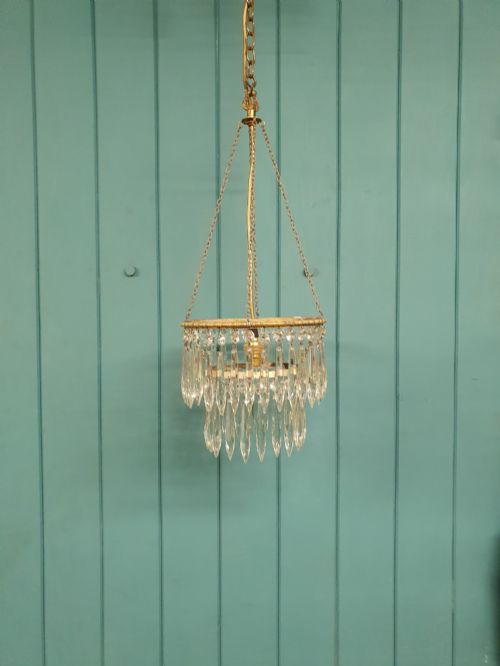
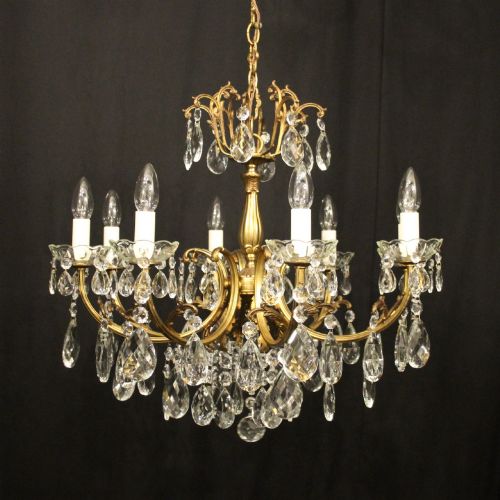
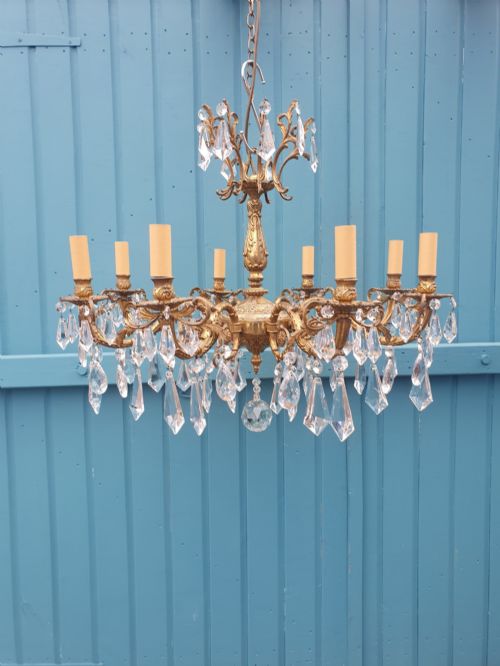
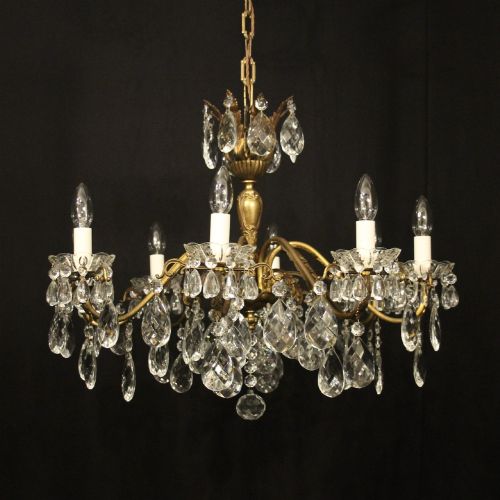
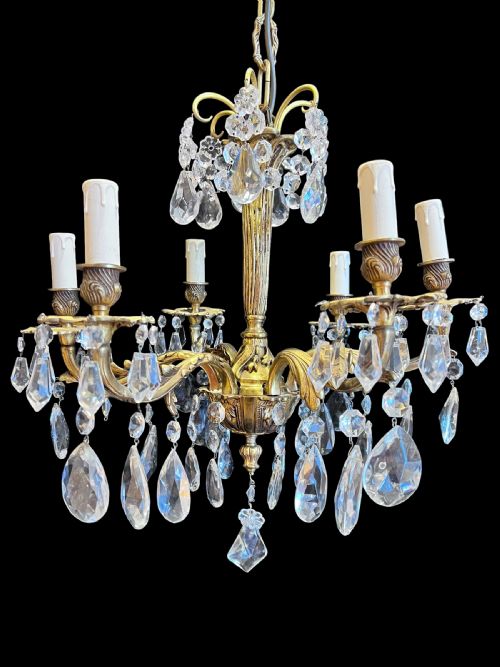
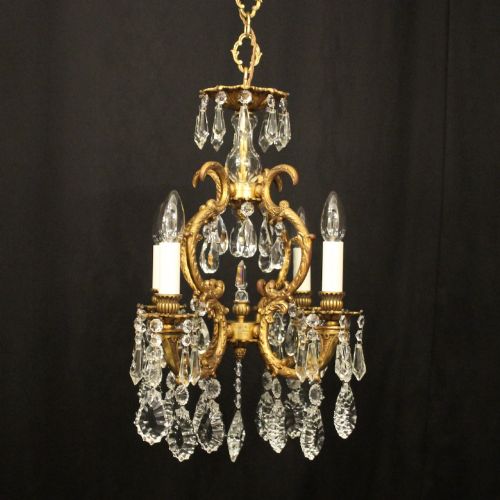
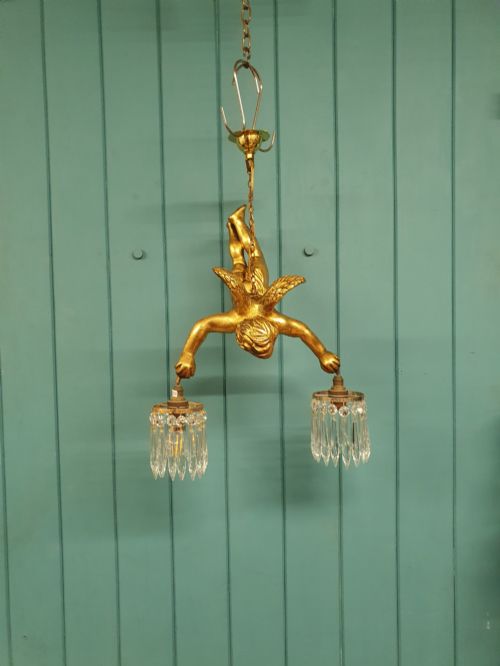
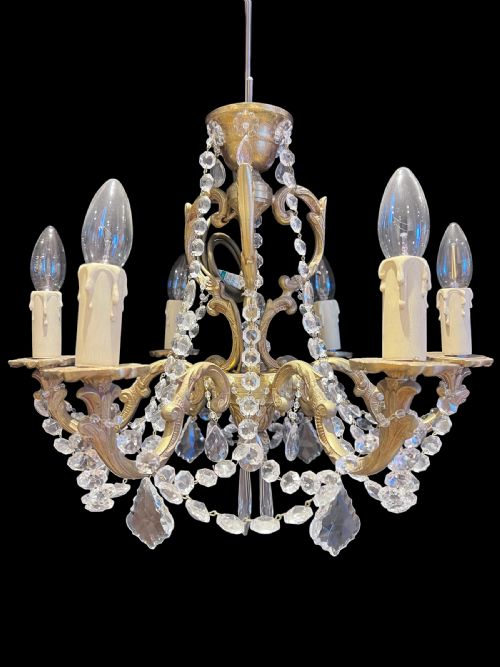
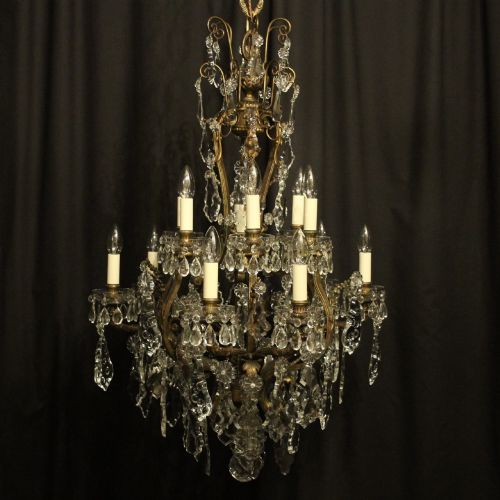
Vintage glass drop lighting encompasses an array of decorative illumination pieces designed to catch and refract light through suspended glass and crystal elements. When searching for vintage glass drop lighting, buyers encounter diverse forms ranging from grand multilight chandeliers to wall lights and table candelabras. The selection leans heavily toward French and Italian designs dating from the late nineteenth century through the early twentieth century.
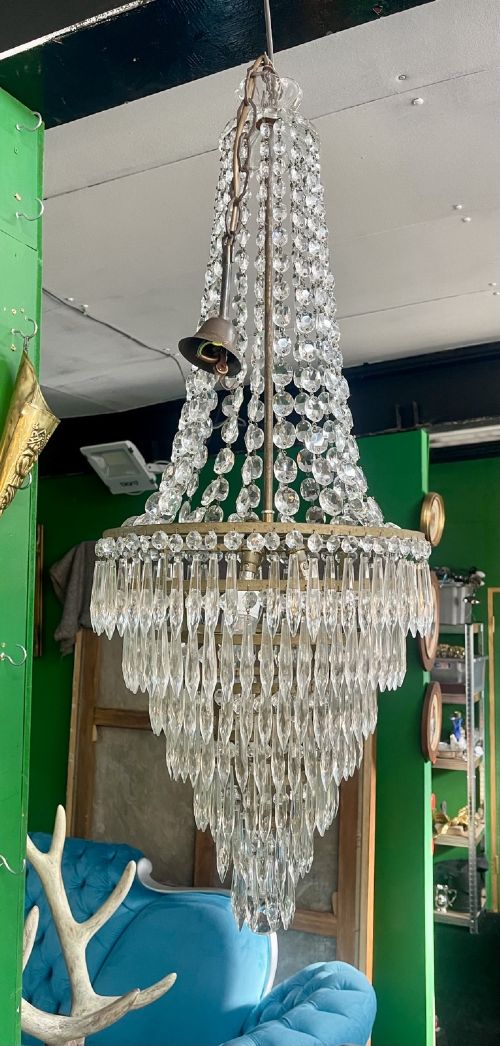
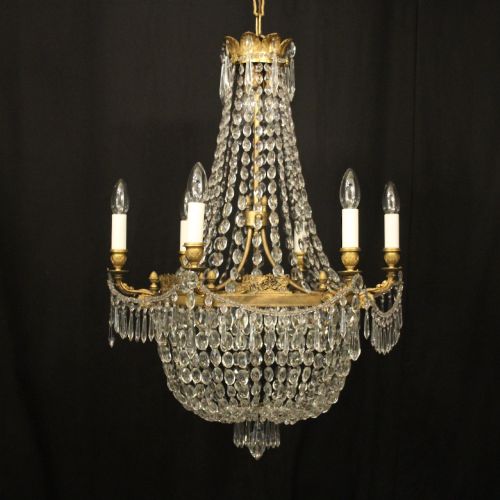
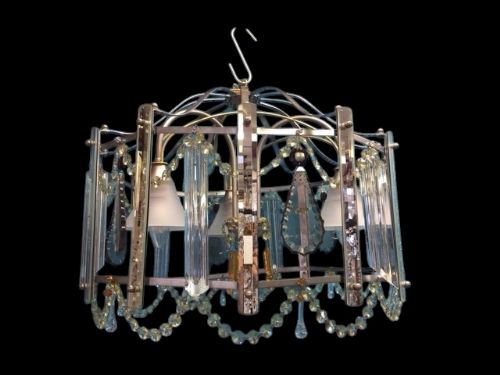
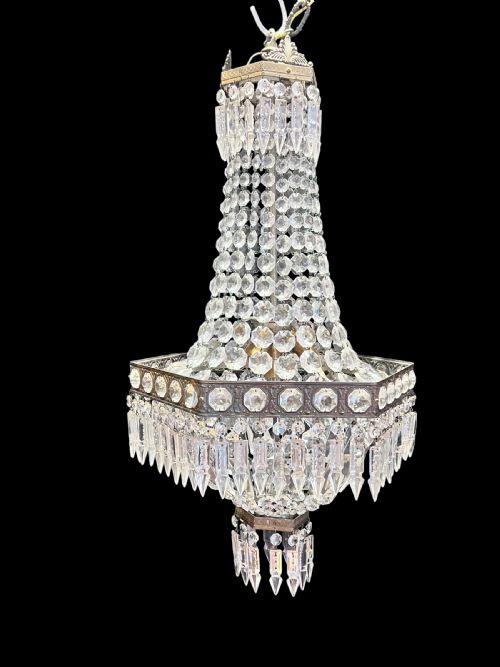
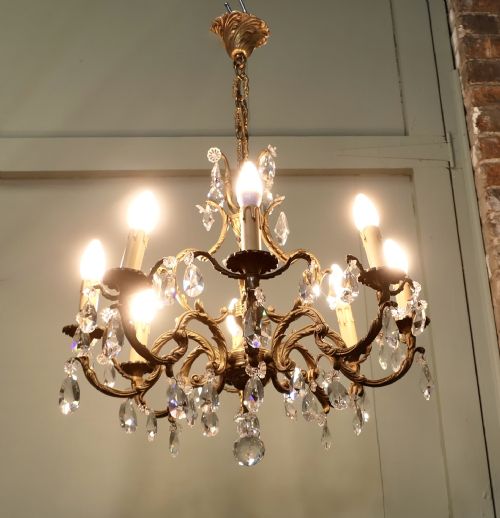
The most common formats found in this category include tent and waterfall chandeliers, basket chandeliers, and smaller flush or pendant ceiling lights. Pieces frequently incorporate brass, gilt bronze, or gilded metal frames supporting rows of cut glass prisms, spikes, and coffin drops. Edwardian and 1920s examples dominate the available selection, often featuring coloured crystals or distinct regional styles like French Empire and Venetian Art Deco.
Materials and construction methods
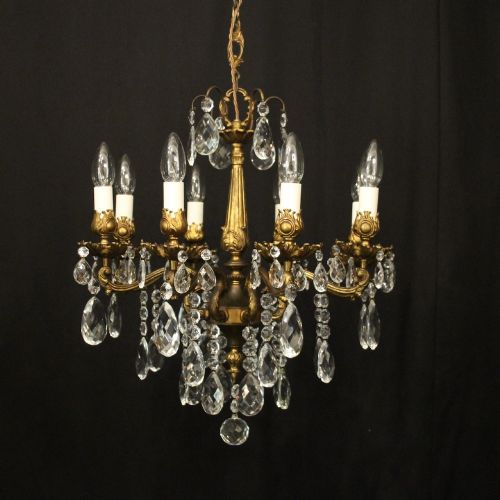
Makers of vintage glass drop lighting constructed robust structural frameworks primarily from cast brass, gilded bronze, and spelter, forming the skeletal armature for multiple candle arms and tiers. These metallic mounts were frequently chased or gilded to enhance their decorative appeal before supporting the weight of numerous suspended glass components.
The hanging elements themselves rely on traditional glassworking techniques, utilising heavy lead crystal and ordinary glass that was hand-cut and polished to maximise light refraction. Individual drops, spikes, and prisms are attached to the frames using delicate wire loops or pins, allowing the glass components to move and shimmer freely with air currents.
The listings span the Edwardian era through the 1930s, featuring glass, crystal, brass, and gilt bronze across French, Italian, and English origins.
Assessing quality in period fixtures
Quality in vintage glass drop lighting depends heavily on the clarity and depth of work within the glass components themselves, where hand-cut facets create sharper light refraction than moulded glass alternatives. The density and weight of the crystal drops, along with the precision of their cutting, distinguish finer examples from standard production pieces.
The structural framework contributes equally to a piece's overall standard, seen in the weight of the brass or gilded bronze mounts and the intricacy of metal chasing. Superior items display meticulous assembly where wirework is secure, metal elements align harmoniously, and integrated decorative motifs remain crisp and well-defined.
The Vintage Glass Drop Lighting Glossary
- Crystal
- High-clarity glass containing metal oxides that increase refractive index and brilliance. This material is cut into various geometric shapes to scatter light effectively across a room.
- Tent and waterfall
- A specific chandelier configuration featuring an upper triangular tent of strung crystals above a cascading curtain of drops. This layered arrangement directs illumination downwards while multiplying reflections.
- Coffin prisms
- Flat, elongated glass drops with bevelled edges resembling the traditional silhouette of a coffin. They hang in rows to catch ambient light from multiple angles.
- Lustre
- A decorative tabletop ornament or candelabra hung with long glass pendants, or a ceiling fixture incorporating similar hanging prisms. Victorian examples often utilise coloured glass bodies.
- Spelter
- A zinc alloy frequently used as a cheaper substitute for bronze or brass in decorative metal mounts. It is commonly painted or gilded to imitate more expensive metals.
Vintage Glass Drop Lighting: Frequently Asked Questions
How do I clean a crystal chandelier?
Cleaning requires a gentle approach using a specialist glass spray or a mild solution of warm water and dish soap applied with a soft cloth. Each drop should be wiped individually while supporting it from beneath to avoid straining the delicate wire fixings.
Power washing or soaking the entire fixture is discouraged because moisture can corrode the internal wiring and damage historic metal finishes. Keeping the power switched off during the process ensures safety while working around delicate glass arms.
Can these chandeliers take modern bulbs?
Most antique fixtures can accommodate modern low-wattage LED candle bulbs provided the existing lampholders match standard socket sizes. Rewiring is often necessary for older pieces to meet contemporary electrical safety standards before installation.
A qualified electrician should inspect the internal wiring and ceiling mounting bracket to ensure it can support the combined weight of the metal frame and glass drops safely.
What rooms suit a drop chandelier?
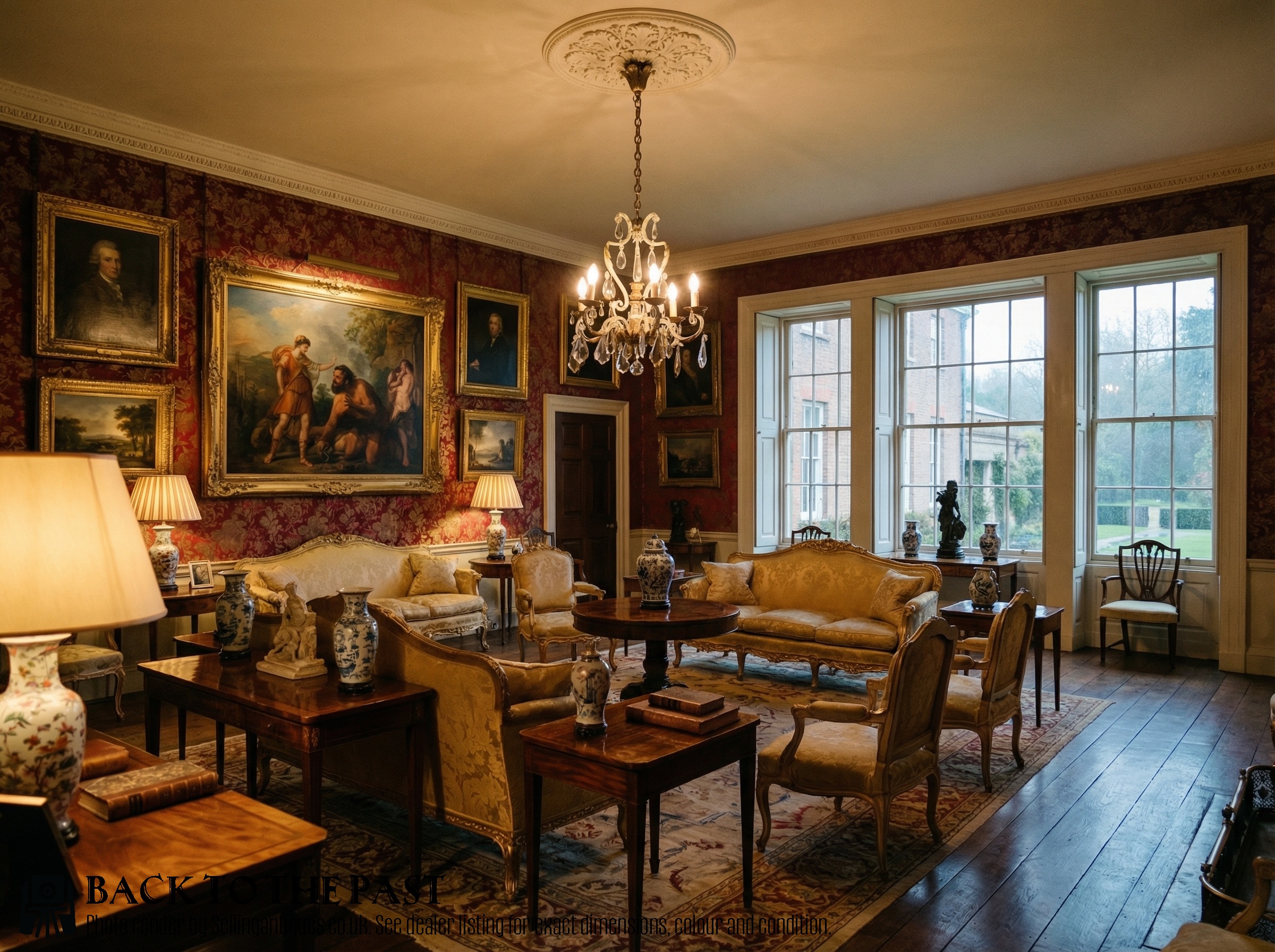
These fixtures suit dining rooms, entrance halls, and living spaces where high ceilings allow the suspended glass drops and arms to hang without obstruction. Their reflective qualities brighten darker spaces by bouncing natural and artificial light around the interior.
Smaller pendant versions and wall lights work effectively in narrower hallways or bedrooms where full-sized chandeliers would overwhelm the available floor area.
How are different periods identified?
Dating relies on stylistic clues such as the symmetry of French Empire tent designs, the delicate brass work of Edwardian pieces, or the distinct pastel hues of Venetian Art Deco. The cut of the glass, the composition of the metal frame, and specific decorative motifs like leaf chasing provide further chronological markers.
Comparing the mounting hardware and wiring style against known manufacturing eras helps narrow down the decade of production for unmarked fixtures.