




Vintage Glass Decanter Holder
A vintage glass decanter holder secures fine crystal vessels while displaying barware with distinction across dining rooms and drawing rooms.
Vintage Glass Decanter Holder
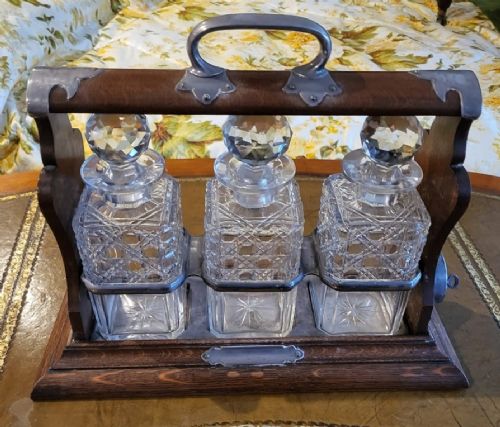
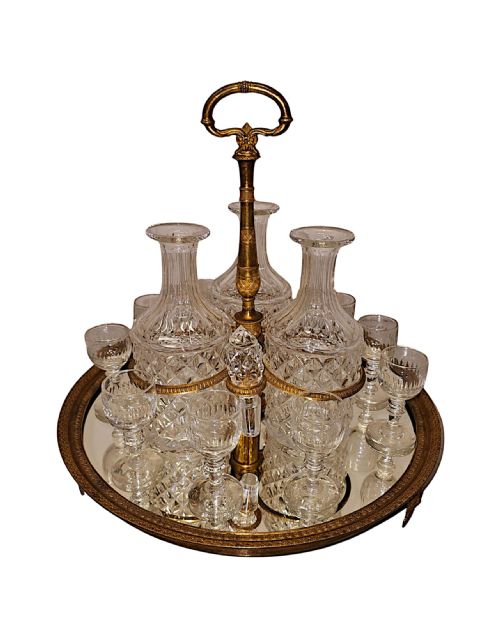
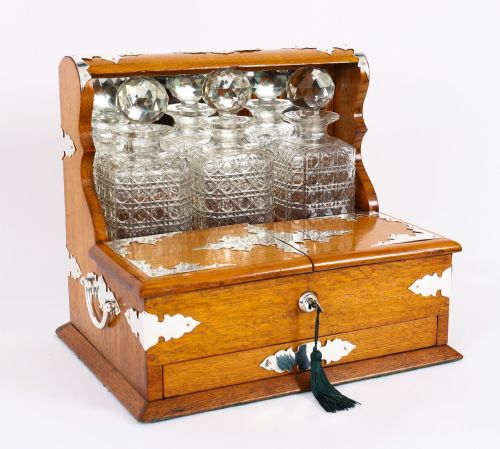
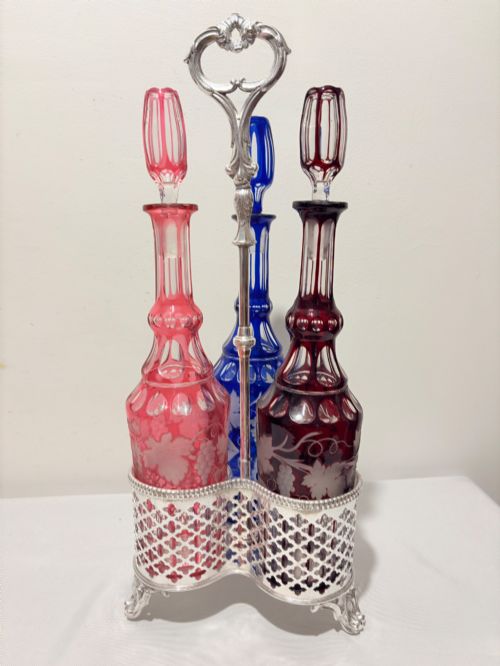
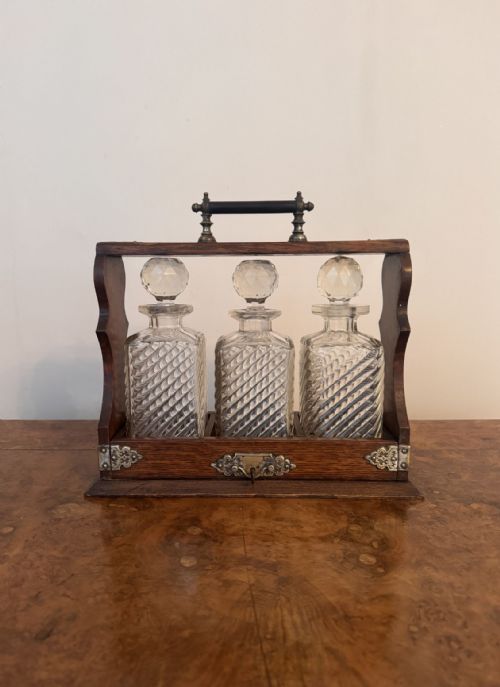
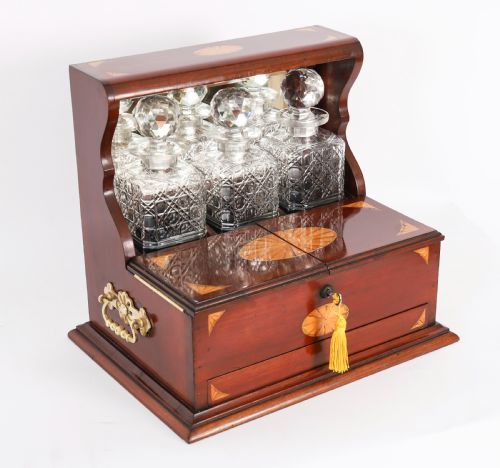
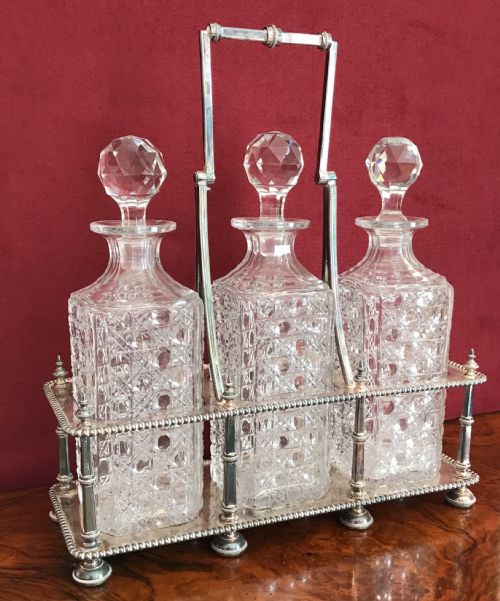
A vintage glass decanter holder takes various forms including tantalus frames, liqueur sets, and standalone bottle stands designed to present beverages securely. Buyers seeking a vintage glass decanter holder encounter pieces ranging from Victorian silver-plated frames to Edwardian oak tantalus units and Art Deco chrome designs.
The objects serve primarily to hold multiple glass bottles or decanters, often featuring locking mechanisms in tantalus configurations to protect contents. Common examples combine sturdy wood frameworks or metal plating with cut crystal and coloured glass vessels.
Origins span multiple design movements, notably Victorian, Edwardian, and Art Deco, reflecting shifting interior tastes across the nineteenth and twentieth centuries. These pieces function both as practical barware and decorative centrepieces within domestic spaces.
Materials and construction methods
Makers utilised solid timbers such as oak and satinwood alongside metal foundations like silver plate, brass, chrome, and ormolu to construct durable frames. Ormolu and silver plating provided polished metallic surfaces, while timber cases frequently incorporated inlaid wood details.
Vessels housed within these frames consist of cut glass, cut crystal, and coloured glass, shaped through blowing and heavy faceting. Wrought iron also appears in specific Art Nouveau designs, demonstrating varied structural approaches across periods.
Vintage Glass Decanter Holder Retail Price Guide 2026
Typical asking prices for vintage glass decanter holder among the pieces listed under this phrase on Sellingantiques today, from the lower quarter to the upper quarter. They describe what is for sale here now, not the wider market.
Listings feature oak, mahogany, silver plate, and chrome alongside cut glass and coloured glass vessels across Edwardian and Victorian periods.
Distinguishing quality in frames and vessels
Quality rests upon the execution of metalwork, the weight and clarity of the glass vessels, and the precision of the woodwork. Superior examples display crisp chasing on silver plating, substantial crystal decanter bodies with deep cutting, and tightly fitted locking mechanisms.
Lesser pieces exhibit simpler materials, plain glass inserts, or mechanical wear within the locking bars of tantalus sets. The integration of auxiliary compartments, such as games compendiums within oak cases, elevates the sophistication of the piece.
Walker & Hall·Elkington·Wade Wingfield Wilkins·Jacques Adnet
The Vintage Glass Decanter Holder Glossary
- Tantalus
- A locking drink cabinet or frame that secures decanters while revealing the bottles within. The mechanism prevents unauthorised pouring.
- Silver Plate
- A base metal coated with a thin layer of silver through electroplating or older techniques. It provides the appearance of solid silver at a different weight.
- Ormolu
- Gilded bronze or brass applied to decorative objects and furniture mounts. The technique creates a bright gold-coloured metallic finish.
- Cave À Liqueur
- A portable fitted case containing liqueur decanters and small glasses. These sets often feature ornate French craftsmanship.
- Cruet Set
- A frame holding condiment bottles or small cruets for the table. Certain Victorian examples accommodate multiple glass bottles in silver-plated stands.
Vintage Glass Decanter Holder: Frequently Asked Questions
How do tantalus locks work?
A tantalus employs a metal bar that engages the stoppers of the decanters, preventing removal when a key secures the upright frame.
Turning the key releases the retaining bar, allowing each bottle to be lifted freely from its individual compartment.
What woods were used for frames?
Oak and blonde oak serve as the primary timbers for sturdy Victorian and Edwardian tantalus frames and dry bars.
Satinwood also appears on finer inlaid boxes, providing lighter tones and contrasting decorative stringing.
How do I date a decanter stand?
Stylistic markers such as wrought iron curves indicate Art Nouveau influences, while geometric chrome suggests later Art Deco periods.
Heavy silver plating and deep-cut crystal typically point toward Victorian or Edwardian manufacturing dates.
Can missing decanters be replaced?
Replacing missing bottles requires matching the exact height, base diameter, and stopper style of the original openings.
Tantalus frames depend on precise bottle dimensions to engage the locking mechanism correctly.